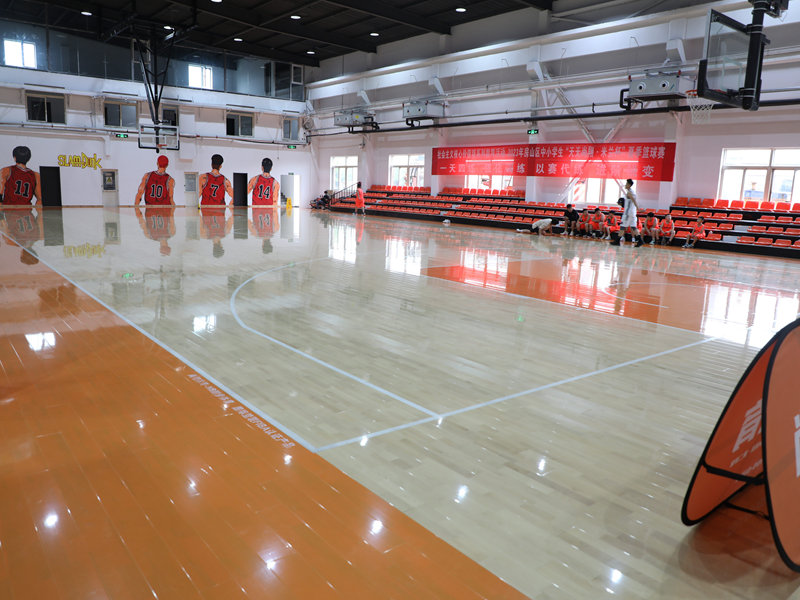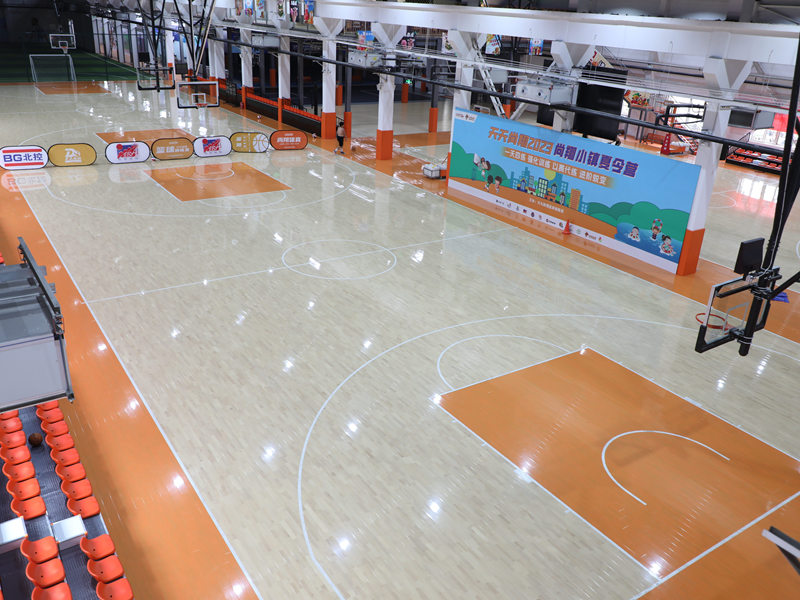
The method by which the wooden floor is attached to the subfloor is one of the most important decisions in the design of an indoor basketball court. The two primary options are floating floor systems and nailed-down (mechanically fastened) systems. Each has distinct advantages and disadvantages, and the right choice depends on your facility’s specific needs, usage patterns, and budget.
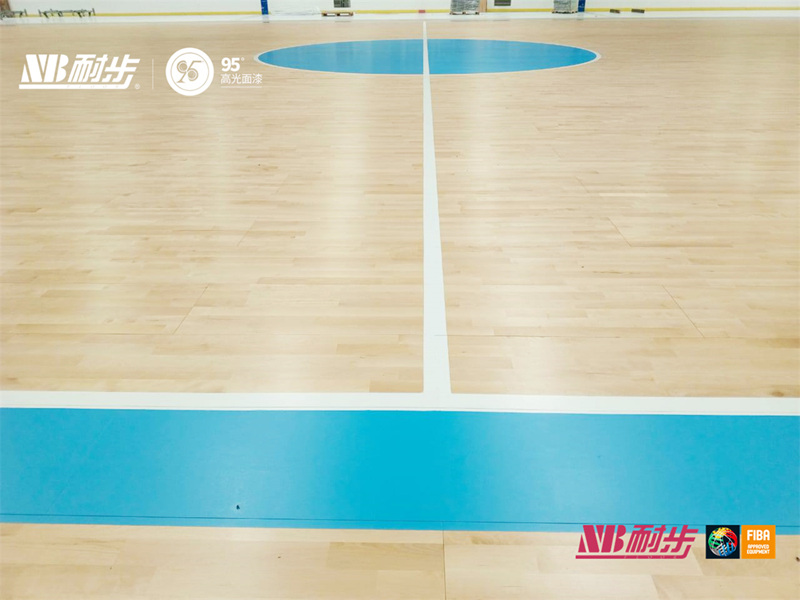
A nailed-down system is the traditional method used in professional and collegiate basketball arenas. In this system, the wood planks are fastened directly to the subfloor using nails, staples, or adhesive. The planks are typically solid hardwood, twenty to twenty-two millimeters thick, and they are installed over a foam or rubber padding system that sits on top of the subfloor. The nailing process creates a very rigid, stable floor that does not move or shift over time.
The advantages of a nailed-down system are numerous. First, it provides the best ball bounce consistency. Because the floor is rigidly attached to the subfloor, there is no flex or movement that could affect the way the ball bounces. Second, nailed-down systems offer the best shock absorption when combined with a proper underlayment system. The foam or rubber padding compresses under load and then returns to its original shape, providing a cushioned surface that protects players’ joints. Third, nailed-down floors are the most durable and longest-lasting option. Solid hardwood nailed-down floors can be refinished five to seven times, giving them a lifespan of thirty years or more.
The disadvantages of nailed-down systems are primarily related to cost and installation complexity. Nailed-down installations require a very flat, stable subfloor, which can add to the preparation costs. The nailing process is labor-intensive and requires skilled installers. If the subfloor is not perfectly level, the floor can develop high and low spots that affect play. Nailed-down systems also do not allow for easy removal, which can be a problem if the facility needs to be reconfigured for other uses.
Floating floor systems, on the other hand, are not attached to the subfloor at all. The planks are laid on top of a foam or rubber underlayment and held in place by their interlocking edges. The entire floor “floats” on the padding, which means it can expand and contract with changes in temperature and humidity without being damaged.
The advantages of floating systems are significant. Installation is faster and easier because there is no nailing or gluing required. This reduces labor costs and shortens the project timeline. Floating systems are also more forgiving of subfloor imperfections, because the underlayment can compensate for minor high and low spots. They are ideal for multi-purpose facilities where the floor may need to be converted for different sports, because the entire floor can be removed and reinstalled in a different configuration. Floating systems are also more dimensionally stable, making them a good choice for facilities in climates with significant seasonal humidity changes.
The disadvantages of floating systems are related to performance. Because the floor is not rigidly attached to the subfloor, there can be slight movement or flex that affects ball bounce consistency. The ball bounce on a floating system is generally very good but may not match the precision of a nailed-down solid hardwood system. Floating systems also tend to have a slightly different feel underfoot — some players describe it as less solid or less connected to the ground. For competitive play at the highest levels, this difference can be meaningful.
Another consideration is the type of wood used in floating systems. Most floating systems use engineered hardwood rather than solid hardwood, because engineered wood is more dimensionally stable and better suited to the floating installation method. This means floating systems may have fewer opportunities for refinishing, depending on the thickness of the veneer.
In summary, if your facility is dedicated to basketball and you want the best possible performance, a nailed-down solid hardwood system is the way to go. If your facility is multi-purpose, has budget constraints, or is in a climate with significant humidity variation, a floating engineered hardwood system is an excellent alternative that offers good performance with greater flexibility and lower cost.