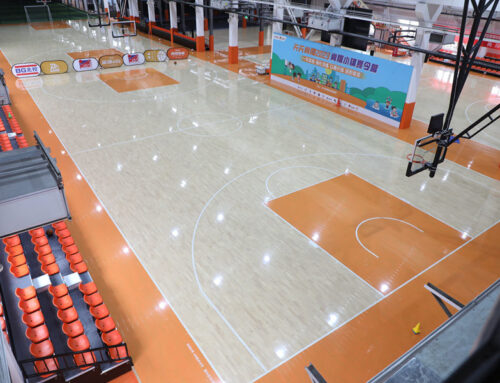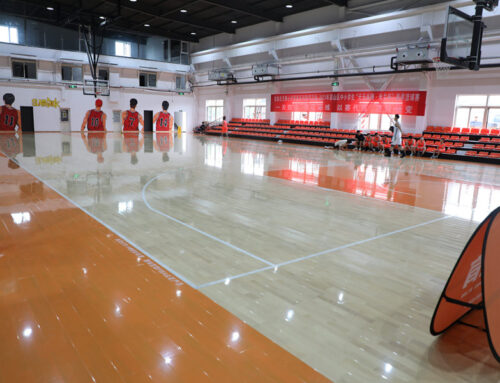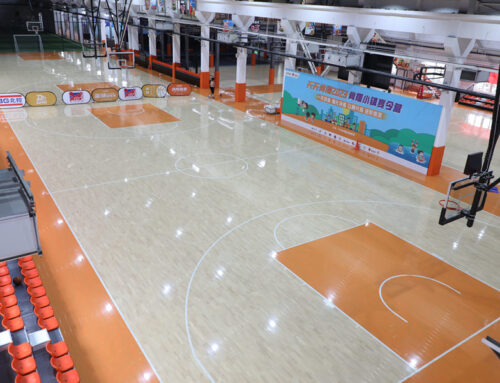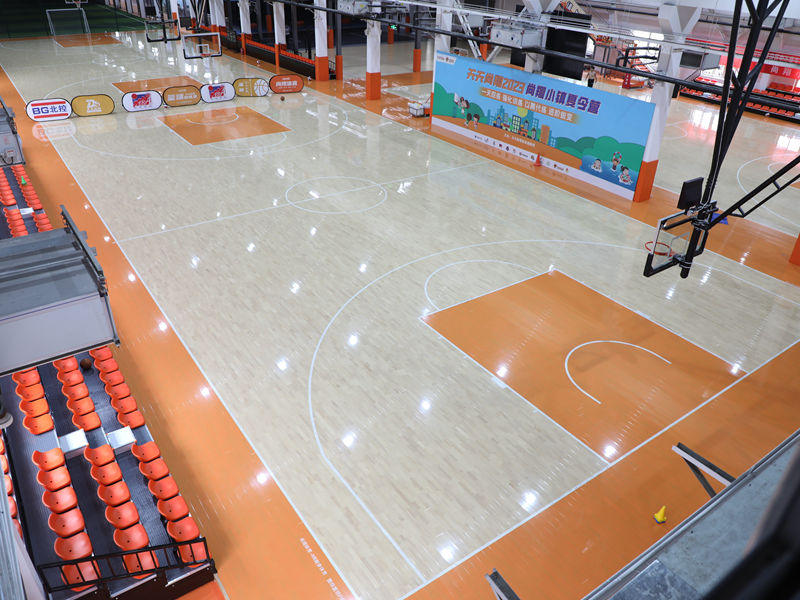
Wood is a natural, organic material, and like all natural materials, it responds to its environment. Temperature and humidity are the two most important environmental factors that affect the performance, appearance, and lifespan of an indoor basketball court wooden floor. Understanding how climate control impacts your floor is essential for protecting your investment.
Wood expands when it absorbs moisture and contracts when it loses moisture. This is a fundamental property of all wood, and it cannot be eliminated — it can only be managed. In an indoor basketball court, the ideal relative humidity range is between thirty-five and fifty-five percent. When humidity rises above this range, the wood absorbs moisture from the air and expands. This can cause the planks to swell, cup, or buckle. When humidity drops below this range, the wood loses moisture and contracts, creating gaps between the planks.
The ideal temperature range for a basketball court wooden floor is between eighteen and twenty-four degrees Celsius. Temperature affects the rate at which wood absorbs and releases moisture, so maintaining a stable temperature is just as important as controlling humidity. Rapid temperature fluctuations are particularly damaging because they cause the wood to expand and contract quickly, which can lead to cracking, splitting, and delamination.
Professional basketball arenas invest heavily in climate control systems for exactly these reasons. The HVAC systems in these facilities are designed to maintain temperature and humidity within very tight tolerances, twenty-four hours a day, seven days a week. This level of control is what allows solid hardwood floors to perform at their best for decades.
For smaller facilities like high school gyms or community centers, achieving the same level of climate control can be more challenging and more expensive. However, it is still essential. At a minimum, the facility should have a functioning HVAC system with both heating and cooling capabilities, as well as humidification and dehumidification. Without these systems, the floor will be at the mercy of the outside climate, which can cause significant damage over time.
One of the most common problems caused by poor climate control is cupping. Cupping occurs when the edges of a plank are higher than the center, creating a concave shape. This happens when the bottom of the plank is exposed to more moisture than the top — for example, if there is a moisture problem in the subfloor. Cupping affects ball bounce because the ball will not roll smoothly across a cupped surface. If cupping is caught early, it can sometimes be reversed by adjusting the humidity. If it is severe, the affected planks may need to be replaced.
Crowning is the opposite of cupping — the center of the plank is higher than the edges. This can happen when the top of the plank is exposed to more moisture than the bottom. Like cupping, crowning affects ball bounce and should be addressed as soon as it is detected.
Gapping occurs when the planks pull apart, creating visible gaps between them. This is a sign that the humidity is too low, and the wood has contracted. Small gaps can be filled with wood filler, but large gaps may indicate a more serious problem that requires professional attention.
Buckling is the most severe form of moisture damage. It occurs when the wood expands so much that the planks push against each other and lift off the subfloor. Buckling is very difficult to fix and often requires replacing the affected section of floor.
The best defense against climate-related damage is prevention. Invest in a good HVAC system, monitor temperature and humidity regularly, and make adjustments as needed. Place hygrometers and thermometers in multiple locations throughout the gym to get an accurate picture of the environmental conditions. During the winter months, when indoor heating can dry out the air, use humidifiers to maintain the ideal humidity range. During the summer, use dehumidifiers and air conditioning to prevent excess moisture.
By taking climate control seriously, you can protect your wooden floor from the most common and costly forms of damage. A well-maintained environment is just as important as a well-maintained floor, and together they will ensure that your court performs at its best for many years.