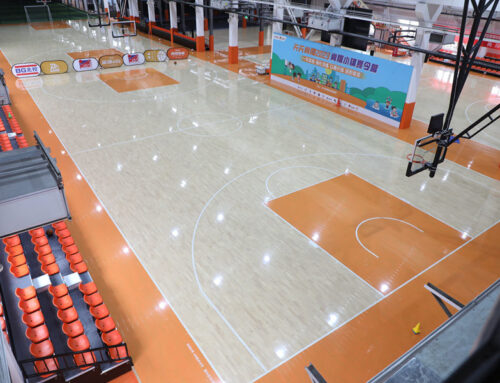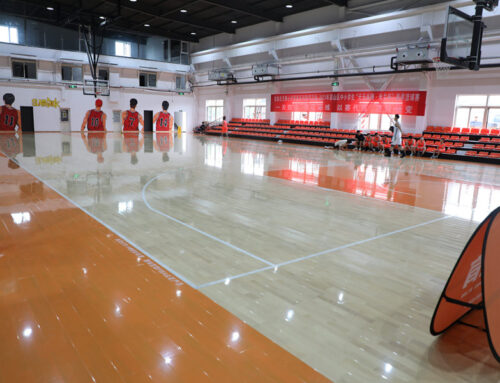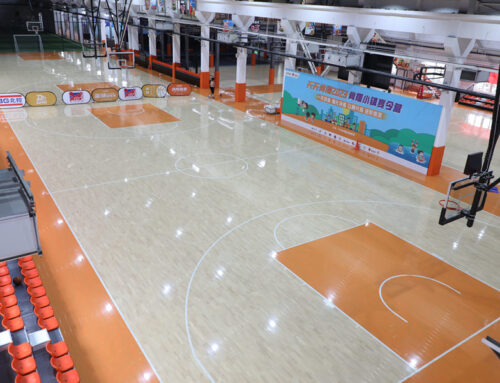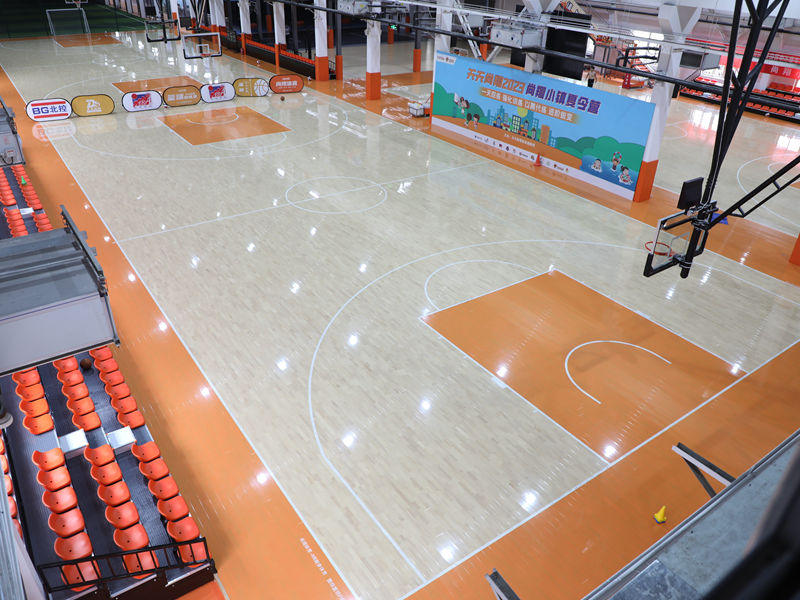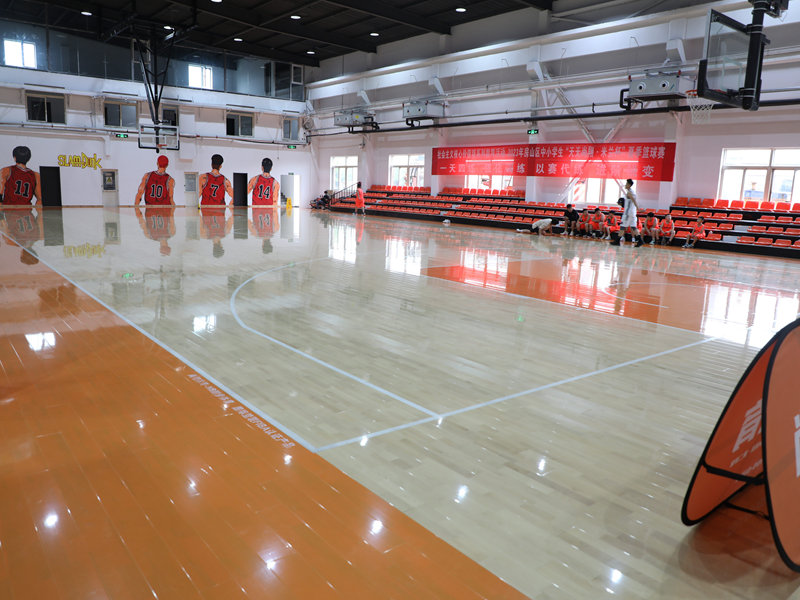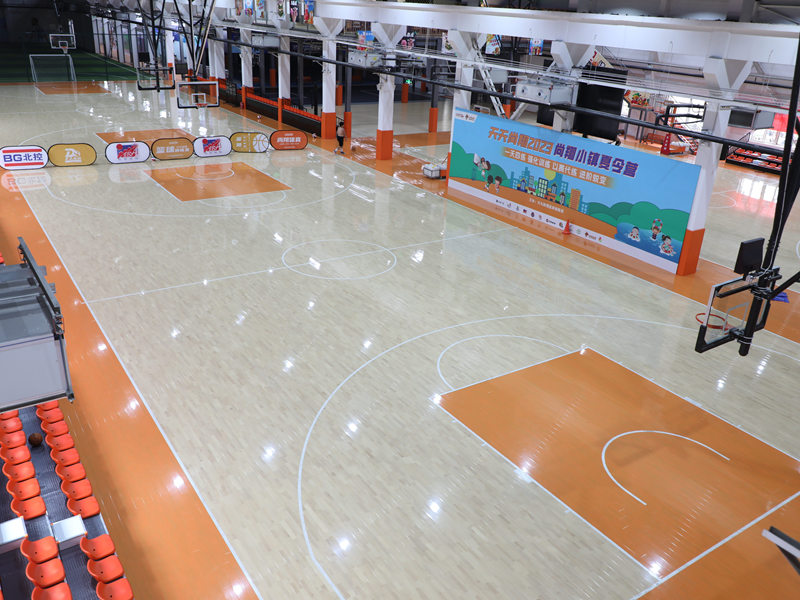
If you watch basketball closely, you will notice something that casual fans miss: players react to the floor as much as to the ball. A player who has played on a court a hundred times knows exactly how the ball will bounce off that surface. They know where it will kick, how high it will rise, and how quickly it will roll. This muscle memory is built on consistency, and consistency is the direct product of a well-engineered hardwood floor.
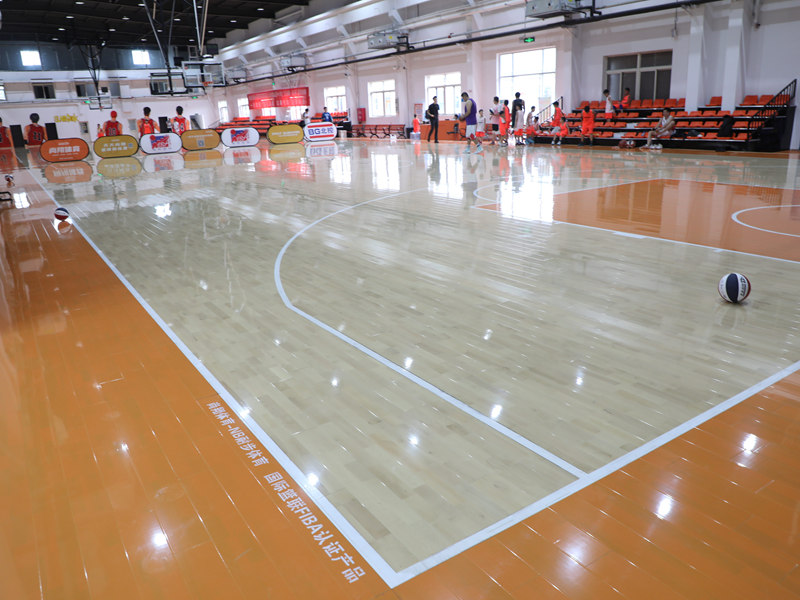
Ball bounce on an indoor basketball court hardwood floor is governed by physics, but it is also governed by engineering. The physics is straightforward. When a ball hits a surface, the energy of the impact is partially absorbed by the surface and partially returned. The ratio of returned energy to applied energy is called the coefficient of restitution. For a basketball on a properly finished hardwood floor, this coefficient should fall within a narrow range that produces a bounce between forty-nine and fifty-four inches from a seventy-two-inch drop.
But physics alone does not guarantee consistency. The engineering is what makes the difference. Several factors influence ball bounce consistency, and each must be controlled.
The first factor is the hardness of the wood. Harder woods return more energy, producing a higher bounce. Softer woods absorb more energy, producing a lower bounce. Maple is the standard because its hardness produces a bounce that falls right in the target range. If you use a softer species, the bounce will be too low. If you use a harder species, the bounce may be too high, and the floor may feel too harsh on players’ joints.
The second factor is the thickness of the hardwood. Thicker planks are stiffer and return energy more consistently. Thin planks can flex under load, absorbing energy unevenly and producing inconsistent bounce. The standard thickness for indoor basketball court hardwood is twenty to twenty-six millimeters. Anything thinner risks flex, especially in the center of the court where deflection is greatest.
The third factor is the subfloor. The subfloor must be perfectly flat and rigid. Any flex in the subfloor will reduce the energy returned to the ball, lowering the bounce. Plywood is preferred over oriented strand board because it is more dimensionally stable and less prone to flexing under load. The subfloor should be at least three-quarter inch thick and installed with seams staggered and properly fastened.
The fourth factor is the shock absorption layer. This is the most complex variable. The shock absorption pads sit between the subfloor and the hardwood. They are designed to compress under load, absorbing a portion of the impact energy. The thickness and density of these pads determine how much energy is absorbed versus returned. If the pads are too thick or too soft, they will absorb too much energy, and the ball bounce will be too low. If they are too thin or too firm, they will not absorb enough energy, and the floor will feel too hard.
The fifth factor is the finish. The polyurethane or similar finish on the surface affects how the ball interacts with the floor. A smooth, even finish produces consistent bounce. A worn or uneven finish can cause the ball to grip in some areas and slip in others, creating unpredictable bounce patterns. This is why recoating the floor every three to five years is so important.
The sixth factor is temperature. Wood expands and contracts with temperature changes. When the floor is warm, the wood expands slightly, and the planks press against each other more tightly. This can increase the effective stiffness of the floor, raising the bounce slightly. When the floor is cold, the wood contracts, and the planks may separate slightly, reducing stiffness and lowering the bounce. This is why indoor basketball courts must maintain a stable temperature, ideally between sixty and seventy-five degrees Fahrenheit.
The seventh factor is humidity. Like temperature, humidity affects the wood. High humidity causes the wood to absorb moisture and expand. Low humidity causes it to dry out and shrink. Both conditions can affect ball bounce consistency, which is why humidity should be maintained between thirty-five and fifty percent relative humidity.
All of these factors must be monitored and controlled to maintain consistent ball bounce. This is not a set-it-and-forget-it system. It requires ongoing attention from facility managers who understand the science behind the floor.
The payoff is enormous. A floor with consistent ball bounce allows players to develop reliable muscle memory. They know exactly how the ball will react, and they can make decisions faster. At the professional level, where games are decided by fractions of a second, this consistency is not a luxury. It is a necessity.