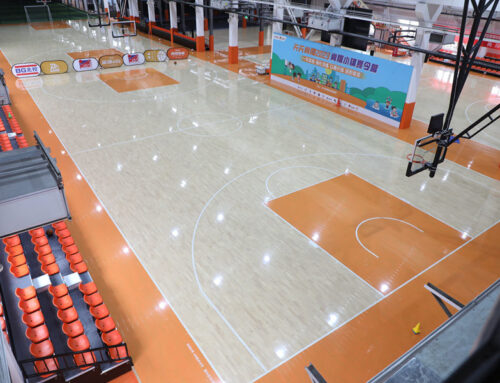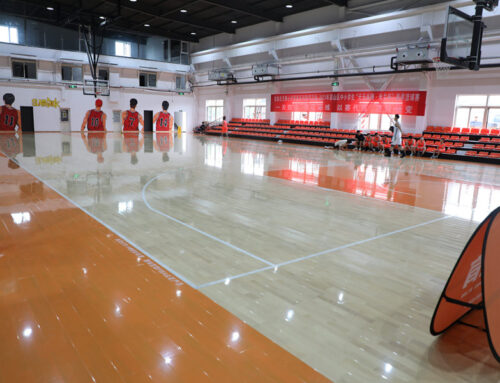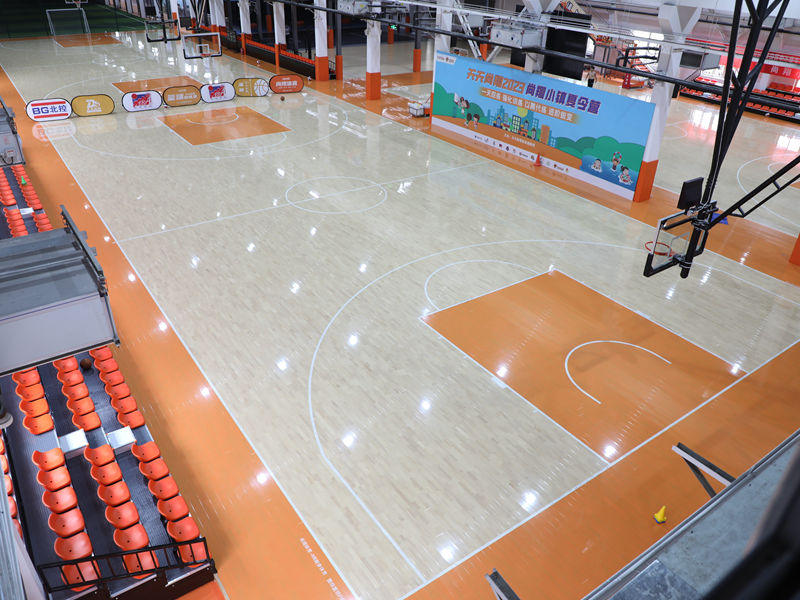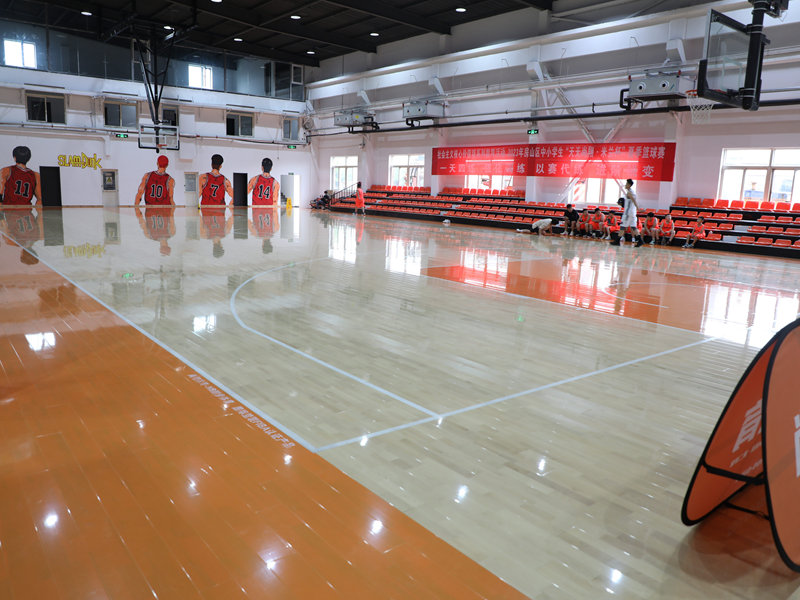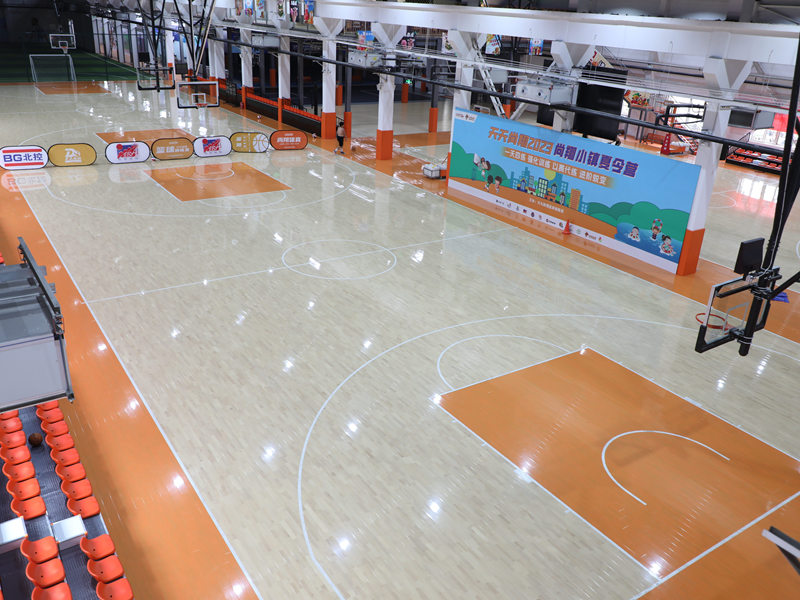
A basketball court floor that looks fine can still be dangerous. This is one of the most misunderstood aspects of indoor basketball court hardwood flooring. Players and coaches often assume that if the floor looks good, it is safe. But safety is not about appearance. It is about measurable performance characteristics that degrade over time, often invisibly.
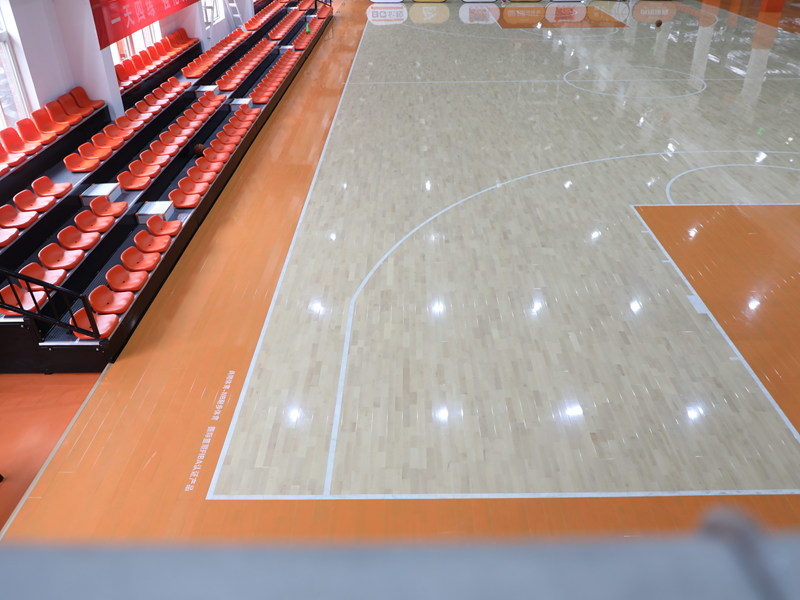
The most common safety hazard on an indoor basketball court hardwood floor is inconsistent surface friction. Friction is what allows players to grip the floor when they run, stop, pivot, and change direction. Too little friction, and players slip. Too much friction, and players stick, which can cause knee and ankle injuries when they try to change direction quickly. The ideal friction level is a narrow band, and it is affected by the finish on the surface.
Over time, the finish on a basketball court wears down. In high-traffic areas, such as the paint, the free-throw lane, and the sidelines, the finish can wear through completely, exposing the bare wood. Bare wood has a different friction coefficient than finished wood. It can be either too slippery or too sticky, depending on the species and the condition of the surface. This creates a patchwork of friction levels across the court, which is extremely dangerous. A player who is used to a certain grip level in one area may suddenly encounter a different grip level in another, leading to slips, falls, and injuries.
Another hidden danger is shock absorption degradation. The foam or rubber pads beneath the hardwood are designed to compress under load and return to their original shape. Over time, repeated compression causes these pads to lose their resilience. They become permanently compressed, reducing their ability to absorb impact. When this happens, more force is transferred directly to the players’ joints. The floor feels harder, and the risk of stress fractures, tendonitis, and joint injuries increases.
Shock absorption degradation is invisible to the naked eye. The floor looks the same. The ball bounces the same. But the forces being transmitted to the players’ bodies have increased significantly. This is why periodic shock absorption testing is essential. Facilities should test shock absorption at least once a year, and more frequently in high-use facilities.
A third hidden danger is subfloor failure. The plywood subfloor beneath the hardwood can deteriorate over time, especially if moisture has infiltrated the system. When the subfloor weakens, it can flex under load, creating waves or humps in the playing surface. These irregularities are not always visible, but they affect ball bounce and player footing. A player who steps on a slightly raised area may twist an ankle. A ball that hits a wave may bounce unpredictably.
Moisture is the root cause of most subfloor problems. Even a small amount of moisture can cause plywood to delaminate or swell. This is why the moisture barrier between the concrete slab and the subfloor is so critical. It must be intact and properly installed. If it is damaged or was never installed, moisture can seep up from the concrete and destroy the subfloor from below.
A fourth danger is cupping and crowning. These are deformations of the hardwood planks caused by uneven moisture exposure. Cupping occurs when the edges of a plank rise higher than the center. Crowning is the opposite, with the center rising higher than the edges. Both conditions create an uneven surface that affects ball bounce and increases the risk of tripping.
Cupping and crowning are often caused by poor climate control. If one side of the court is exposed to more sunlight or higher humidity than the other side, the wood on that side will expand more, causing the planks to deform. This is why HVAC systems in basketball facilities must be designed to maintain uniform temperature and humidity across the entire court.
The takeaway is clear: safety on an indoor basketball court hardwood floor requires active management. It is not enough to install a good floor and walk away. Facility managers must monitor friction, shock absorption, subfloor integrity, and climate conditions on an ongoing basis. The cost of this monitoring is trivial compared to the cost of a single serious injury.