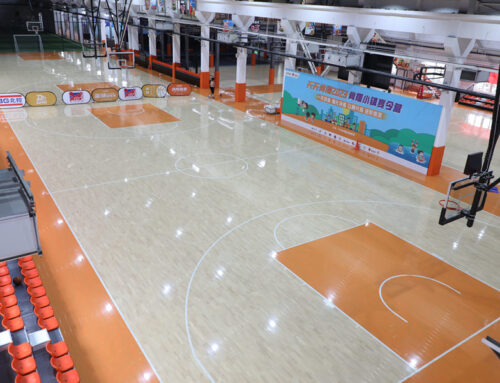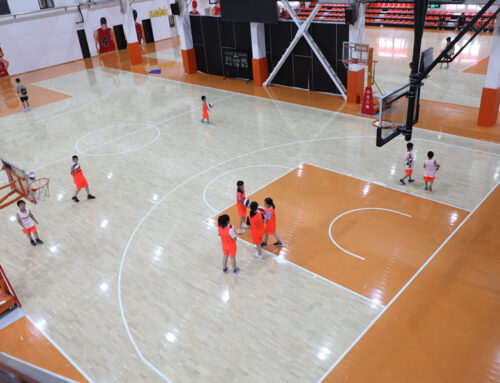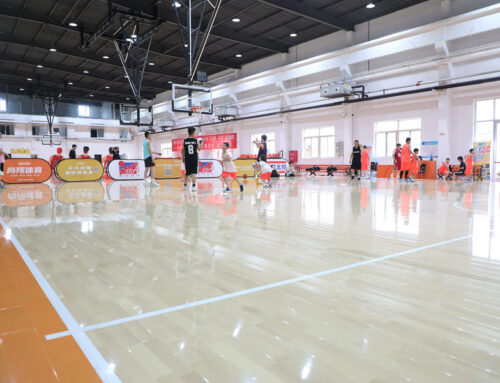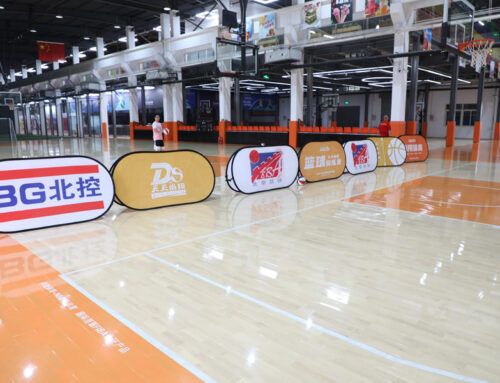
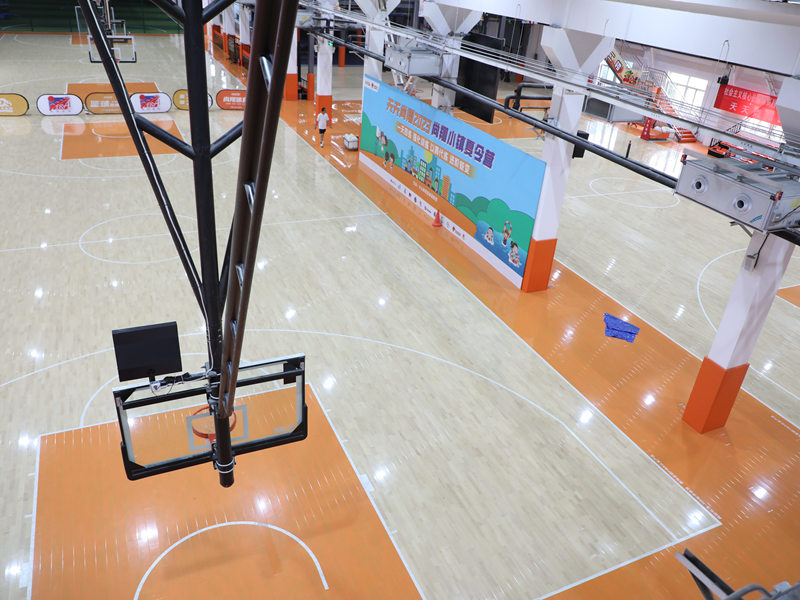
The indoor basketball court hardwood flooring industry is at an inflection point. After more than a century of dominance, hardwood faces new challenges from synthetic alternatives, evolving player expectations, and growing environmental concerns. At the same time, new technologies and materials are opening up possibilities that would have been unimaginable even a decade ago. This article explores the trends and innovations that will shape the future of hardwood basketball court flooring.
Trend 1: Engineered and Hybrid Systems
The future of hardwood flooring is likely to be engineered. Engineered hardwood, which consists of a thin layer of hardwood bonded to a stable core, offers the appearance and performance of solid hardwood with greater dimensional stability. Engineered planks are less prone to cupping, crowning, and movement, making them ideal for basketball courts in challenging climates.
Hybrid systems that combine hardwood with synthetic underlayment or cushioning are also gaining traction. These systems aim to deliver the best of both worlds — the performance and aesthetics of hardwood with the consistency and durability of synthetic materials.
Trend 2: Smart Flooring Technology
Embedded sensors are beginning to appear in high-end basketball court installations. These sensors can monitor moisture levels, temperature, flatness, and impact forces in real time, providing facility managers with data that can be used to optimize maintenance schedules and detect problems before they become serious.
In the future, smart flooring could provide even more value. Imagine a system that alerts you when the finish is wearing thin in a specific area, or when the moisture level is approaching a dangerous threshold. This technology is still in its early stages, but it has the potential to revolutionize floor maintenance.
Trend 3: Sustainability as a Standard
Sustainability is no longer a niche concern — it is becoming a standard expectation. Facilities are increasingly requiring that their hardwood come from certified forests, that finishes be low-VOC, and that end-of-life materials be recyclable.
The future will likely see the development of new finishes based on bio-based or water-based chemistries that are even more environmentally friendly than current options. Reclaimed hardwood, salvaged from old buildings and repurposed for court use, will also become more common.
Trend 4: Wider and Longer Planks
The trend toward wider and longer planks is accelerating. Wider planks (5 inches and above) provide a cleaner, more modern appearance with fewer seams. Longer planks reduce the number of end joints, creating a more stable and consistent surface.
Advances in milling technology are making it possible to produce wider planks from smaller logs, reducing waste and cost. This trend is likely to continue as players and facility owners increasingly prefer the look and feel of wide-plank hardwood.
Trend 5: The Synthetic Challenge
Synthetic flooring will continue to improve, and it will continue to capture market share in multi-use facilities and budget-conscious projects. However, it is unlikely to displace hardwood in dedicated basketball courts. The performance gap, while narrowing, remains significant, and the cultural and aesthetic value of hardwood is irreplaceable.
The most likely outcome is a coexistence — hardwood for dedicated basketball courts, synthetics for multi-use facilities. Both will continue to improve, but hardwood will remain the gold standard for the sport.
The Prediction
In 20 years, the indoor basketball court hardwood floor will look and perform better than ever. It will be smarter, more sustainable, more durable, and more beautiful. But at its core, it will still be the same material that has defined the sport for over a century — warm, responsive, and unmistakably basketball. The game changes, the players change, but the floor remains.