Owning an indoor basketball court with hardwood flooring involves more than just installation and maintenance — it also involves legal and financial responsibilities. Understanding the insurance and liability implications of your hardwood floor is essential for protecting your facility, your players, and your investment.
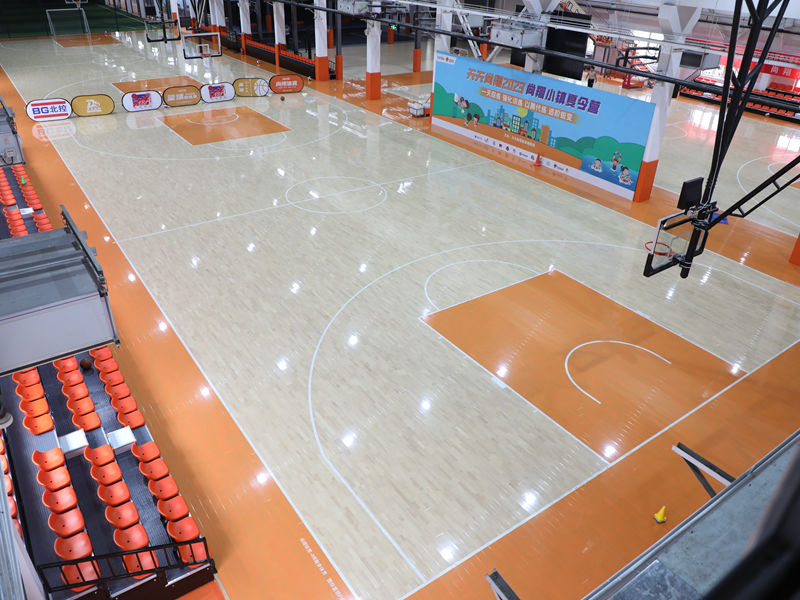
The Duty of Care
As a facility owner, you have a legal duty of care to provide a safe environment for players and spectators. This duty extends to the playing surface. A floor that is uneven, slippery, or poorly maintained can be the basis for a negligence claim if a player is injured.
Hardwood floors, when properly maintained, are among the safest surfaces available. But “properly maintained” is the key phrase. A floor that has not been recoated in years, that has visible wear in high-traffic areas, or that has moisture damage can be considered negligent if an injury occurs.
Common Liability Scenarios
The most common liability scenarios involving basketball court floors include:
Slip and fall injuries caused by a worn or contaminated finish.
Ankle or knee injuries caused by an uneven surface.
Impact injuries caused by a floor that does not meet shock absorption standards.
Injuries caused by moisture-related issues such as mold or warped planks.
In each of these scenarios, the facility owner can be held liable if it can be shown that the owner knew or should have known about the hazard and failed to address it.
Insurance Coverage
Most commercial general liability (CGL) policies cover injuries that occur on your premises, including injuries caused by the playing surface. However, coverage limits vary, and some policies exclude certain types of claims.
It is important to review your policy with an insurance professional who understands athletic facilities. Key questions to ask include:
Does the policy cover injuries caused by the playing surface?
What are the coverage limits for bodily injury and property damage?
Is there a requirement for the floor to meet specific performance standards (such as those set by the NBA or NCAA)?
Are there exclusions for wear and tear or lack of maintenance?
Meeting Performance Standards as a Liability Shield
One of the best ways to protect yourself from liability is to ensure that your floor meets or exceeds the performance standards set by recognized organizations. The NBA, NCAA, and FIBA all publish detailed standards for ball bounce, shock absorption, traction, and flatness. Having your floor tested and certified to these standards provides documentation that you have met your duty of care.
Documentation and Maintenance Records
Keeping detailed records of maintenance, inspections, and repairs is critical for liability protection. If an injury occurs and a claim is filed, your maintenance records demonstrate that you took reasonable steps to keep the floor safe. Without records, you have no way to prove that you met your duty of care.
The Bottom Line
Insurance and liability are not afterthoughts — they are integral to owning an indoor basketball court. A properly maintained hardwood floor, documented with regular inspections and meeting recognized performance standards, is your best protection against liability claims. Invest in the floor, maintain it diligently, and document everything.