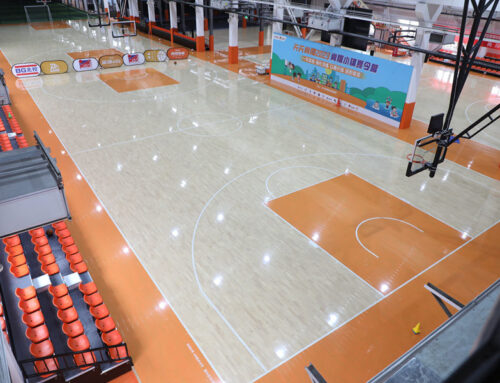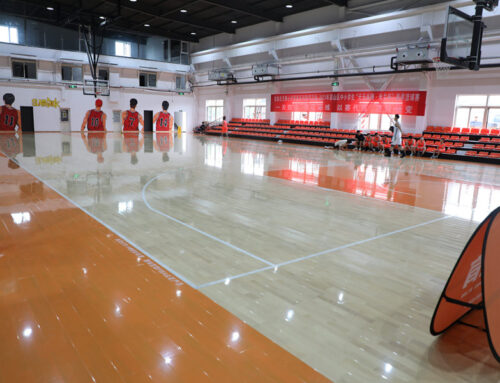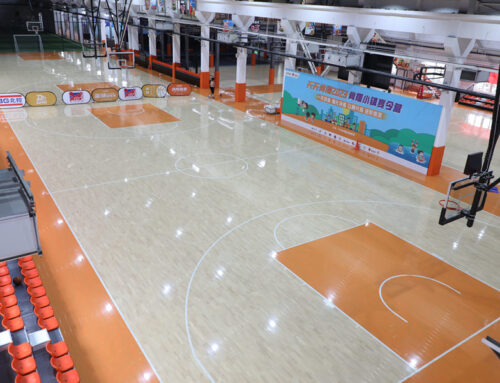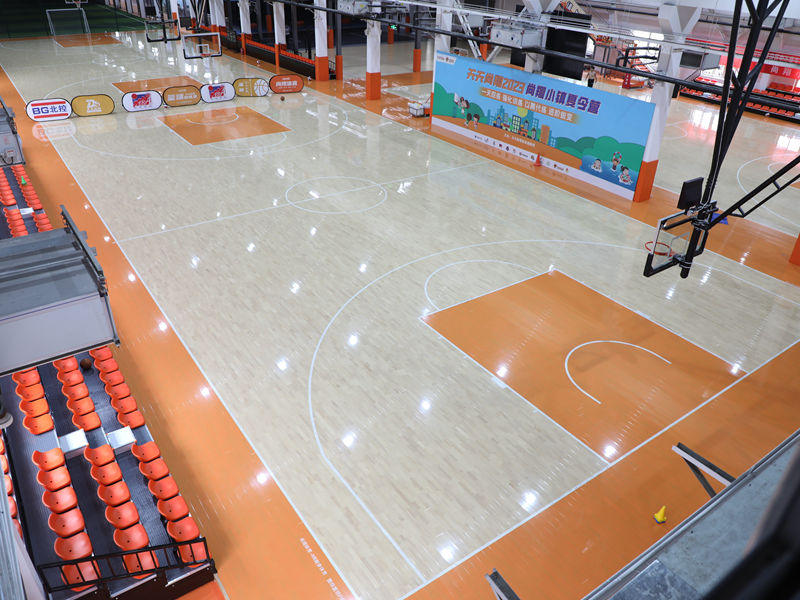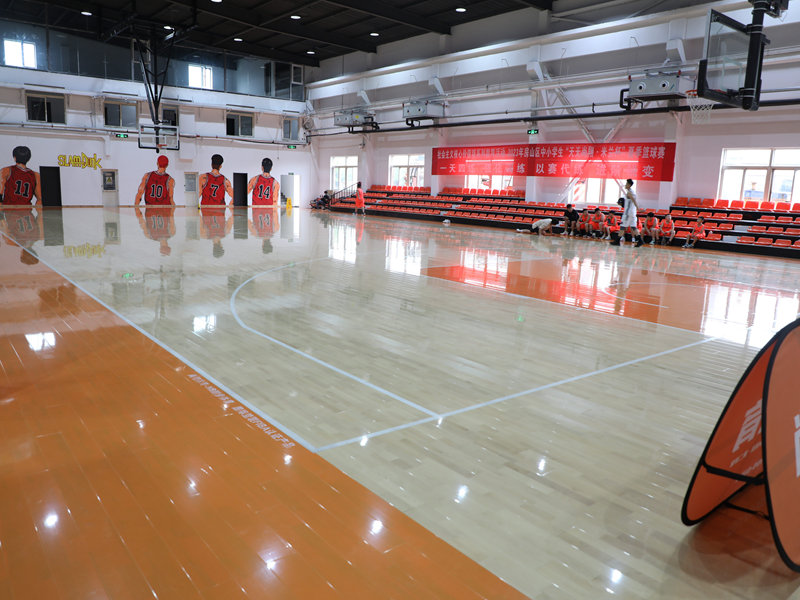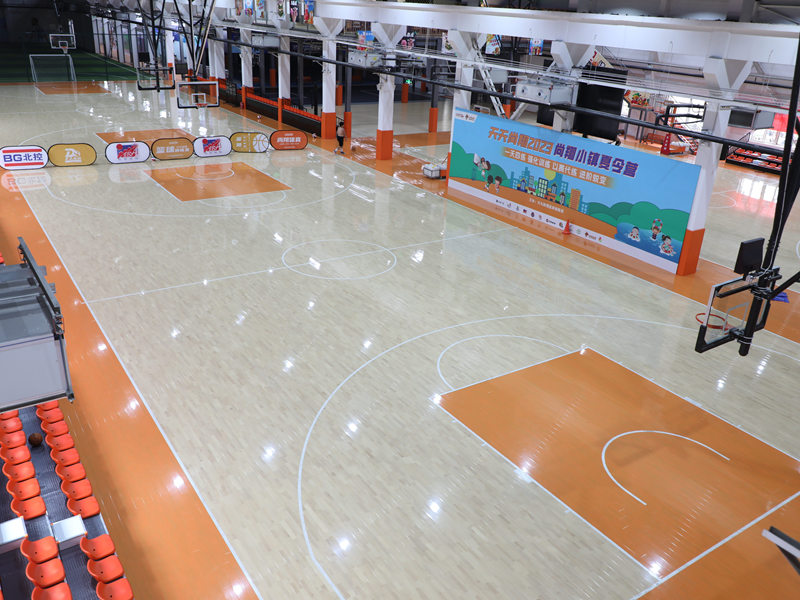
The application of printing technology in the field of indoor sports wooden flooring has gone through a long exploration process, from the initial simple pattern transfer to today’s high-precision digital direct injection, which has experienced multiple technological iterations.
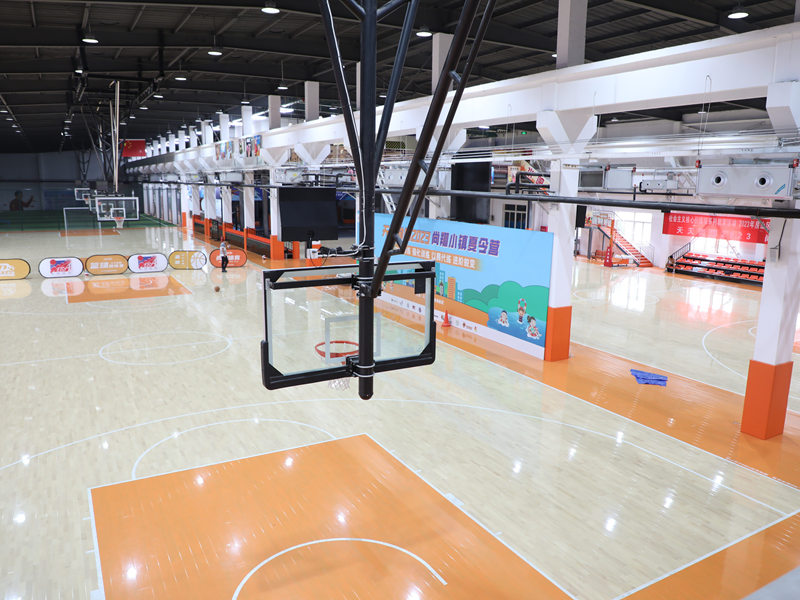
In the early stage, the pattern processing of sports wooden flooring mainly adopted the traditional transfer printing process. This process needs to print the pattern on the special transfer paper in advance, and then transfer the pattern to the surface of the floor through high temperature and high pressure. However, this process has many limitations. The pattern precision is low, the color reduction degree is poor, and it is easy to appear the problem of pattern deformation in the transfer process. Moreover, the transfer glue used in the process will release a large number of volatile harmful substances, and the environmental protection performance is far from meeting the requirements of modern sports venues. Therefore, this process was only tried in a small number of non-professional sports venues in the early stage, and was not widely promoted.
With the development of inkjet printing technology, people began to try to apply industrial inkjet printing equipment to the surface treatment of wooden flooring. The first generation of inkjet printing equipment has low nozzle precision, and the ink permeability control is not accurate enough. It is easy to cause the ink to penetrate too deep into the interior of the wood, resulting in blurred pattern edges. Moreover, the wear resistance of the ink at that time was poor, and the pattern would fade quickly after a short period of use on the sports floor. But this stage of exploration has laid a technical foundation for the subsequent development of printing technology, making people realize the huge potential of digital printing technology in the field of sports flooring.
After 2010, with the continuous breakthrough of UV curing ink technology and high-precision nozzle technology, the printing technology of sports wooden flooring has entered a stage of rapid development. The new UV ink can be instantly cured after being sprayed on the surface of the floor, which will not penetrate into the interior of the wood, and the pattern precision is greatly improved, which can reach the micron level. The environmental protection performance of the ink has also achieved a qualitative leap, no longer containing volatile harmful components, and fully meeting the environmental protection standards of indoor sports venues. At this stage, the printed sports wooden flooring began to gradually enter the public view, and was applied to some new comprehensive gymnasiums.
In recent years, with the popularization of high-precision 3D printing technology and digital color management system, the printing technology of sports wooden flooring has reached a new height. The multi-channel printing nozzle can spray a variety of inks at the same time, realizing the layered presentation of patterns, and the printed wood grain effect is almost the same as that of natural solid wood, which is difficult to distinguish with the naked eye. At the same time, the intelligent color calibration system can ensure that the color difference of different batches of printed floors is controlled within a very small range, which can meet the paving needs of large-scale professional sports venues. Today, the printing technology has become one of the mainstream surface treatment processes in the sports wooden flooring industry, and is leading the entire industry to develop in a more personalized and environmentally friendly direction.