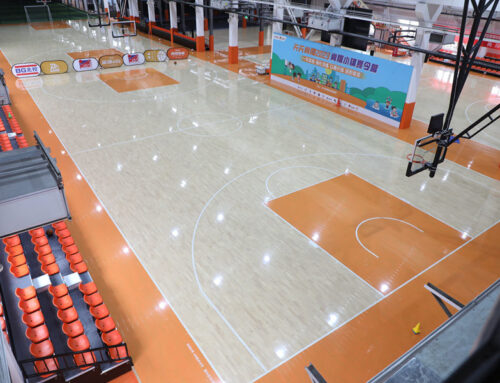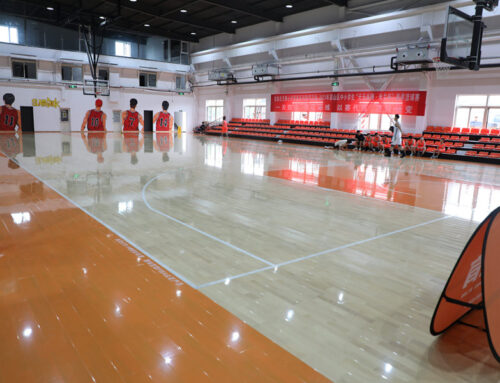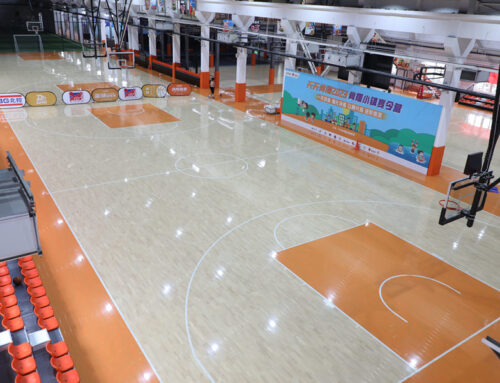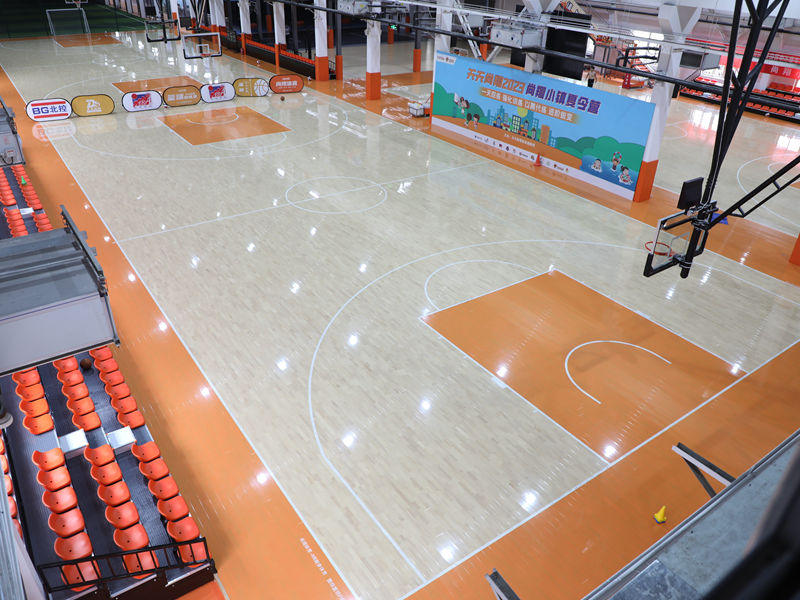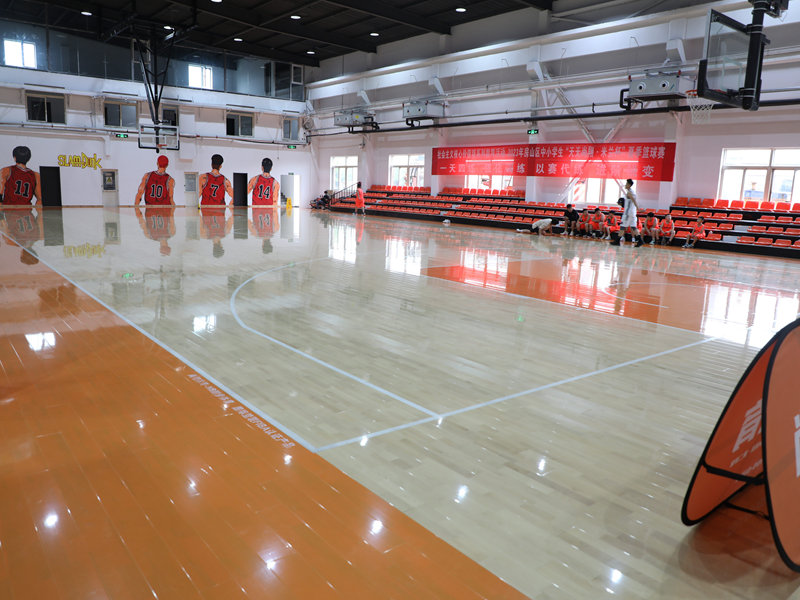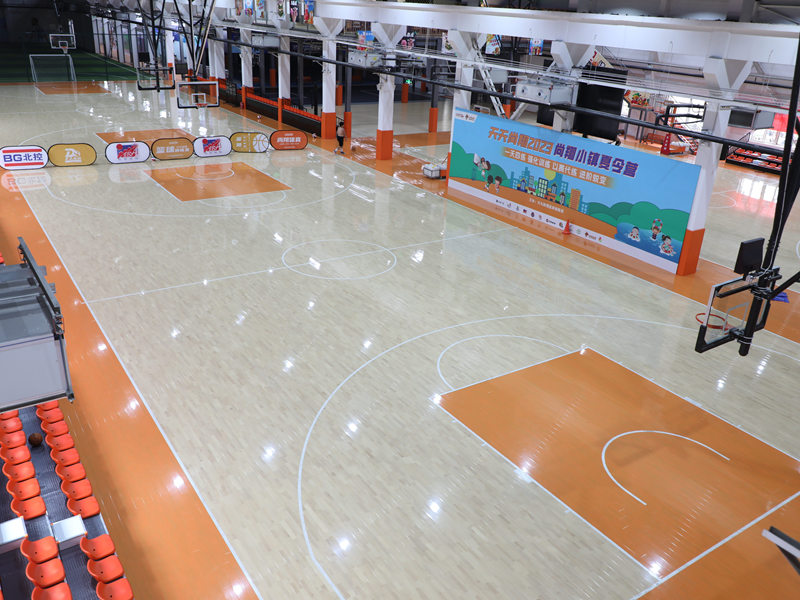
The sound insulation performance of indoor sports venues directly affects the use experience of the venue and the surrounding environment. The traditional sports wooden flooring is easy to produce a large amount of impact sound when athletes move at high speed, which not only affects the experience of other people in the venue, but also may cause noise interference to the residents or businesses on the lower floor of the venue. The printing technology can further optimize the sound insulation performance of the floor through the collaborative design with the floor structure.
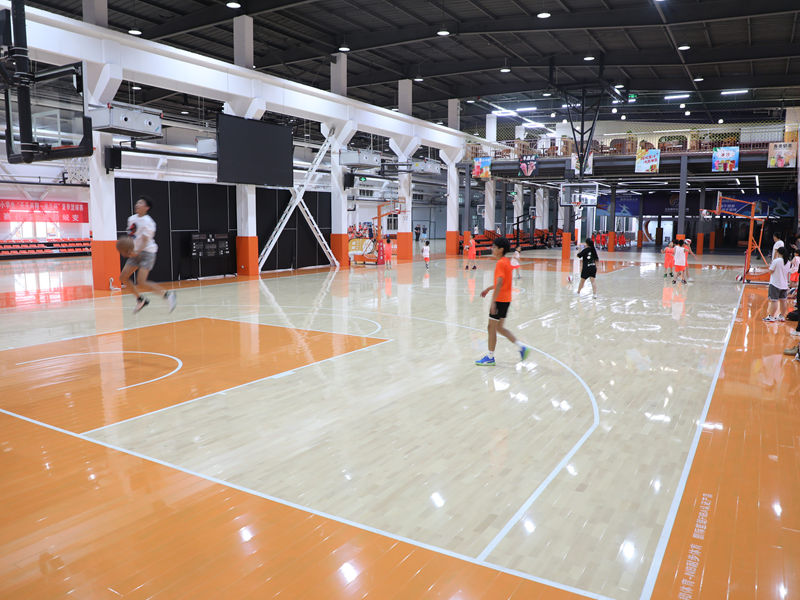
In the process of pattern printing, the sound-absorbing medium particles can be added to the special ink in a targeted manner. These tiny sound-absorbing particles are evenly distributed in the pattern layer and the subsequent wear-resistant layer. When the impact sound generated by the movement is transmitted to the surface of the floor, these sound-absorbing particles can effectively absorb the sound wave energy, reduce the reflection of the sound wave on the surface of the floor, and reduce the echo noise in the venue. After testing, the printed floor with sound-absorbing particles added can reduce the indoor echo by more than 20% compared with the traditional ordinary painted floor, making the sound environment of the entire venue more quiet and comfortable.
At the same time, the printing process can also cooperate with the bottom structure of the floor to print the buffer sound-insulating pattern on the back of the floor. These patterns are made of elastic ink with a micro-concave-convex structure. After the floor is paved, these elastic patterns on the back form a large number of tiny air cushions between the floor and the keel structure. These air cushions can effectively buffer the impact force generated by the movement, reduce the downward transmission of vibration, and greatly reduce the impact sound transmitted to the lower floor. This optimized structural design makes the impact sound insulation performance of the floor far higher than the national standard requirements, which can meet the construction requirements of the venues located in the commercial complex and the upper floors of the residential building, and avoid the noise complaint problem of the surrounding residents.
For the multi-functional venues that often hold events and performances, this optimized sound insulation performance is particularly important. When the venue holds a large-scale sports event, the cheers of the audience and the impact sound of the athletes’ movements will not form a harsh superposition effect, and the audience can clearly hear the on-site commentary and the sound of the game. When holding a cultural performance, the sound effect of the stage will not produce a messy echo on the floor, ensuring the clarity of the performance sound. This design that combines printing technology and sound insulation performance makes the adaptability of the indoor sports venue greatly enhanced, and can meet more diverse use scenarios.
It is worth mentioning that this sound insulation optimization design through the printing process does not increase the extra thickness of the floor, nor does it affect the sports performance of the floor. The elastic structure added by the printing process is very subtle, which will not change the original elastic feedback performance of the sports wooden flooring, and will not have any adverse effect on the movement of athletes. While bringing a better sound environment, it completely retains all the professional sports performance of the sports wooden flooring.