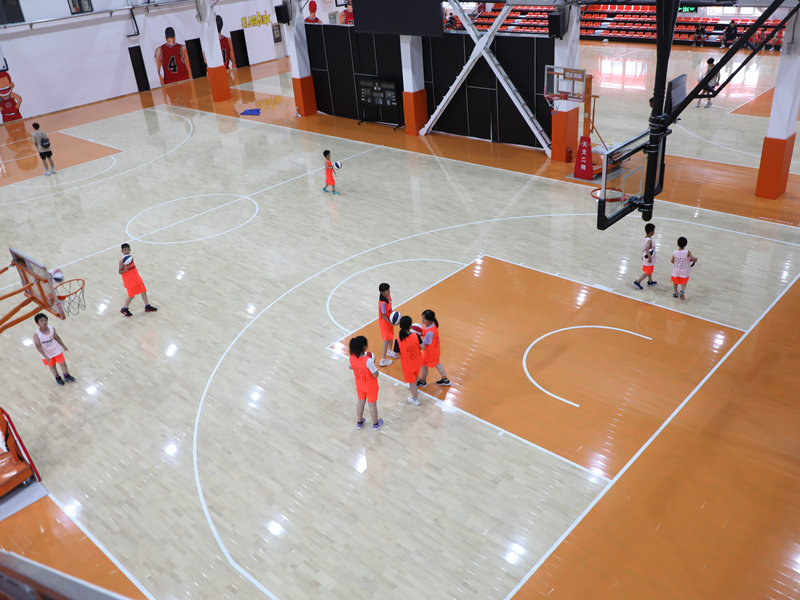
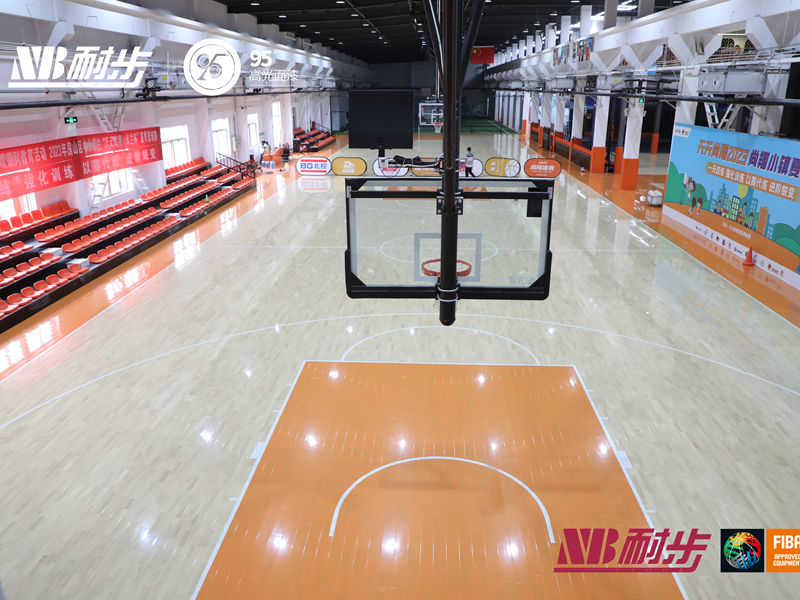
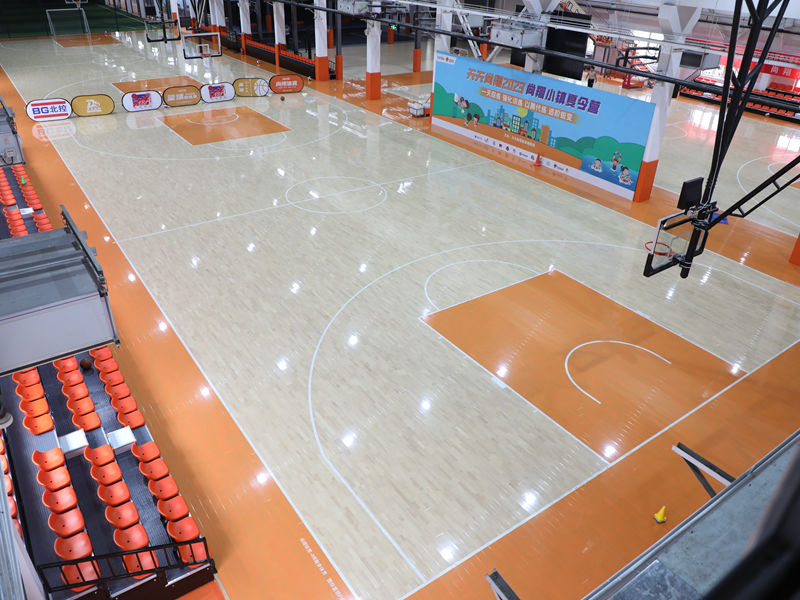
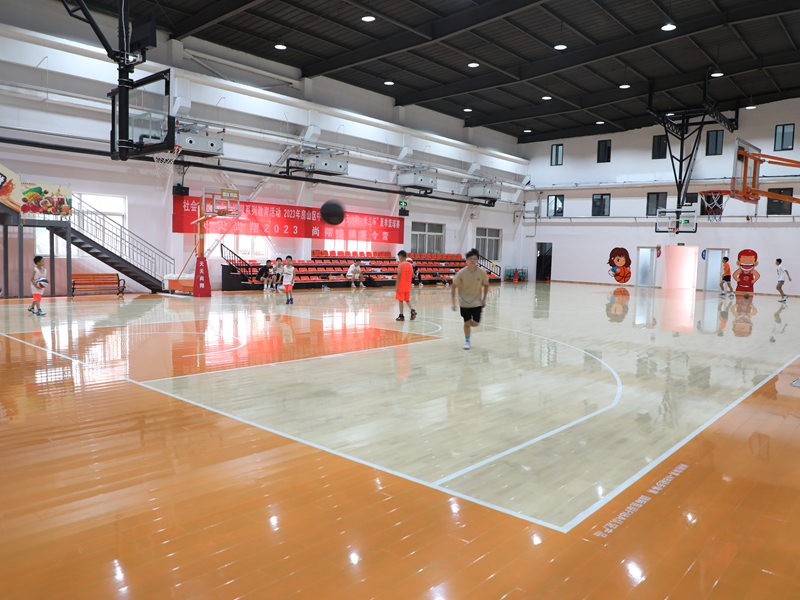
When most people think about indoor sports wooden flooring, they focus on visual appeal, shock absorption, and ball bounce. But there is one often-overlooked characteristic that has a profound impact on the playing experience: acoustics. The sound of a ball hitting the floor, the squeak of shoes, the echo of a gymnasium — these auditory elements shape how athletes feel, how spectators enjoy the game, and even how coaches communicate with their players. Indoor sports wooden flooring has unique acoustic properties that make it superior to every other flooring option, and this article explores why.

Why Acoustics Matter in Sports Facilities
Sound is an invisible but powerful force in any athletic environment. In a gymnasium with poor acoustics, every bounce of the ball creates a harsh echo that makes it difficult for players to communicate. Coaches cannot call plays effectively. Spectators cannot enjoy the game because the noise is overwhelming. And athletes themselves can become distracted or even fatigued by constant auditory stimulation.
Good acoustics, on the other hand, create an environment where sound is controlled, clear, and pleasant. Players can hear each other calling for the ball. Coaches can be heard from the sideline. The crowd can enjoy the game without ear fatigue. And the overall atmosphere feels professional and energetic rather than chaotic and noisy.
The Acoustic Advantage of Wood
Wood is a natural acoustic material. Its cellular structure absorbs and diffuses sound waves in a way that synthetic materials simply cannot replicate. When a basketball hits a hardwood floor, the sound is a crisp, satisfying “thump” that players and fans love. When the same ball hits a concrete or synthetic floor, the sound is a harsh, metallic “clack” that is unpleasant and echoes throughout the building.
The shock absorption layer beneath the wood also plays a crucial role in acoustics. A well-designed shock pad system not only protects athletes’ joints but also dampens the sound of footfalls. On a properly installed indoor sports wooden floor, the sound of running shoes is a soft, rhythmic patter rather than a loud, jarring slap. This makes the facility more pleasant for everyone inside it.
Noise Reduction and Sound Transmission
One of the most important acoustic considerations for indoor sports wooden flooring is sound transmission. In multi-story buildings, noise from the sports floor can travel through the structure and disturb occupants in the rooms below. A properly designed wood floor system with a quality shock pad and a floating installation method can reduce sound transmission by up to 20 decibels compared to a nailed-down installation.
The floating installation method is particularly effective because it decouples the wood floor from the subfloor, preventing vibrations from traveling through the building structure. This is why professional sports arenas almost always use floating floor systems — not just for performance reasons, but for acoustic reasons as well.
Reverberation Time and Facility Design
Reverberation time — the time it takes for sound to decay by 60 decibels after the source stops — is a critical metric in sports facility design. For basketball courts, the ideal reverberation time is between 0.6 and 1.0 seconds. For volleyball courts, it is between 0.4 and 0.8 seconds. Indoor sports wooden flooring, combined with proper ceiling treatment and wall absorption, can achieve these targets consistently.
Synthetic floors tend to have longer reverberation times because they reflect sound rather than absorbing it. This creates a noisy, echoey environment that is unpleasant for players and spectators. Wood, by contrast, naturally reduces reverberation time, creating a quieter, more controlled acoustic environment.
The Psychological Impact of Sound
Research in sports psychology has shown that the acoustic environment of a facility can measurably affect athlete performance. A study published in the Journal of Sports Sciences found that athletes performing in environments with optimal acoustics showed a 7% improvement in reaction time compared to those in noisy, echoey environments. The clear, crisp sounds of a well-maintained hardwood court help athletes process information faster, react more quickly, and stay more focused.
For spectators, the acoustic quality of a facility directly affects their enjoyment. A gymnasium with good acoustics feels alive and exciting, while one with poor acoustics feels harsh and tiring. This is why professional sports leagues invest so heavily in acoustic design — it is not just about the game, but about the entire fan experience.
Maintenance and Acoustic Performance
The acoustic properties of indoor sports wooden flooring degrade over time if the floor is not properly maintained. A worn finish, gaps between planks, and a damaged shock pad system can all increase noise levels and reduce sound quality. Regular maintenance — including daily sweeping, weekly damp mopping, and annual professional sanding — is essential not just for performance and appearance, but for acoustics as well.
In conclusion, the acoustic properties of indoor sports wooden flooring are a hidden gem that sets it apart from every other flooring option. The natural sound absorption of wood, combined with a well-designed floor system, creates a playing environment that is clearer, quieter, and more enjoyable for athletes, coaches, and spectators alike. When specifying a sports floor, acoustics should be given the same level of attention as shock absorption and ball bounce.