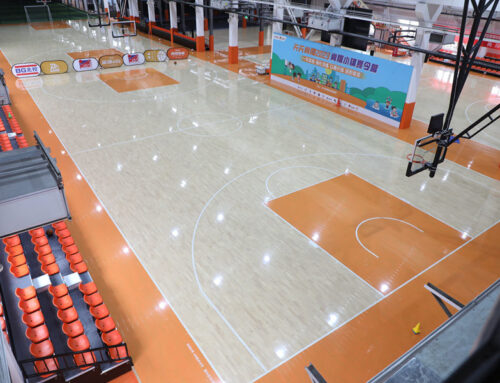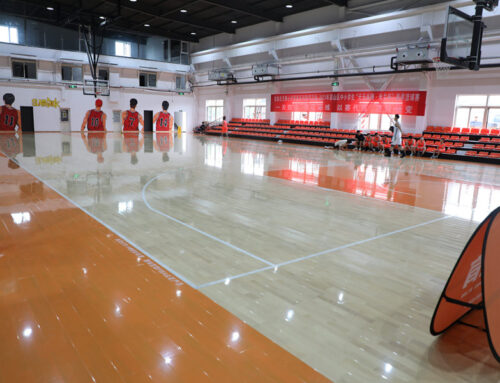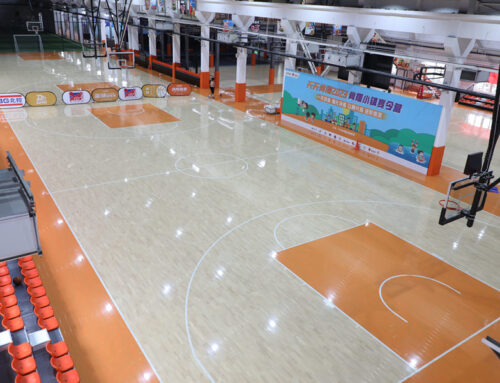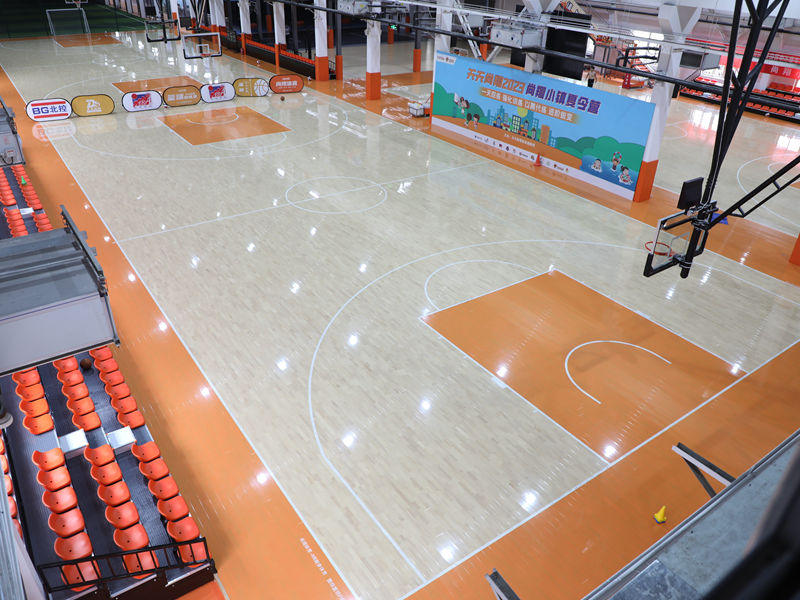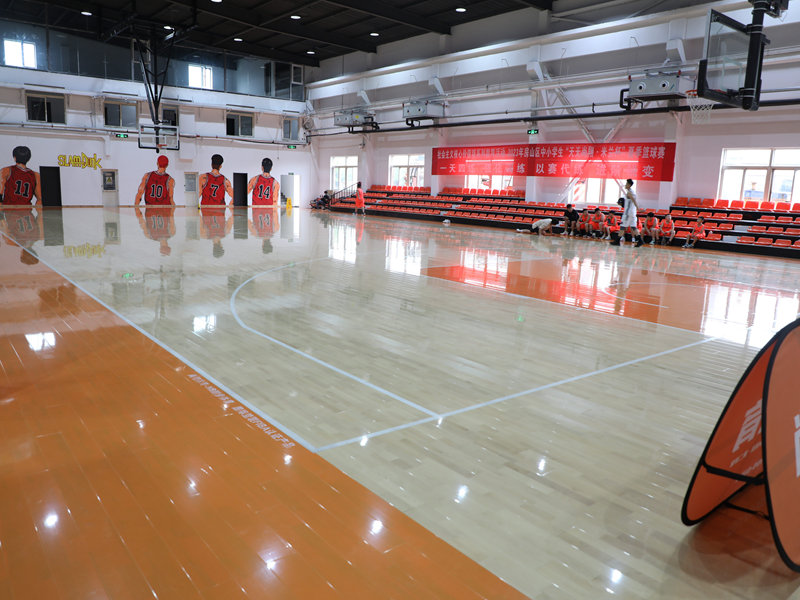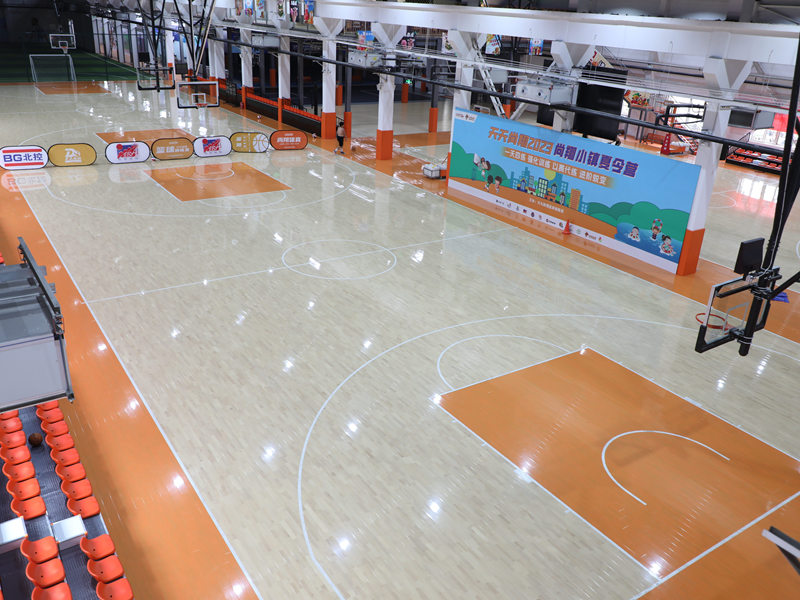
Safety is the foundation of any sports facility. A court that looks great but puts players at risk is a liability, not an asset. Portable basketball court wood flooring incorporates several safety features that are often overlooked in the purchasing process. Understanding these features helps you choose a system that protects your players.
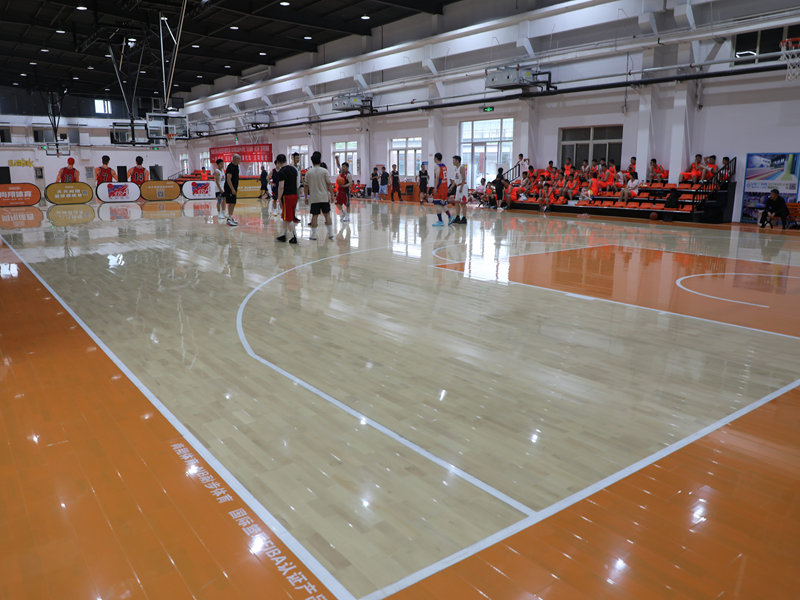
The most important safety feature is shock absorption. Basketball is a high-impact sport. Players land from jumps, change direction abruptly, and collide with each other hundreds of times per game. A hard surface with no shock absorption transmits all of that impact directly to the bones and joints. Portable flooring systems address this through panel thickness, core material, and optional underlayment. Look for a system that provides at least 2.3mm of vertical deformation under a standard point load. This is the minimum recommended by most sports safety organizations.
Surface friction is the second critical safety factor. If the floor is too slippery, players cannot stop or change direction safely, leading to falls and injuries. If the floor is too sticky, players’ feet can get stuck, leading to ankle sprains and knee injuries. The ideal coefficient of friction for basketball is between 0.4 and 0.6. Quality portable flooring achieves this through a properly finished hardwood surface. The finish should be matte or semi-gloss, as high-gloss finishes tend to reduce friction.
Flatness and evenness are safety features that people rarely think about. A panel that sticks up even five millimeters above its neighbors is a tripping hazard. A low spot can cause the ball to behave unpredictably, leading to awkward landings. Modern portable systems use precision-milled edges and robust connection systems to maintain flatness across the entire court. Check flatness regularly with a straightedge, especially after transport.
Connection security is unique to portable systems and deserves special attention. If panels come loose during play, they create tripping hazards and uneven surfaces. Quality systems use interlocking edges reinforced with metal clips or adhesive strips that hold panels firmly in place. Inspect all connections before every use, and tighten or replace any that feel loose.
Perimeter safety is also important. The edges of a portable court need to be clearly defined and protected. Rubber or foam edging should be installed around the entire perimeter to cover expansion gaps and provide a visual boundary. This edging also serves as a shock-absorbing barrier if a player runs off the court.
Fire safety is rarely discussed but worth mentioning. Wood is a combustible material, and any sports facility must meet fire safety codes. Quality portable flooring uses fire-retardant treatments that reduce flammability and slow the spread of fire. Check that your flooring meets the fire safety requirements for your jurisdiction.
By prioritizing these safety features when selecting your portable basketball court wood flooring, you create a playing environment that is not only high-performing but also genuinely safe for everyone who uses it.