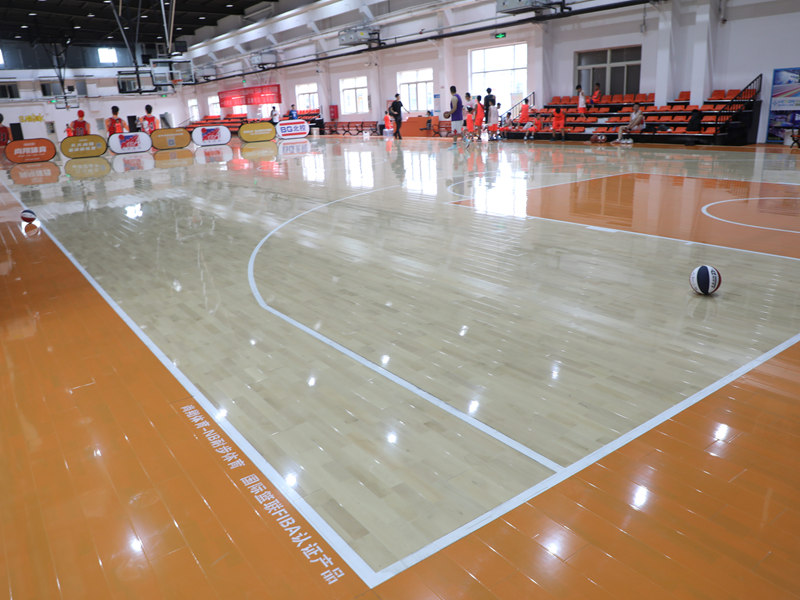
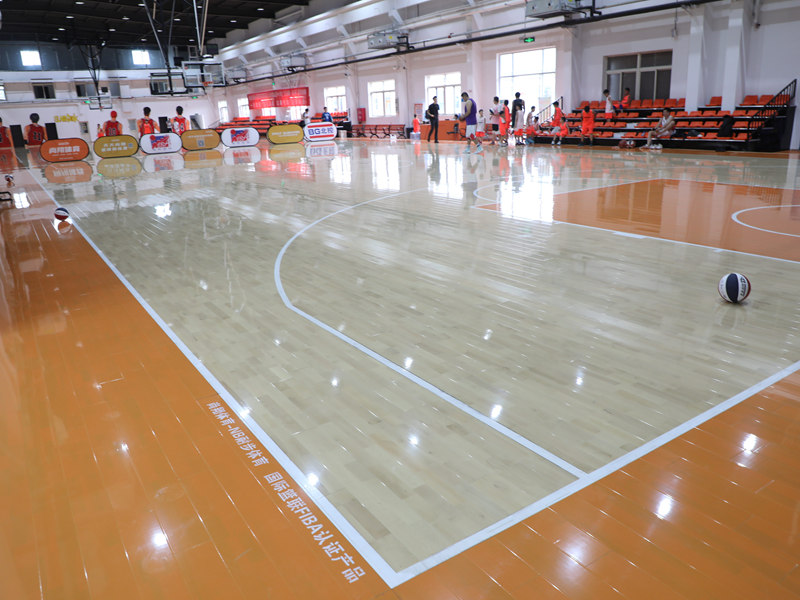
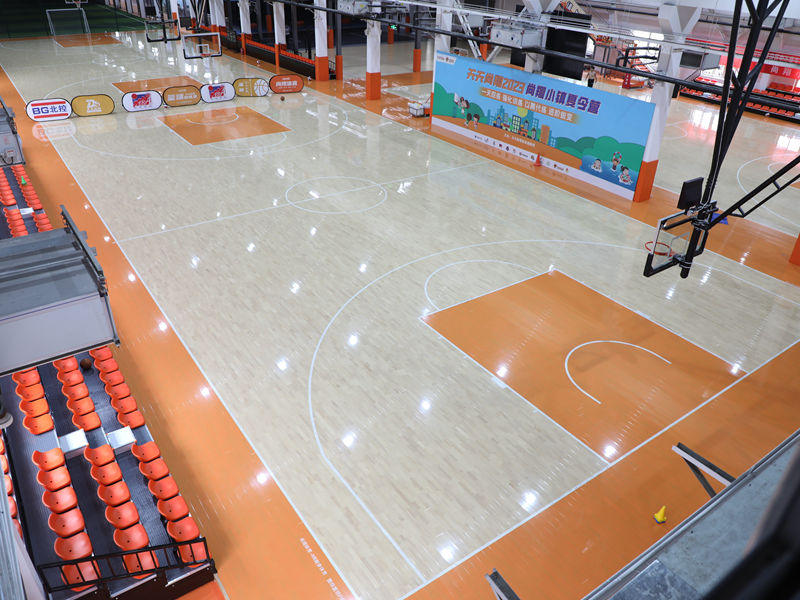
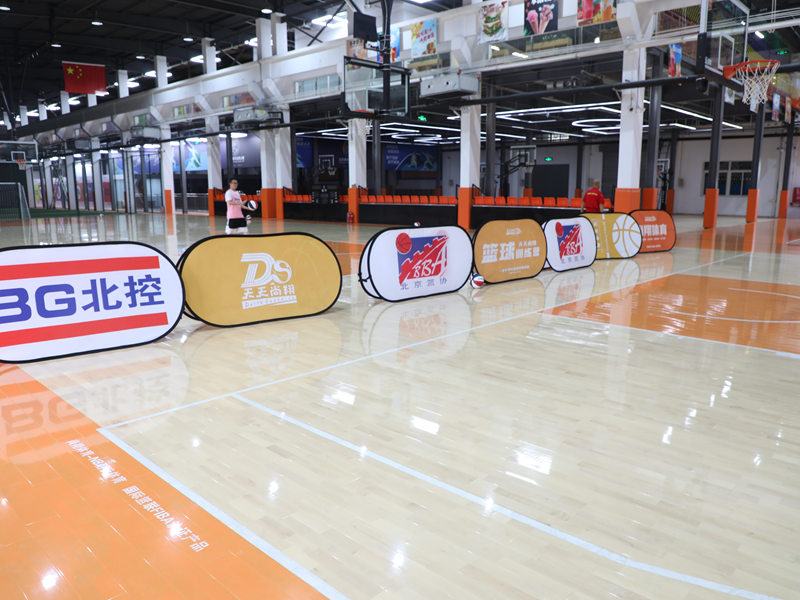
Not all indoor sports are created equal, and neither are the flooring requirements for each sport. A floor that is perfect for basketball may not be ideal for volleyball, and a floor that works great for handball may be overkill (or under-spec) for a fitness class.

In this article, we will explore the specific flooring requirements for the most popular indoor sports and explain how to choose the right wood floor for each one.
Basketball: The Gold Standard
Basketball is the sport that has driven the development of indoor sports wooden flooring more than any other. The NBA has used maple floors since the 1940s, and the standards they have established are the benchmark for basketball courts worldwide.
Recommended species: Hard maple (Acer saccharum), Select or No. 1 Common grade.
Recommended thickness: 3/4 inch (19mm) solid hardwood, nail-down installation.
Recommended finish: Polyurethane, 3 to 5 sealer coats + 2 to 3 finish coats, UV-cured.
Performance requirements (per NBA standards):
Vertical deformation: 2.3mm to 5.3mm under a 1,500 lb load.
Ball bounce: 49 to 54 inches from a 72-inch drop.
Friction (COF): 0.4 to 0.6.
Flatness: No more than 1/8 inch deviation over 10 feet.
Why maple? Maple is the hardest domestic wood species commonly used for sports flooring, making it extremely resistant to the scratching and gouging caused by basketball shoes. Its consistent density ensures uniform ball bounce, and its light color provides excellent visibility for players and broadcast cameras.
Special considerations: Basketball courts experience the highest impact forces of any indoor sport, so the subfloor and installation system must be engineered for maximum stability and shock absorption. A high-quality shock pad is recommended under the subfloor.
Volleyball: Precision and Consistency
Volleyball is played on a larger surface than basketball, and the demands on the floor are somewhat different. The ball is lighter and travels at lower speeds, but the floor must still provide consistent bounce and excellent traction for the quick lateral movements that volleyball requires.
Recommended species: Hard maple, beech, or white oak.
Recommended thickness: 3/4 inch solid hardwood or 5/8 inch engineered hardwood.
Recommended finish: Polyurethane, similar to basketball.
Performance requirements (per FIVB standards):
Vertical deformation: 2.3mm to 5.3mm.
Ball bounce: Similar to basketball, approximately 49 to 54 inches.
Friction (COF): 0.4 to 0.6.
Special considerations: Volleyball courts are larger than basketball courts (18m x 9m vs. 28m x 15m), so the total cost of the floor is higher. Beech is a popular and cost-effective alternative to maple for volleyball courts, especially in Europe. Theended finish**: Polyurethane or oil finish.
Performance requirements:
Friction (COF): 0.5 to 0.7 (slightly higher than ball sports for better traction).
Vertical deformation: Less critical, but should still be within 3mm to 5mm.
Special considerations: Badminton shoes have very thin, non-marking soles, so the floor finish must be smooth enough to prevent slipping but not so smooth that players cannot change direction quickly. Many badminton facilities use a slightly textured finish to improve traction.
Fitness and Multipurpose: Versatility Is Key
Many modern sports facilities are multipurpose, hosting everything from basketball and volleyball to yoga, dance, and fitness classes. For these facilities, the floor must be versatile enough to handle a wide range of activities.
Recommended species: Red oak or white oak (for a warm, versatile look) or maple (for a more professional appearance).
Recommended thickness: 3/4 inch solid hardwood or 5/8 inch engineered hardwood.
Recommended finish: Polyurethane with a matte or satin sheen (less glossy than a traditional sports finish, which reduces glare and improves visibility for fitness activities).
Performance requirements:
Must meet the requirements of the most demanding sport that will be played (usually basketball or volleyball).
Friction (COF): 0.4 to 0.6.
Vertical deformation: 2.3mm to 5.3mm.
Special considerations: Multipurpose floors take a beating from a variety of activities, choose for our buildings and facilities matter more than ever. Indoor sports wooden flooring, when sourced and installed responsibly, is one of the most sustainable and environmentally friendly flooring options available. In this article, we will explore the environmental impact of wood flooring, compare it to synthetic alternatives, and show you how to make the greenest choice for your facility.
Wood: A Renewable Resource
The most fundamental environmental advantage of wood flooring is that wood is a renewable resource. Trees can be harvested and replanted, creating a continuous cycle of growth and renewal. When wood is sourced from responsibly managed forests, the rate of harvest is equal to or less than the rate of regrowth, ensuring that the forest ecosystem is preserved for future generations.
The two main certification systems for responsibly managed forests are:
FSC (Forest Stewardship Council): The most widely recognized certification, FSC ensures that forests are managed in a way that protects biodiversity, respects the rights of indigenous peoples and workers, and maintains the forest’s ecological function.
PEFC (Programme for the Endorsement of Forest Certification): Similar to FSC, PEFC is a global certification system that promotes sustainable forest management.
When you purchase wood flooring that is FSC or PEFC certified, you can be confident that the wood came from a responsibly managed forest. Many leading sports flooring manufacturers now offer FSC-certified products, making it easier than ever to make a sustainable choice.
Carbon Sequestration: Wood Fights Climate Change
One of the most compelling environmental arguments for wood flooring is carbon sequestration. Trees absorb carbon dioxide (CO2) from the atmosphere as they grow, storing the carbon in their wood. When a tree is harvested and made into a floor, that carbon remains locked in the wood for the life of the product, which can be 30 to 50 years or more.
In contrast, synthetic flooring materials (vinyl, rubber, polypropylene) are made from petroleum, a fossil fuel that releases carbon when extracted, processed, and eventually discarded. The production of synthetic flooring generates significant greenhouse gas emissions, contributing to climate change.
A study by the Athena Sustainable Materials Institute found that wood flooring has a carbon footprint that is 30% to 50% lower than vinyl flooring over a 50-year life cycle. When you factor in the carbon sequestration benefit, the advantage of wood is even greater.
Indoor Air Quality: Wood Is Healthier
Indoor air quality is a growing concern, especially in enclosed sports facilities where athletes and spectators spend hours breathing recycled air. Synthetic flooring materials can release volatile organic compounds (VOCs) into the air, including phthalates, formaldehyde, and other harmful chemicals. These VOCs can cause headaches, respiratory problems, and other health issues.
Wood flooring, by contrast, emits very low levels of VOCs. A properly finished wood floor with a water-based polyurethane finish can have VOC emissions that are near zero. Many green building certification programs (LEED, BREEAM, WELL) give credit for using low-VOC materials, and wood flooring is one of the easiest ways to earn these credits.
End of Life: Wood Is Biodegradable
At the end of its useful life, wood flooring can be recycled, repurposed, or composted. Old wood planks can be milled into mulch, used as biomass fuel, or repurposed into furniture, paneling, or other products. Wood is 100% biodegradable, meaning it will decompose naturally without releasing harmful chemicals into the environment.
Synthetic flooring, on the other hand, is not biodegradable. Vinyl floors contain chlorine and other chemicals that can leach into the soil and groundwater when disposed of in a landfill. Rubber floors can take hundreds of years to decompose. The environmental cost of disposing of synthetic flooring is significant and growing.
Energy Efficiency: Wood Insulates Better
Wood is a natural insulator, meaning it does not transfer heat or cold as quickly as concrete, metal, or synthetic materials. This has several environmental benefits:
A wood floor reduces the load on HVAC systems, saving energy and reducing greenhouse gas emissions.
A wood floor helps maintain a more stable indoor temperature, reducing the need for heating in winter and cooling in summer.
A wood floor does not radiate heat or cold the way concrete or tile does, making the facility more comfortable for occupants.
The Sustainability of Engineered vs. Solid Hardwood
One common question is whether engineered hardwood is more or less sustainable than solid hardwood. The answer depends on how you look at it:
Engineered hardwood uses less hardwood in the top layer, which means fewer trees are harvested per square foot of flooring. This can be seen as a positive from a resource conservation perspective.** with multiple refinishings. Over its lifetime, a solid hardwood floor may actually use fewer total resources than an engineered floor that needs to be replaced two or three times.
The most sustainable choice is solid hardwood from a responsibly managed forest, installed with a low-VOC finish and maintained properly over its lifetime.
How to Make Your Sports Floor as Green as Possible
Choose FSC or PEFC certified wood.
Specify a water-based polyurethane finish with low or zero VOCs.
Opt for solid hardwood over engineered (for maximum lifespan).
Use a subfloor system with recycled content (some plywood and OSB products contain recycled wood fibers).
Install a high-quality finish to maximize the time between refinishing.
Maintain the floor properly to extend its life.
Recycle or repurpose the floor at the end of its life.
Conclusion
Indoor sports wooden flooring is one of the most environmentally responsible choices you can make for your facility. It is renewable, carbon-sequestering, low-VOC, biodegradable, and energy-efficient. When compared to synthetic alternatives, wood is clearly the greener option. By choosing responsibly sourced wood and maintaining it properly, you can create a sports facility that is not only great for athletes but also great for the planet.