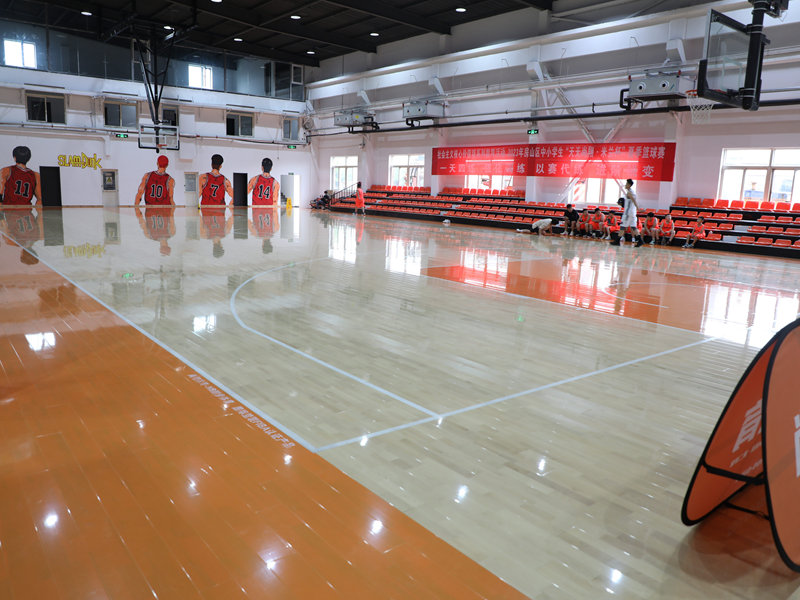
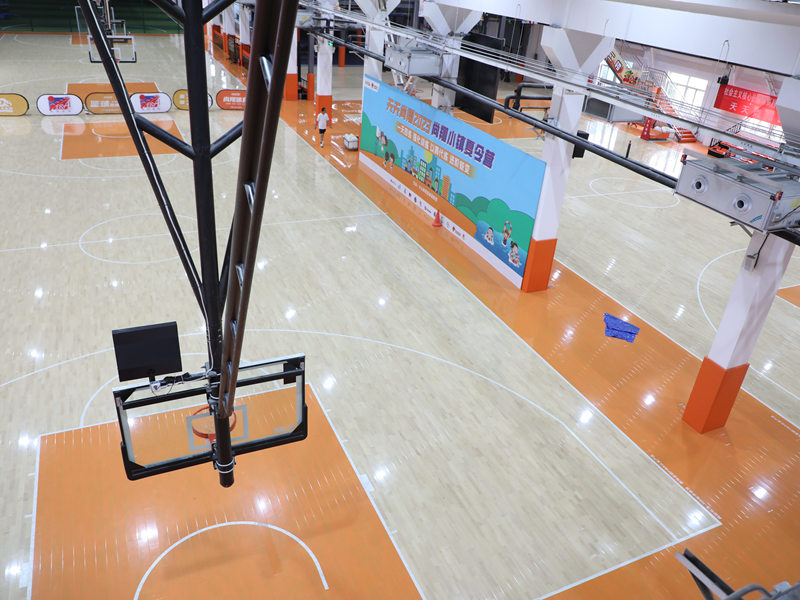
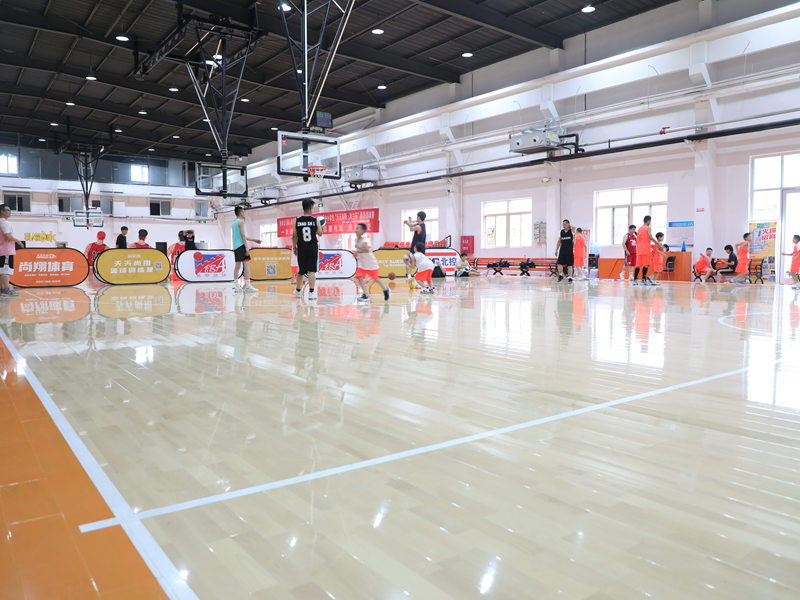
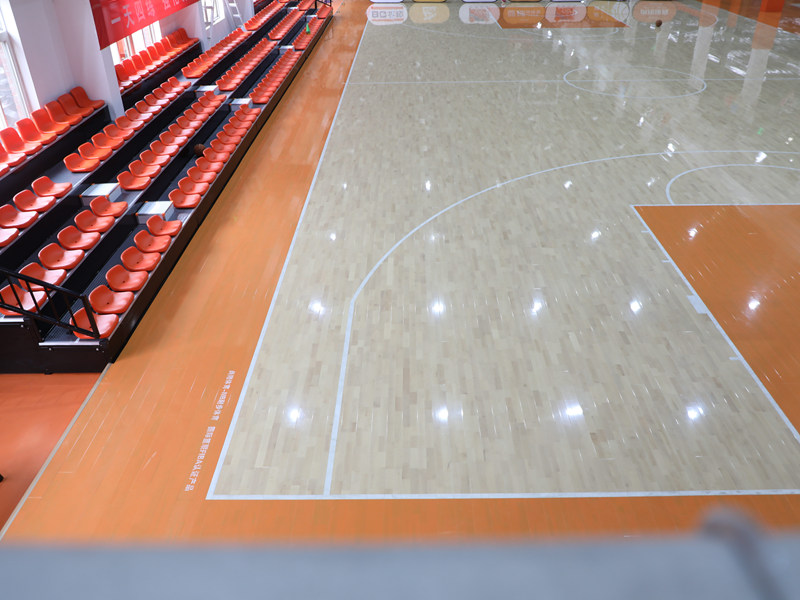
For decades, the debate between hardwood and synthetic basketball court surfaces has raged on. Synthetic surfaces (made from polypropylene tiles, rubber, PVC, or other materials) have gained popularity in recent years, largely due to their lower upfront cost and lower maintenance requirements. But does synthetic really compete with hardwood? In this article, we will compare the two options across every important category.

Ball Bounce
| Feature | Hardwood | Synthetic |
|---|---|---|
| Consistency | Excellent — very uniform | Good, but can vary by tile |
| Height | 53-58″ (NBA standard) | 45-55″ (varies by product) |
| Predictability | 0,000 | $15,000-30,000 |
| Total 30-Year Cost | $140,000-330,000 | $105,000-270,000 |
Winner: Depends on usage — For high-use facilities, hardwood is cheaper over 30 years. For low-use facilities, synthetic may be more economical.
Aesthetics
| Feature | Hardwood | Synthetic |
|---|---|---|
| Appearance | Classic, warm, beautiful | Functional, modern |
| Fan Appeal | Very high | Moderate |
| “Feel” | Premium | Adequate |
Winner: Hardwood — There is no substitute for the look and feel of real hardwood.
The Verdict
| Category | Winner |
|---|---|
| Ball Bounce | Hardwood |
| Shock Absorption | Hardwood |
| Traction | Tie |
| Durability | Hardwood |
| Maintenance | Synthetic |
| Cost (30-yr) | Tie (depends on use) |
| Aesthetics | Hardwood |
| Overall | Hardwood |
For competitive play, professional settings, and facilities that want the best possible experience, hardwood is the clear winner. For budget-conscious recreational facilities with low usage, synthetic is a viable alternative for anything serious, there is no substitute for real hardwood.