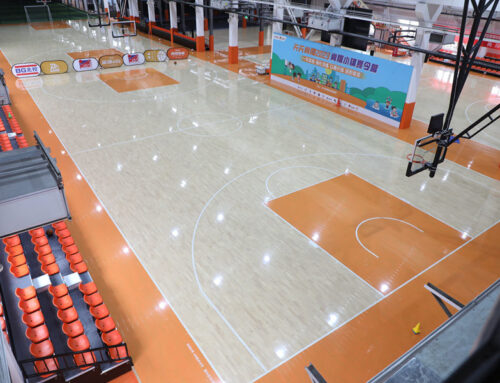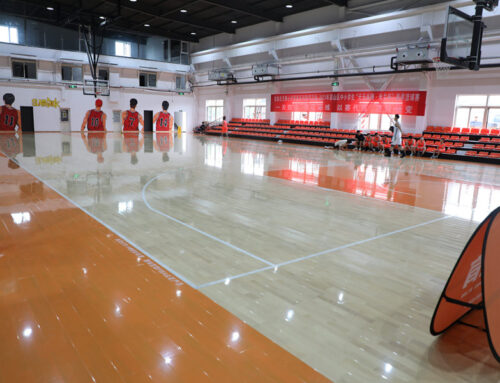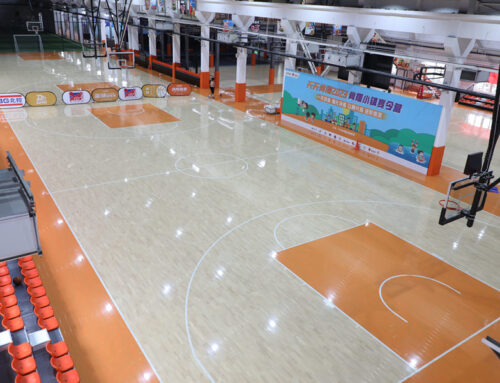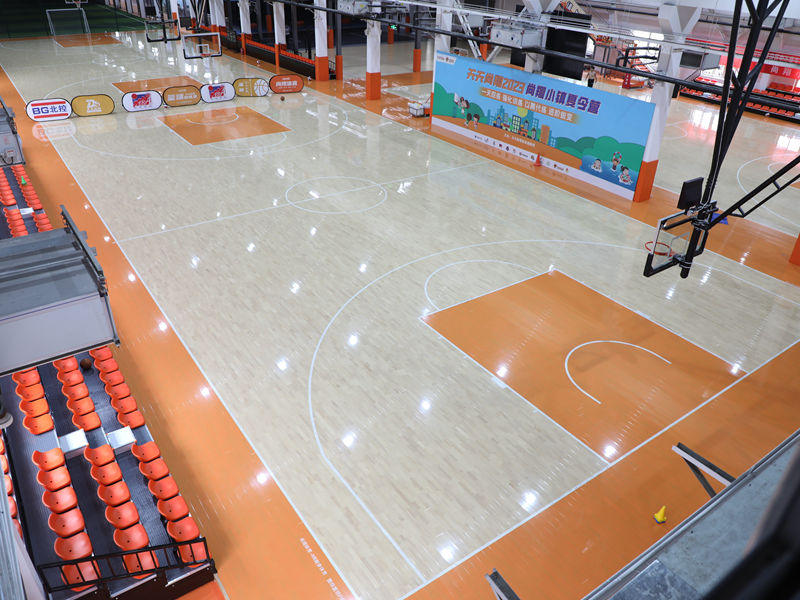
In an age of increasing environmental awareness, the materials we use to build our facilities**
One of the environmental concerns with indoor sports flooring is the finish. Traditional polyurethane finishes are made from petroleum-based chemicals and can release volatile organic compounds (VOCs) into the air. VOCs contribute to indoor air pollution and can cause health problems for athletes, coaches, and facility staff.
Fortunately, the indoor sports flooring industry has made significant progress in developing eco-friendly finishes. Water-based polyurethane finishes are now the standard for most indoor sports applications. They contain significantly fewer VOCs than traditional finishes and are much safer for indoor air quality.
Some manufacturers are also exploring bio-based finishes made from plant oils and other natural ingredients. These finishes offer excellent performance with an even lower environmental impact. When choosing a finish for your indoor sports floor, look for products that are certified low-VOC or zero-VOC.
Longevity and Waste Reduction
One of the best environmental arguments for wooden flooring is its longevity. A quality hardwood indoor sports floor can last for 30 to 50 years or more with proper maintenance. This means fewer replacements and less waste over time.
When a wooden sports floor does reach the end of its life, the wood can often be repurposed or recycled. Old planks can be used for furniture, decorative wall panels, or other projects. The wood can also be chipped and used as mulch or biomass fuel. In contrast, synthetic sports surfaces typically end up in a landfill when they are replaced, contributing to the growing problem of plastic waste.
Energy Efficiency and Climate Control
Wooden floors also contribute to the energy efficiency of indoor sports facilities. Wood is a natural insulator, which means it helps maintain a consistent temperature in the facility. This reduces the replaced every 5 to 10 years. Even the best synthetic products degrade over time due to UV exposure, wear, and chemical breakdown. This means that over a 30-year period, a synthetic floor may need to be replaced three to six times, while a hardwood floor may only need to be refinished two or three times.
The long lifespan of wooden floors also means less waste. When a synthetic surface is replaced, the old material often ends up in a landfill. When a wooden floor is refinished, the existing material is retained and reused.
Cost Comparison: Upfront vs. Lifetime
The upfront cost of indoor sports wooden flooring is higher than synthetic alternatives. A professional-grade hard maple court can cost 50,000 to 150,000 dollars or more, while a synthetic court may cost 20,000 to 60,000 dollars. However, when you factor in the lifetime cost, wood is often the more economical choice.
Over a 30-year period, a synthetic floor may cost 60,000 to 180,000 dollars when you include multiple replacements. A hardwood floor, including installation, refinishing, and maintenance, may cost 80,000 to 150,000 dollars. The difference is not as large as the upfront cost suggests, and the hardwood floor provides significantly better performance throughout its life.
Maintenance Requirements
Indoor sports wooden flooring requires more daily maintenance than synthetic surfaces. The floor must be swept or dust-mopped daily, mopped regularly,
Why Climate Control Matters
Wood is a hygroscopic material, meaning it absorbs and releases moisture in response to changes in the surrounding environment. When the humidity is high, the wood absorbs moisture and expands. When the humidity is low, the wood loses moisture and contracts. This expansion and contraction is normal and expected, but if the changes are too extreme or too rapid, they can cause damage to the floor.
The most common problems caused by poor climate control are cupping, crowning, gapping, and buckling. Cupping occurs when the edges of a plank are higher than the center, creating a concave shape. Crowning is the opposite — the center of the plank is higher than the edges. Gapping occurs when the planks shrink and create visible gaps between them. Buckling occurs when the wood expands so much that the planks push up against each other, creating waves or ridges in the floor.
All of these problems affect the performance of the floor. A cupped or crowned floor will not provide a consistent ball bounce, and gapping can create tripping hazards and allow moisture to enter the wood. Buckling can cause the finish to crack and the planks to separate.
The Ideal Climate for Indoor Sports Wooden Flooring
The ideal climate for indoor sports wooden flooring is a temperature between 18 and 24 degrees Celsius (65 to 75 degrees Fahrenheit) and a relative humidity between 35 and 50 percent. These conditions keep the wood at a stable moisture content of 6 to 8 percent, which is the optimal range for performance and durability.
Maintaining these conditions year-round is essential. In the summer, when the air is floor that performs at its best for decades.
In conclusion, if you have an indoor sports wooden floor, you must invest in climate control. It is the single most important factor in maintaining the performance, appearance, and longevity of your floor.