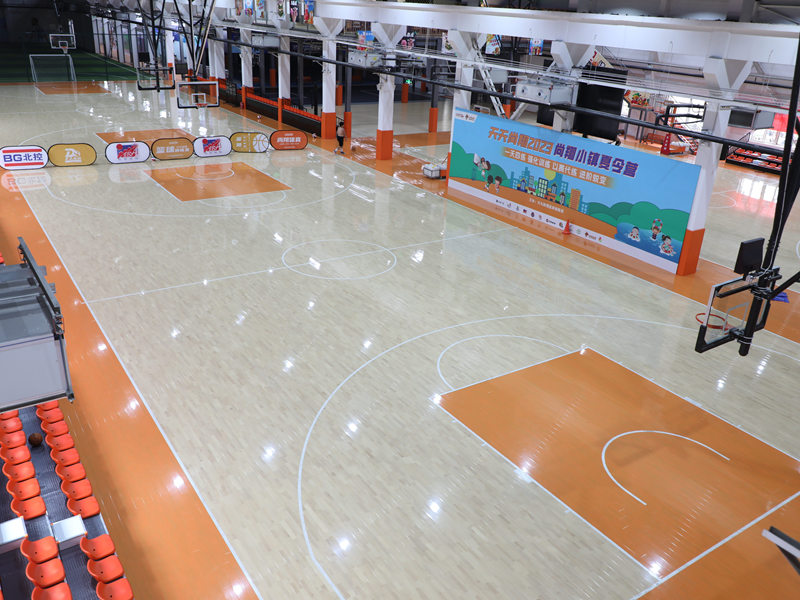
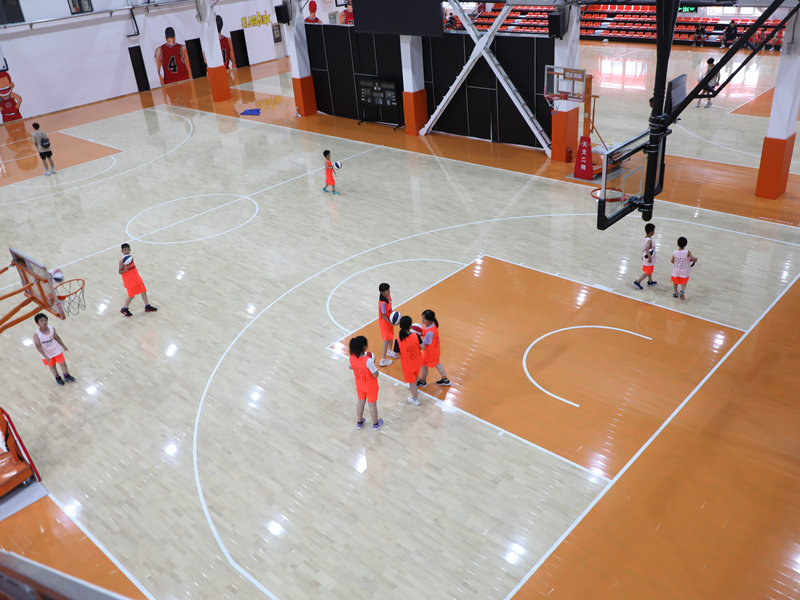
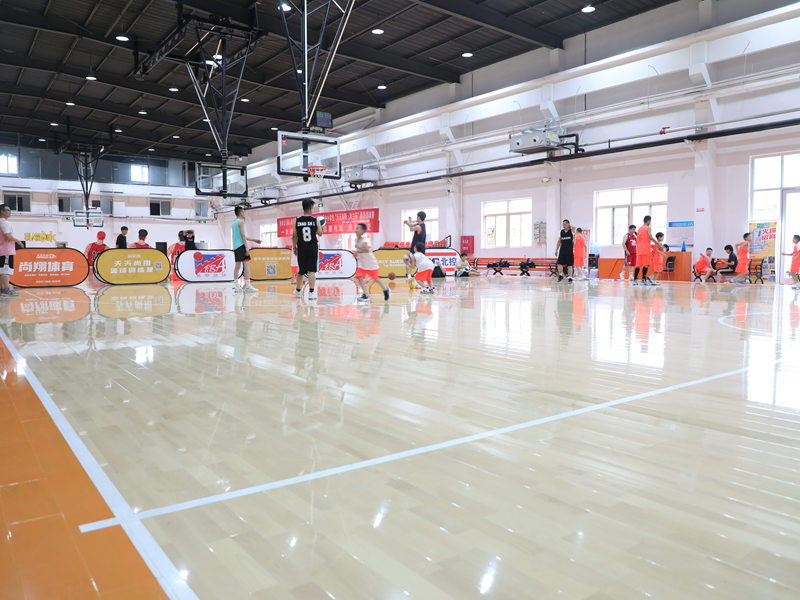
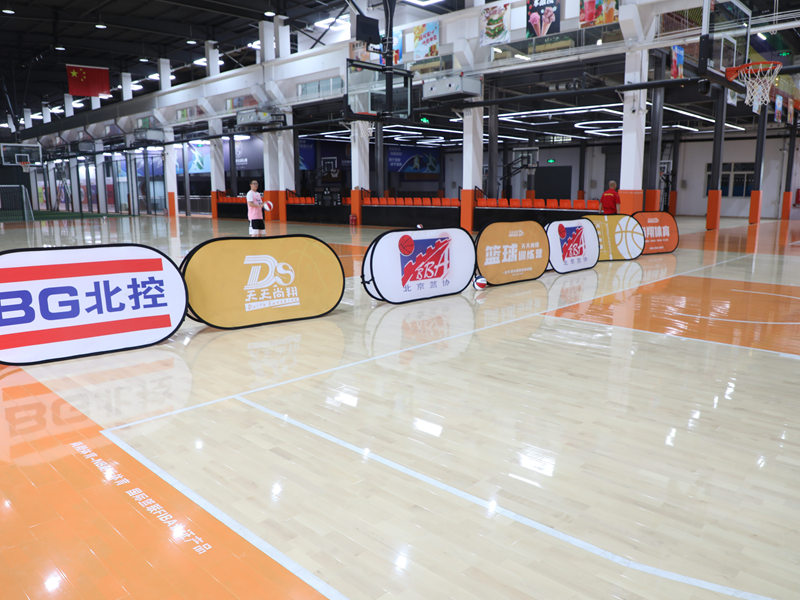
The installation process of an indoor basketball court wood floor is a highly specialized craft that requires far more precision than standard residential or commercial hardwood flooring installation, as every step directly impacts the final performance and safety of the playing surface. The process almost always begins with a thorough assessment and preparation of the underlying concrete slab, which must be level to within 3 millimeters across every 2-meter section of the entire court area. Any uneven spots, cracks, or imperfections in the concrete must be repaired with specialized leveling compounds before any flooring materials are brought in, because even small irregularities in the base layer can create noticeable dead spots or uneven bounce in the finished playing surface. The concrete must also be tested for moisture vapor emission rates, as excessive moisture coming up through the slab can cause irreversible warping, cupping, and delamination of the wood floor if not properly addressed.

The traditional nail-down installation method for solid hardwood basketball court wood floors has been the industry standard for competitive play for more than 80 years, and it remains the preferred choice for facilities that demand the absolute highest level of performance and long-term repairability. This method begins with the installation of long, pressure-treated wood sleepers that are laid perpendicular to the direction of the finished wood planks, spaced at precise intervals that are calculated based on the thickness and species of the top wood layer. Between each sleeper and the concrete base, resilient rubber or foam pads are installed, which are carefully selected to deliver the exact level of shock absorption specified for the facility. This creates a raised subfloor system with a small air gap beneath the planks that allows air circulation, prevents moisture buildup, and gives the floor the ability to flex uniformly across its entire surface.
Once the sleeper system is in place, a layer of plywood or oriented strand board is often installed over the sleepers to create a stable, uniform base for the top hardwood layer, ensuring that no movement or flex in the sleepers can create uneven spots in the finished floor. The solid hardwood planks, typically 19 millimeters to 22 millimeters thick, are then nailed down to this base layer using specialized cleat nails that are driven at an angle through the tongue of each plank. This hidden nailing method creates a tight, secure connection that holds every plank firmly in place while still allowing the entire floor to expand and contract as a single unified system with changes in temperature and humidity. This installation method creates a floor that can be sanded and refinished dozens of times over its multi-decade lifespan, allowing facility operators to repair scuffs, remove old paint, and refresh the surface without ever needing to replace the actual wood planks.
For facilities that need a more moisture-resistant option or have budget constraints that make full solid hardwood installation impractical, floating and glue-down installation methods for engineered basketball court wood floors have become increasingly popular in recent years. Engineered wood floors feature a solid hardwood wear layer on top of a multi-layer plywood core, which is constructed with cross-grain lamination that makes the entire board far more resistant to warping and dimensional movement than solid hardwood when exposed to fluctuating humidity levels. In a floating installation, the engineered planks are connected to each other with tight-fitting interlocking edges, but they are never directly attached to the subfloor, allowing the entire floor to move freely as a single unit. This method is faster to install than traditional nail-down systems, reduces labor costs significantly, and is an excellent choice for schools, community centers, and multi-use facilities that need to get their court back in operation quickly.
Glue-down installation methods use specialized high-performance adhesives to bond the engineered wood planks directly to a prepared subfloor layer, creating an extremely stable surface that delivers consistent performance across every square meter of the court. This method eliminates the hollow spots that can sometimes develop in floating floors, and it creates a surface with excellent sound-dampening properties that reduces the noise of running feet and bouncing balls, making it ideal for facilities that are located in multi-purpose buildings or near other spaces that need to remain quiet. No matter which installation method is chosen, the final step in the process is the careful sanding of the entire surface, which is done in multiple sequential passes with progressively finer grit sandpaper to create a perfectly smooth, flat surface that is ready for the application of sealers and finish coats. When executed by experienced, specialized installers, any of these methods can create a high-quality indoor basketball court wood floor that meets all performance standards and delivers decades of reliable play.