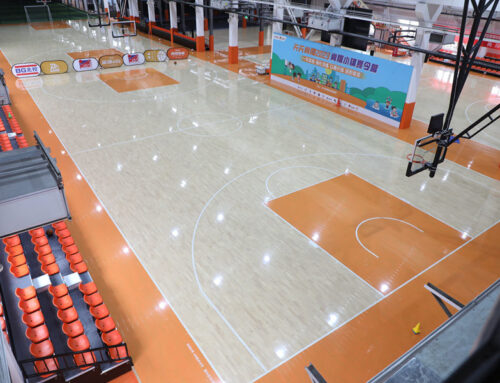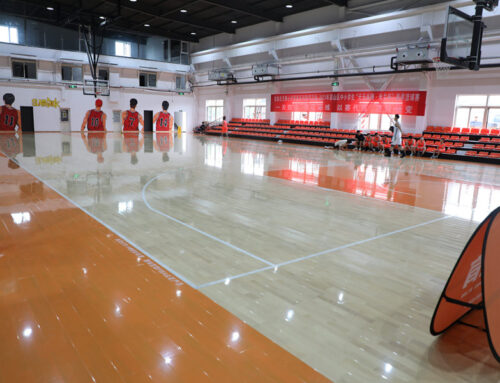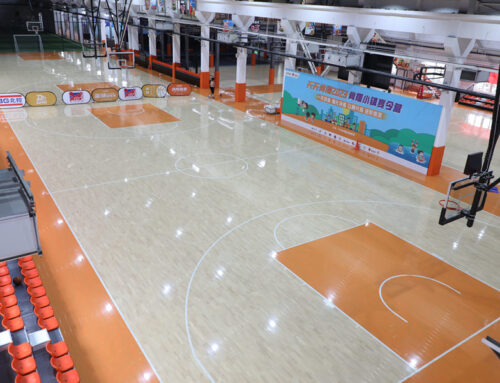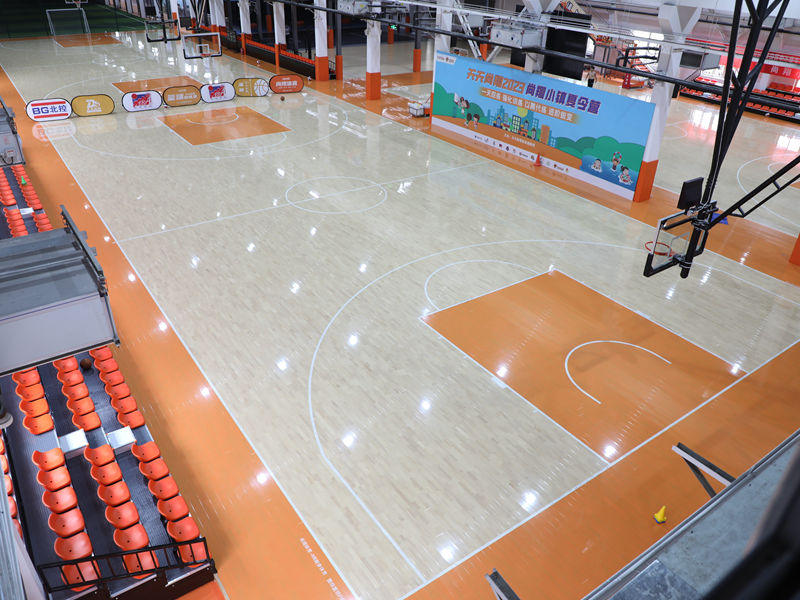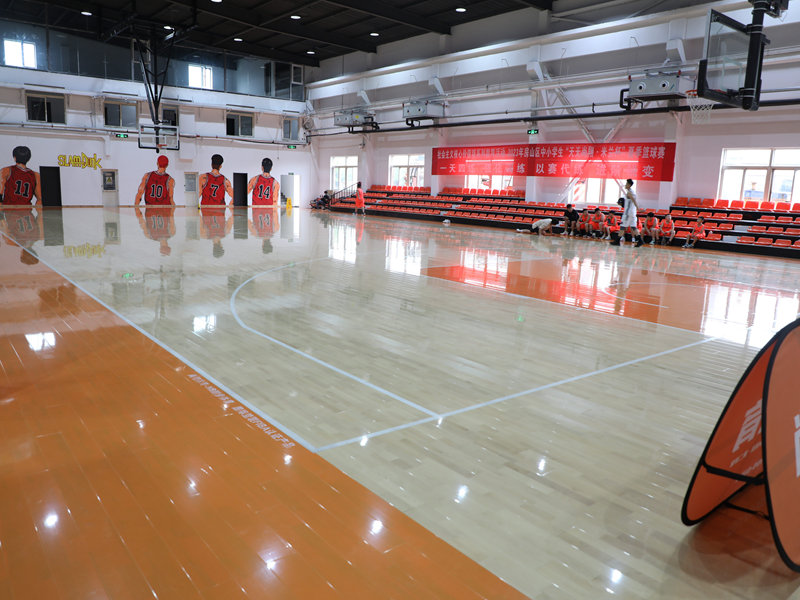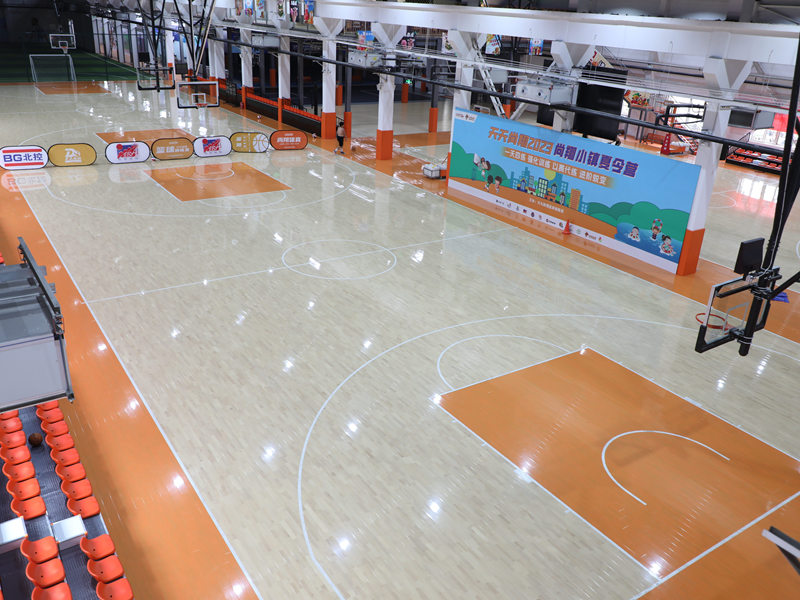
Volleyball is a sport that demands precision, speed, and explosive movement, and the flooring on which it is played plays a crucial role in determining the quality of the game. Indoor sports wooden flooring has become the standard surface for volleyball courts at every level, from local recreation centers to the Olympic Games. This article explores why wood is the ideal choice for volleyball and what makes a great volleyball court floor.
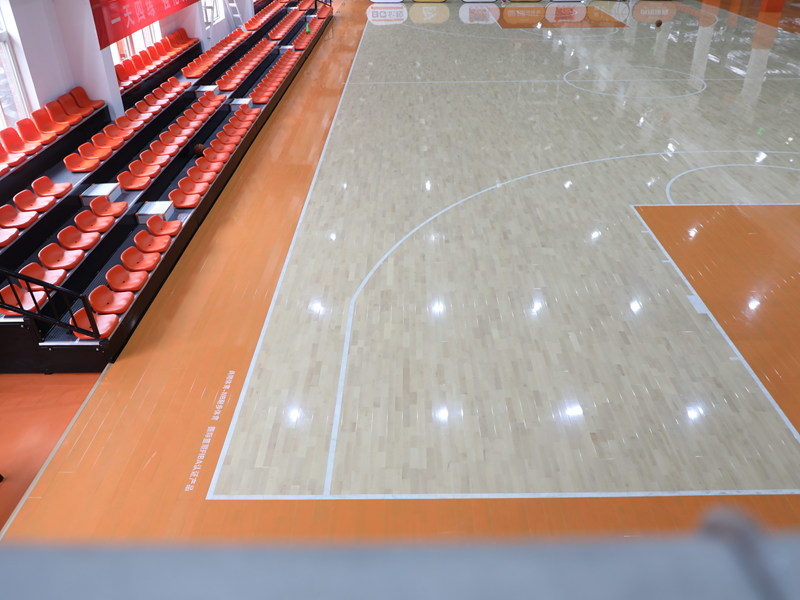
Why Wood Is Ideal for Volleyball
Volleyball is a sport of constant lateral movement, quick stops, and explosive jumps. The floor must provide consistent traction so that players can change direction without slipping, reliable shock absorption to protect joints during landing, and a surface that does not interfere with the ball’s behavior. Indoor sports wooden flooring delivers on all of these requirements.
The friction coefficient of a properly finished hardwood floor falls within the optimal range for volleyball, typically between 0.4 and 0.6 on the standardized tribometer scale. This means players can push off hard for a spike or dig without their feet sliding out from under them. At the same time, the floor is not so grippy that it hinders quick lateral movement, which is essential for defensive plays.
FIVB Standards for Volleyball Courts
The Fédération Internationale de Volleyball (FIVB) has specific requirements for competition volleyball courts. The playing surface must be made of wood or a synthetic material that meets certain performance criteria. For wood courts, the preferred species is maple or beech, with a thickness of at least 20mm. The DIN shock absorption rating should fall between 35% and 50%. The ball bounce must be consistent, and the surface must be flat with no more than 2mm deviation over any 2-meter span.
The official volleyball court measures 18 meters long by 9 meters wide, with a free zone of at least 3 meters on all sides. The court is divided by a net, and the floor markings include boundary lines, attack lines (3-meter lines), and service zones. These markings must be painted with precision to ensure fair play.
Comparison with Beach Volleyball
It is worth noting that beach volleyball is played on sand, which provides a completely different playing experience. Indoor volleyball on wood offers a faster, more controlled game with more consistent ball behavior. Many players and coaches prefer indoor volleyball precisely because of the superior playing surface that wood provides.
Why Not Synthetic Floors for Volleyball?
While synthetic floors are sometimes used for volleyball in recreational settings, they are not ideal. Synthetic floors tend to be too slippery for the quick lateral movements that volleyball requires. They also do not provide the same level of shock absorption, which can lead to more injuries, particularly knee and ankle problems. For any facility that takes volleyball seriously, indoor sports wooden flooring is the way to go.
Maintenance Tips for Volleyball Courts
Volleyball courts should be swept daily, damp-mopped weekly, and professionally maintained annually. Because volleyball involves a lot of sliding and diving, the finish on the floor can wear down faster in certain areas. Regular inspection and spot refinishing can help extend the life of the floor.
Indoor sports wooden flooring elevates the volleyball experience for players and spectators alike, making it the definitive choice for this dynamic sport.