The finish system applied to an indoor basketball court wood floor is far more than just a protective coating – it is a carefully engineered multi-layer system that directly controls the surface’s friction, durability, light reflection, and overall playability. The process almost always begins with a penetrating sealer that is applied immediately after the final sanding of the raw wood, designed to soak deep into the wood’s grain to lock out moisture, prevent tannin staining, and create a uniform base layer that ensures the top finish coats adhere perfectly to the surface. This sealer is typically applied in three to five thin, even coats, with light sanding between each coat to remove any raised wood grain and create an absolutely smooth foundation for the subsequent layers. Skipping or skimping on this sealer stage is one of the most common causes of premature finish failure, as it allows moisture to penetrate the wood, causes the top coats to peel away, and creates uneven friction across the court.

After the sealer system has fully cured, the top finish coats are applied in two to three carefully calibrated layers, each designed to deliver specific performance characteristics for the basketball court wood floor. The most widely used finish systems today are UV-cured polyurethane formulations, which are applied as a liquid and then instantly hardened with ultraviolet light, creating an extremely tough, scratch-resistant surface that can stand up to thousands of hours of play without showing signs of wear. These finishes are formulated to have exactly the right level of slip resistance: they are textured at a microscopic level to provide enough grip for players to make sharp cuts and quick stops without slipping, but smooth enough that basketball shoes can glide naturally across the surface without catching. Modern UV-cured finishes also have extremely low levels of volatile organic compounds, making them safe for players and facility staff, with almost no unpleasant fumes during the application process.
One of the most important properties of a properly formulated finish system for a basketball court wood floor is its ability to maintain consistent friction characteristics over time, even with heavy daily use. Lower-quality finishes can become overly smooth and slippery after just a few months of play, as the surface wears down to a glossy, glass-like texture that offers no grip when players sweat or track in small amounts of moisture on their shoes. Other poor-quality finishes can become too rough and abrasive as they wear, creating excessive traction that causes players’ shoes to stick to the floor, leading to twisted ankles and knee injuries during quick direction changes. High-performance athletic finishes are engineered to wear evenly across their entire surface, maintaining their ideal micro-texture for years, so players never have to adjust their movement style to compensate for changing surface conditions.
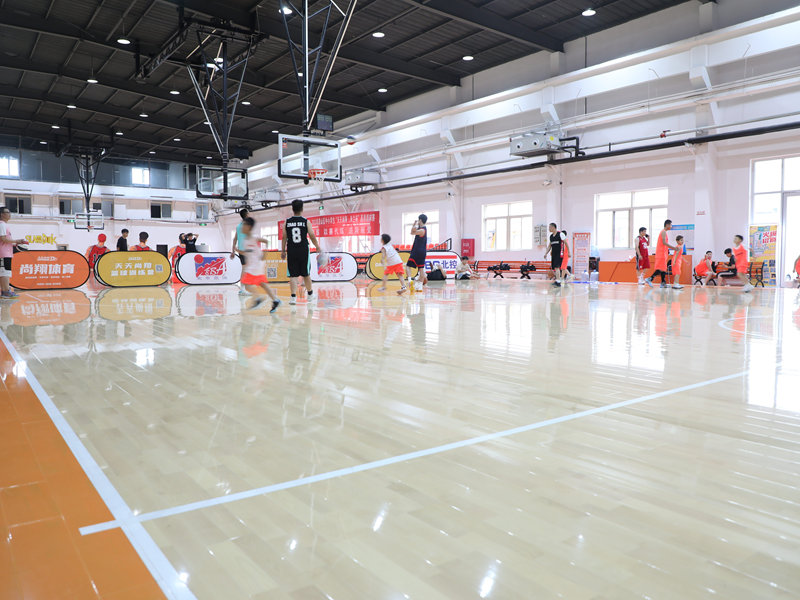
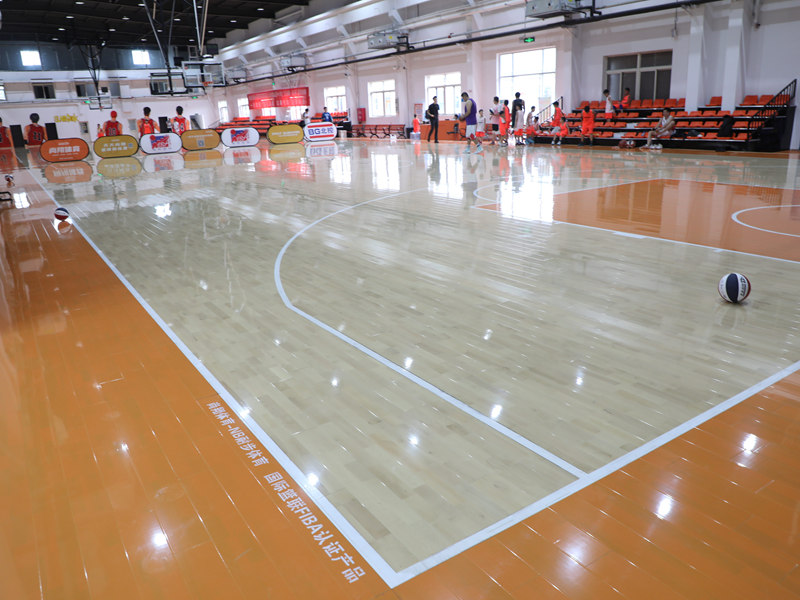
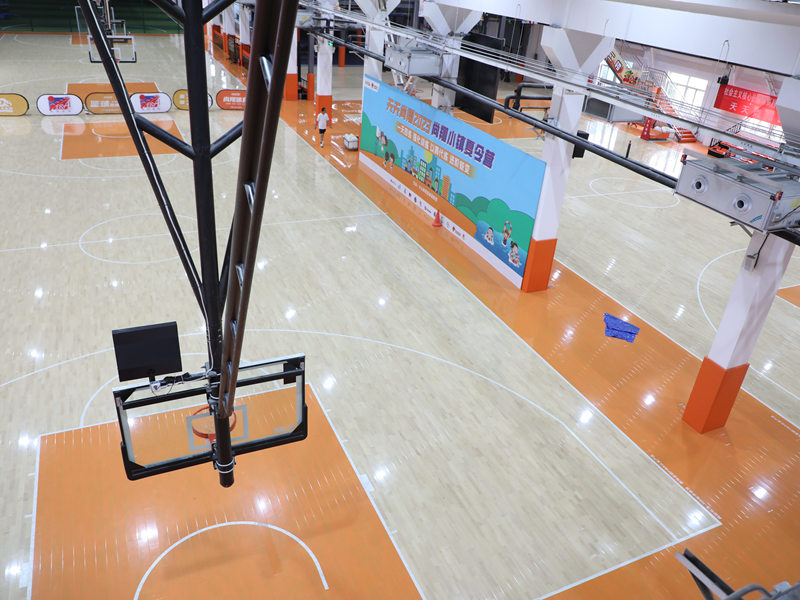
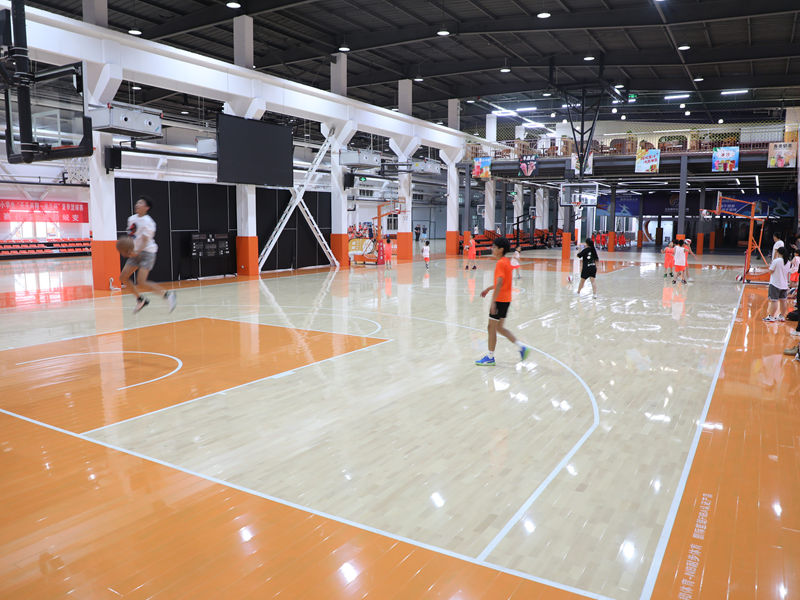
The finish system also serves as the canvas for all the painted court markings, team logos, and custom graphics that give each basketball court wood floor its unique visual identity. After the final sealer coat has been applied and lightly sanded, court lines, center circles, three-point arcs, free throw lanes, and any custom graphics are carefully painted with high-quality, non-yellowing athletic paint that is specifically formulated to bond with the finish system. This paint is applied in multiple thin layers, and then covered with additional clear top finish coats that lock the graphics permanently beneath the surface, so they never wear away, peel off, or become sticky to the touch. This process allows facility operators to create completely custom court designs, with team colors, school logos, sponsor markings, and commemorative graphics that become an integrated part of the floor itself, rather than a temporary sticker or decal that needs to be replaced every few years.
Properly applied and maintained, a high-quality finish system on an indoor basketball court wood floor can last anywhere from 5 to 15 years, depending on the level of daily usage the court receives. When the finish eventually shows signs of wear, it can be completely removed through a full sanding process that strips away all the old finish, paint, and scuff marks, revealing the fresh raw wood beneath. This process can be repeated many times over the multi-decade lifespan of the wood floor, allowing facility operators to completely refresh the court’s appearance, update the graphics, and restore the surface to its original brand-new performance characteristics without ever needing to replace the actual wood planks. This ability to be refinished again and again is one of the greatest advantages of a wood basketball court, making it a far more sustainable and cost-effective long-term investment than synthetic flooring materials that cannot be repaired or renewed.