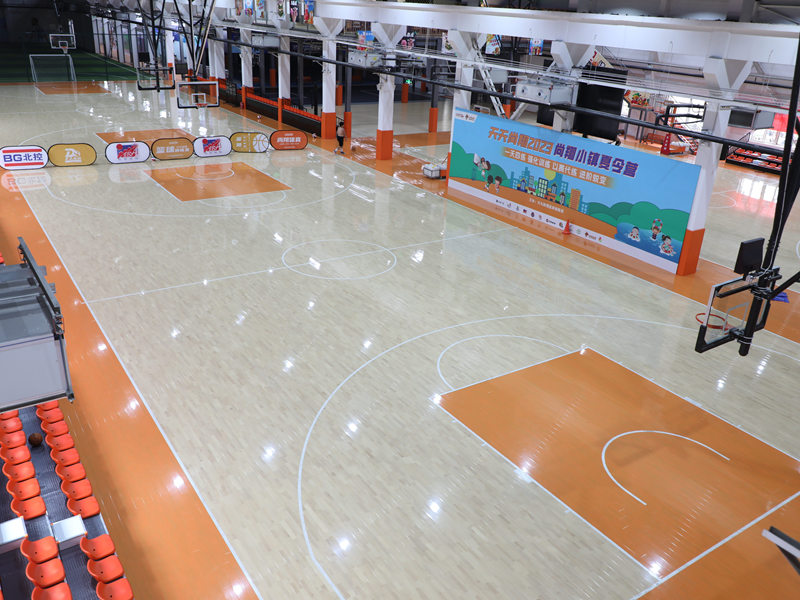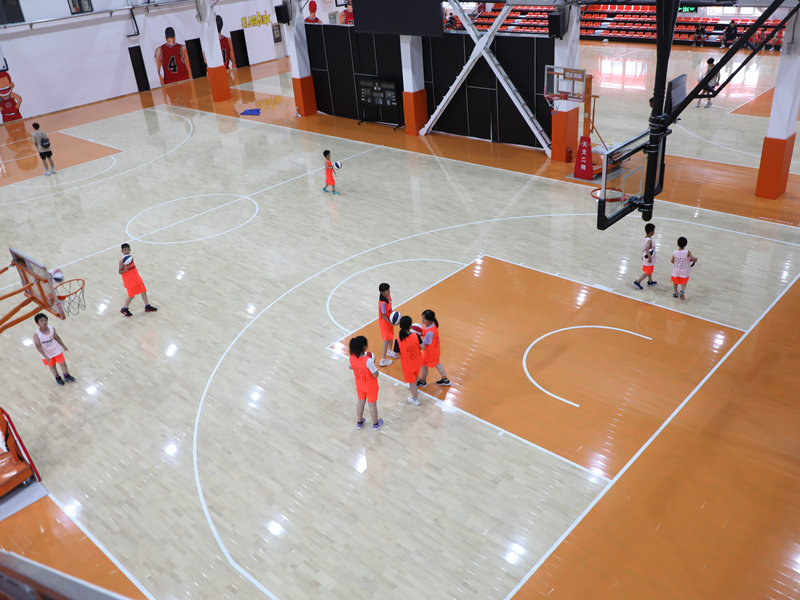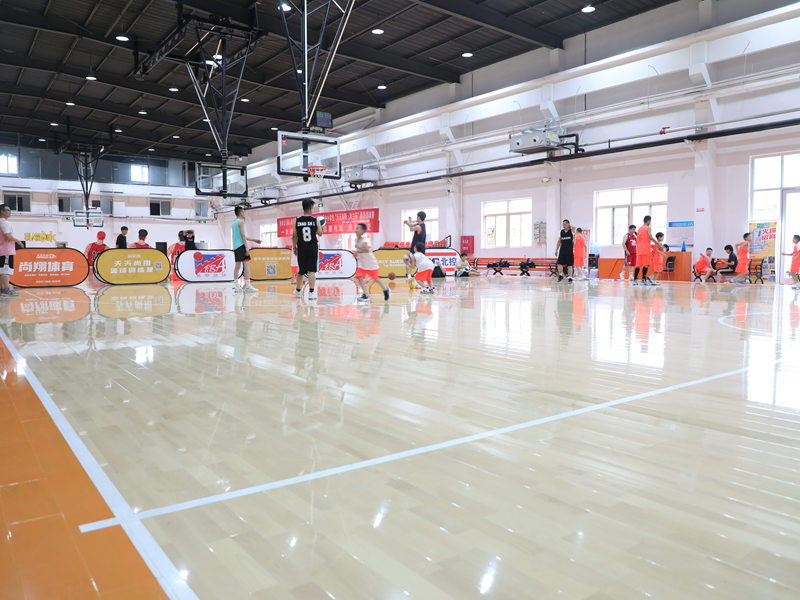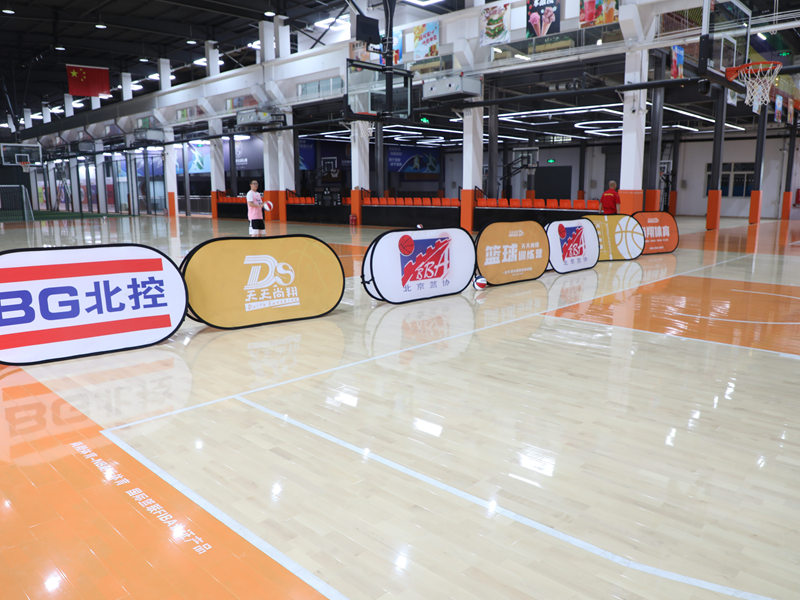
Even the best-installed hardwood basketball court will encounter problems over time. Knowing what to expect and how to address issues can save you thousands of dollars in repairs.
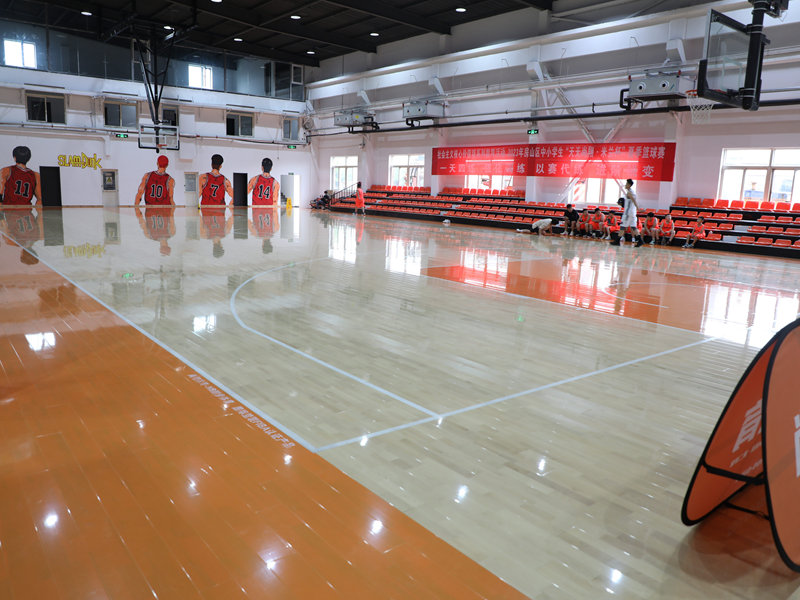
Cupping is one of the most common issues. It occurs when an adequate surface. As the sport grew in popularity, the need for a dedicated court with a proper surface became apparent.
In the early twentieth century, most indoor courts were built with wooden planks laid directly over joists or a simple subfloor. The wood was typically soft pine or fir, chosen for its availability rather than its performance characteristics. These early courts were rough, uneven, and prone to splinters.
The shift to hard maple began in the nineteen forties and fifties, as the sport became more professional and the demands on the playing surface increased. Hard maple’s density and durability made it the obvious choice. By the nineteen sixties, hard maple had become the standard for college and professional basketball.
The introduction of finished floors in the nineteen seventies was a game-changer. Before finishing, the raw wood absorbed moisture, dirt, and shoe marks, making the surface inconsistent and difficult to maintain. Polyurethane and other finishes created a sealed, uniform surface that was easier to clean and provided better traction.
The nineteen eighties and nineties saw advances in subfloor technology. The development of floating floor systems and engineered hardwood allowed courts to be built in facilities that previously could not support a traditional nail-down installation. Climate control technology also improved, reducing the moisture-related problems that had plagued early hardwood courts.
Today, indoor basketball court hardwood flooring is a highly engineered product, refined over more than a century of use. Yet the fundamental choice, hard maple, remains the same. The sport and its surface have evolved together, each driving improvements in the other.