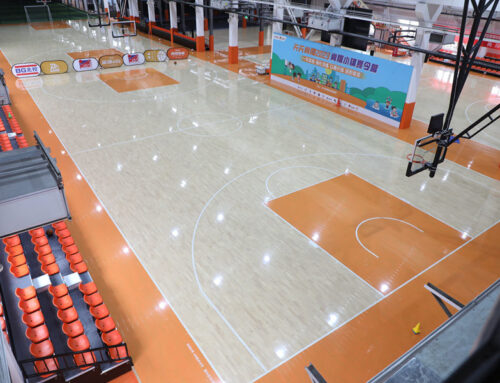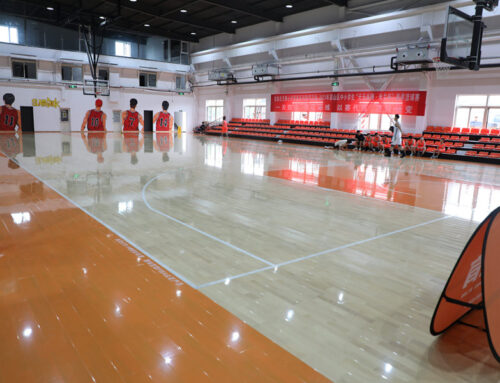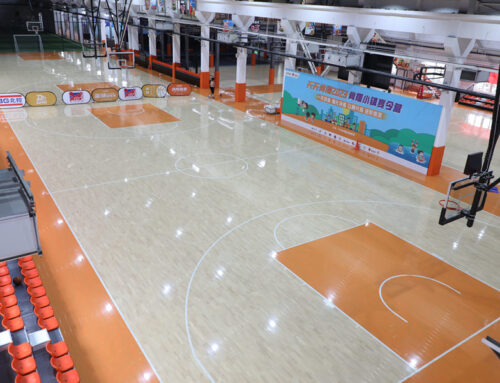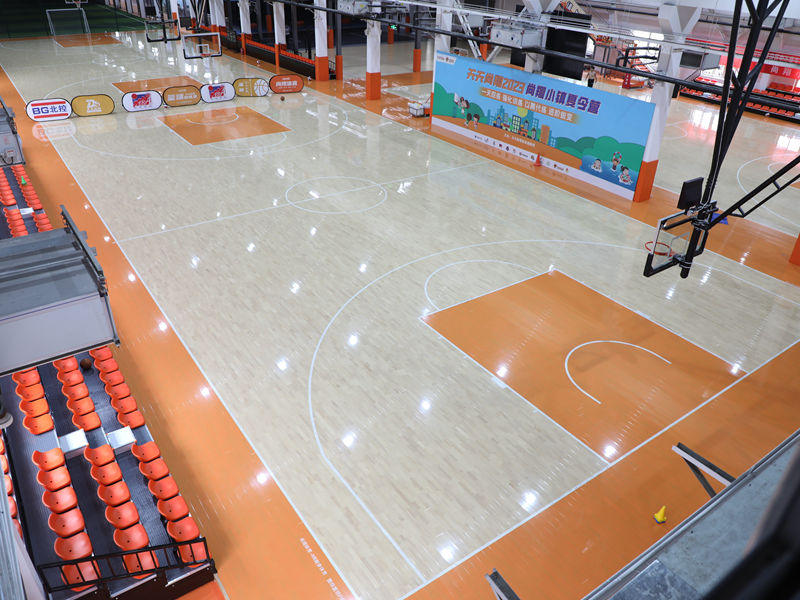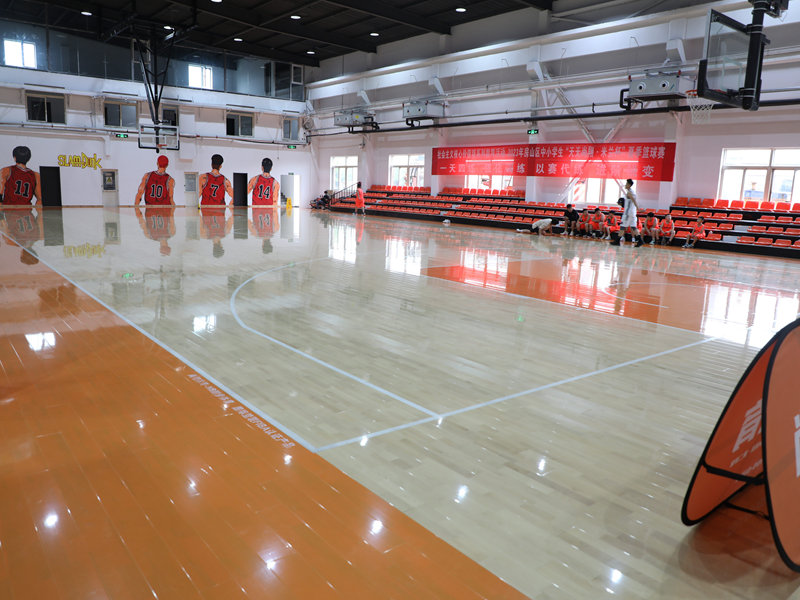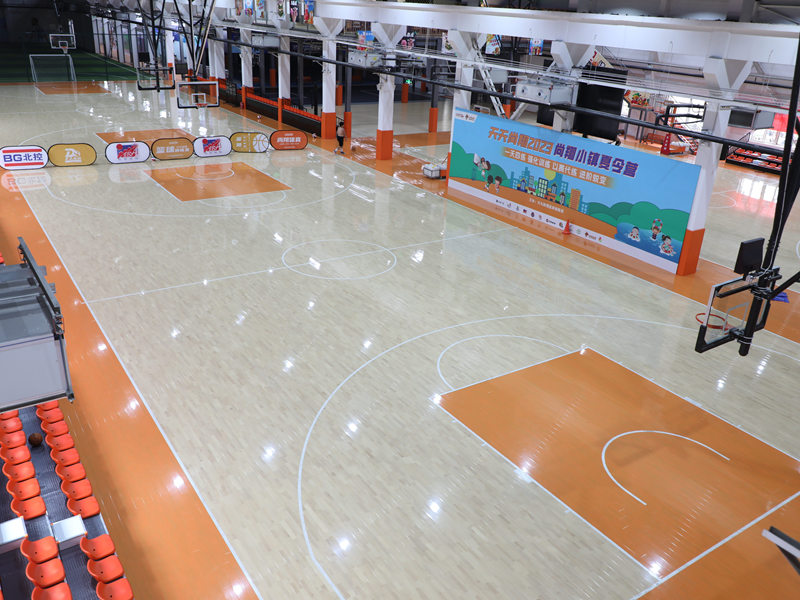
Ball bounce is one of the most visible and immediately noticeable performance characteristics of any sports floor. For athletes, a floor that delivers consistent, predictable ball bounce is essential for skill development, game quality, and fair competition. For facility managers, meeting ball bounce standards is often a requirement for hosting official events.
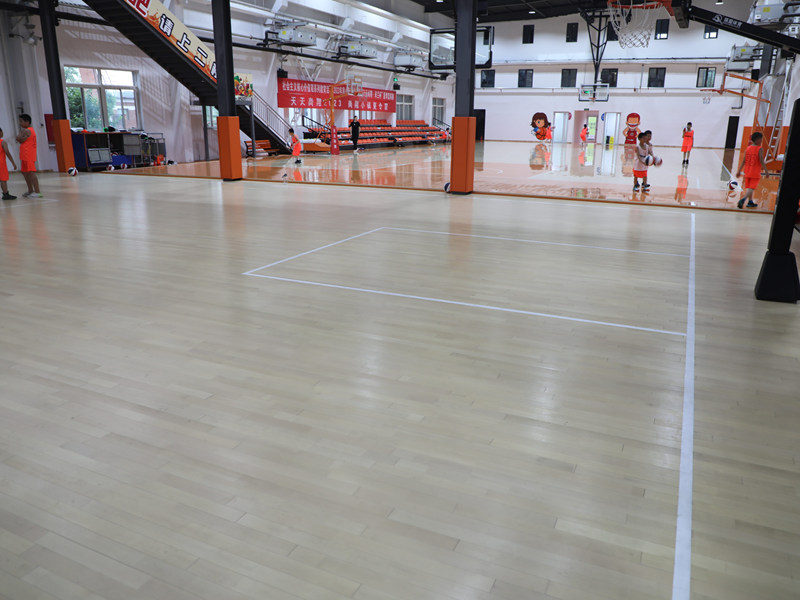
Ball measured by dropping a standard ball from a specified height and measuring the height of the rebound. The result is expressed as a percentage. For example, if a ball is dropped from 1800 millimeters and bounces back to 1350 millimeters, the ball bounce is 75 percent. International standards specify minimum ball bounce values for different sports. For basketball, the minimum is typically 90 percent of the bounce on a concrete surface. For handball, it is 75 to 80 percent.
In modular sports wood flooring, ball bounce is influenced by several factors. The wood species and density affect the stiffness of the surface. Harder woods like maple part of the certification process. The test is conducted on the fully installed floor, including the shock absorption layer, to ensure that the complete system meets the standard. This is important because a panel that bounces correctly in isolation may not perform the same way when installed on a spring-mounted or foam-supported system.
For facility managers, takeaway is that ball bounce is not just a nice-to-have — it is a measurable, certifiable performance characteristic that should be a primary criterion in floor selection. A modular sports wood floor that meets or exceeds the ball bounce standards for your sport will deliver a playing experience that athletes and spectators alike will notice and appreciate.