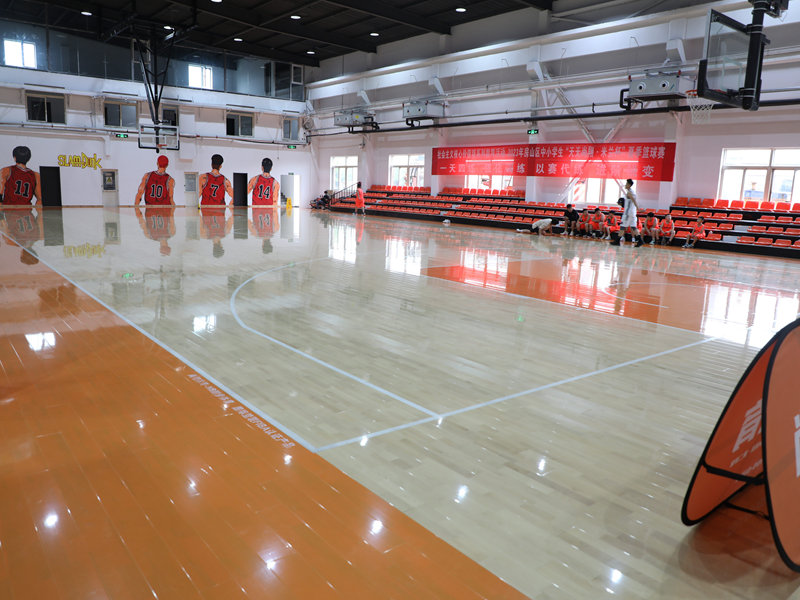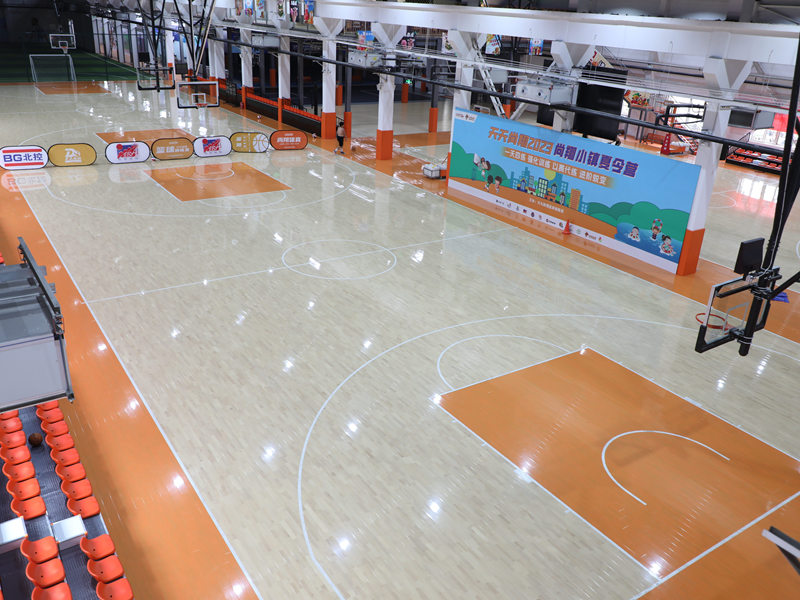
Renovating an indoor sports facility is a complex undertaking. The floor is often the most critical element — it affects performance, safety, aesthetics, and compliance with sports standards. And when the existing floor needs to be replaced, modular indoor sports wood flooring offers distinct advantages that modular floors do not require adhesives, nails, or extensive subfloor modification, the renovation process is cleaner and less destructive. There is no need to remove existing flooring — in many cases, the old floor can be removed and the modular system installed directly on the prepared subfloor. This reduces debris, dust, and the need for extensive cleanup.
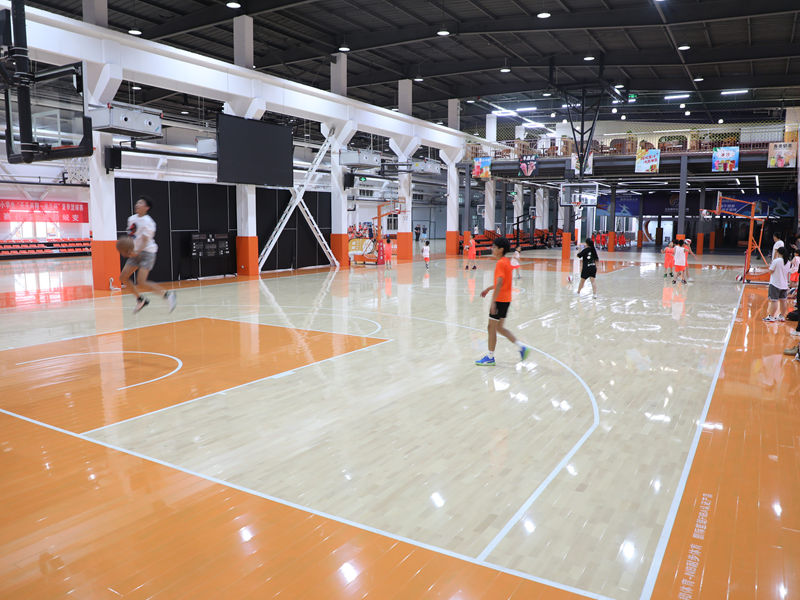
Third, modular flooring solves one of the biggest headaches in renovation: dealing with an imperfect subfloor. Old facilities often have subfloors that are uneven, cracked, or contaminated. Traditional floors require extensive subfloor preparation to achieve the flatness needed for glue-down installation. Modular systems, with their adjustable batten framework, can compensate for minor subfloor imperfections, reducing preparation time and cost.
Fourth, modular flooring allows for phased renovation. If the budget does not allow for a complete floor replacement at once, a modular system can be installed in phases — one section at a time — without compromising the overall performance. This is not possible with traditional floors, which require the entire surface to be installed as a single unit.
Fifth, modular flooring future-proofs the facility. If the sports program changes, the court layouts can be reconfigured. If the organization relocates, the floor can go with it. If a section becomes damaged, it can be replaced without touching the rest. This flexibility is invaluable in a renovation context, where the goal is to create a facility that will serve the organization well for years to come.
Finally, modular flooring simplifies compliance. Renovated facilities often need to meet current sports standards, which may have changed since the original floor was installed. Modular systems are available with is dense. Understanding the technical specifications that actually matter helps cut through the noise and make a sound decision.
Panel thickness is one of important specifications. Thicker panels are more stable, more durable, and can be refinished more times. The standard thickness for competition-level modular floors is typically 22 to 24 millimeters, with a top wear layer of at least 3 to 6 millimeters of hardwood. The wear layer is what gets sanded during refinishing, so a thicker wear layer means more refinishing cycles and a longer lifespan.
The locking mechanism is what makes the floor modular. There are several types, including tongue-and-groove, click-lock, and proprietary interlocking systems. The best systems create a tight-free prevents movement, lippage, and moisture intrusion. Look for systems that are tested for pull-out strength and that maintain their connection under dynamic athletic loads.
Shock absorption is measured as a percentage of impact force absorbed. The specification you need depends on your sport and the governing body standards. For basketball, look for a minimum of 35 percent. For handball, 53 percent. The shock absorption value should be certified by an independent testing laboratory, not just claimed by the manufacturer.
Ball bounce is measured as the percentage of bounce height relative to the drop height. A ball bounce of 90 percent or higher is typical for competition-level floors. This specification ensures that the playing experience is consistent with what athletes expect.
Surface friction is measured as the coefficient of friction (COF). Too little friction and players slip. Too much friction corrosion-resistant, and adjustable. Steel battens are stronger but heavier. The choice affects the overall weight of the floor system and its load-bearing capacity.
Finally, certifications are the ultimate proof of performance. Look for floors certified to EN 14904 (mobile sports flooring), DIN 18032 (sports flooring), or the relevant standard for your sport. These certifications mean the floor has been independently tested and meets defined performance criteria.
Focus on these specifications, and you will be able to evaluate any modular sports wood flooring system with confidence.