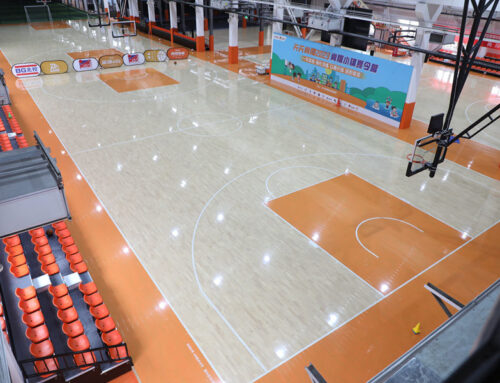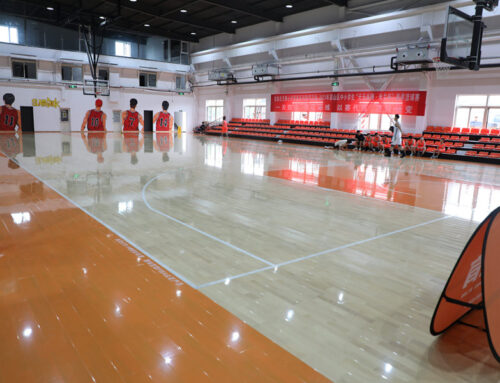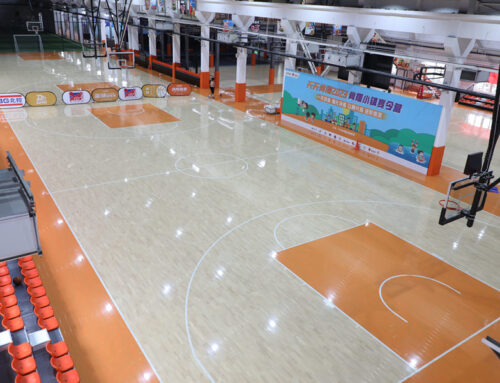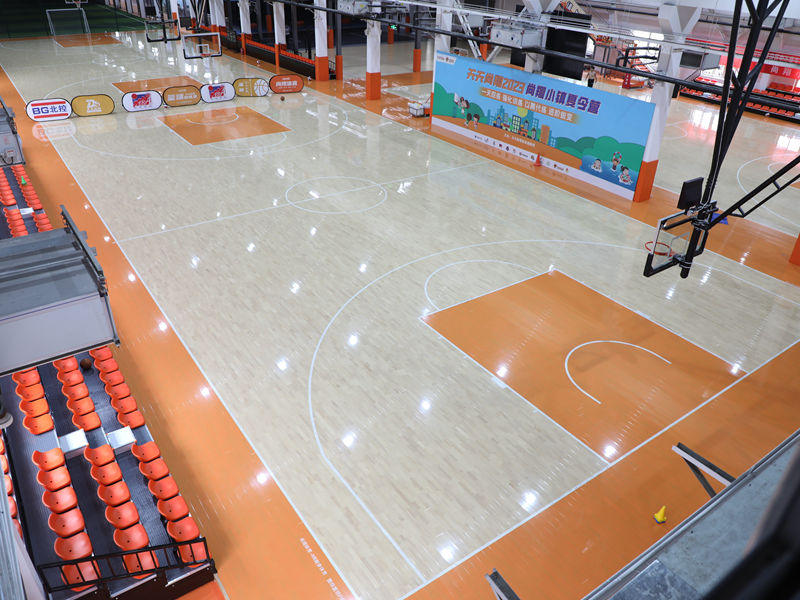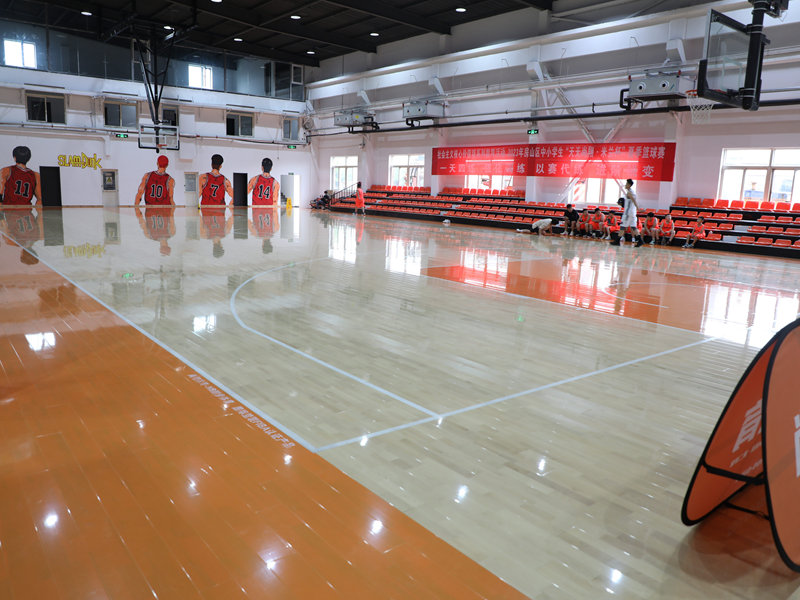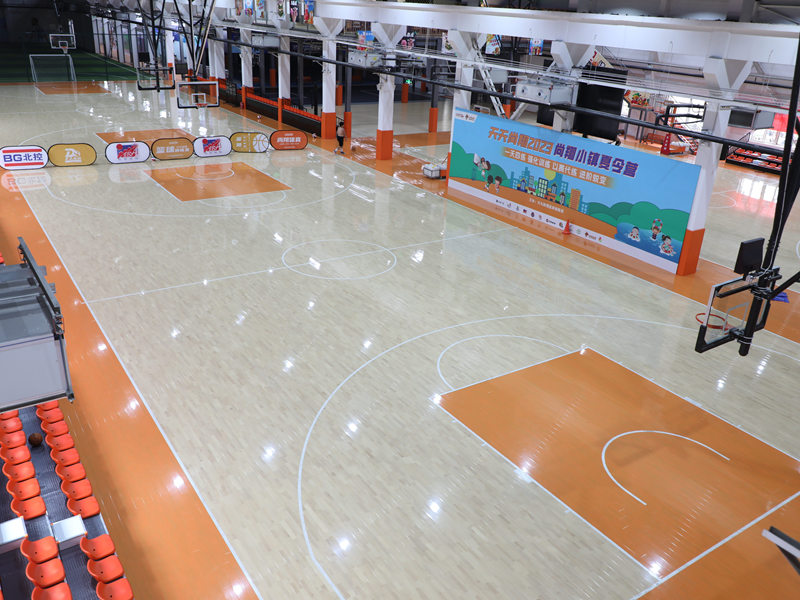
How long does a modular indoor sports wood floor last? This is one of the most common questions facility managers ask, and the answer is more nuanced than a simple number. The lifespan of a modular sports wood floor depends on the wood species, the thickness of the wear layer, the quality of the finish, the intensity of use, and the maintenance regimen. But with proper care, these floors can deliver excellent performance for decades.
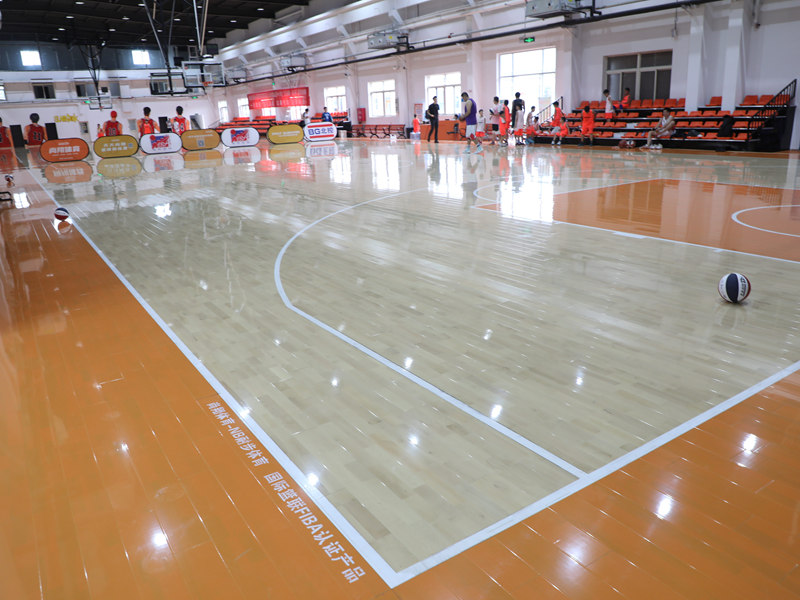
The wood surface itself is the most durable component. Hard maple, the most common species used in sports floors, is extremely dense and resistant to wear. A wear layer of 20 millimeters or more can be sanded and refinished multiple times — typically three to five times over the life of the floor. Each refinishing cycle effectively gives the surface a new life, extending the usable lifespan of the wood to 25 to 30 years or more.
The modular panel structure is also highly durable. The locking mechanisms are engineered to withstand thousands of assembly and disassembly cycles without losing their integrity. This means that even if the floor is relocated multiple times, the panels remain functional. The supporting batten system, typically made from aluminum or steel, is resistant to corrosion and deformation, providing a stable base for decades.
The shock absorption layer has a somewhat shorter lifespan than the wood surface, typically 10 to 15 years depending on the technology. Rubber pads can degrade over time, losing their elasticity. Foam blocks can compress permanently under heavy use. Spring mounts are generally the most durable, maintaining their performance for 15 to 20 years. The good news is that the shock absorption layer can be replaced without disturbing the wood panels, effectively renewing the floor’s performance characteristics.
The surface finish is the component that wears out most quickly, typically needing renewal every three to five years in high-traffic facilities. The finish provides the friction characteristics that athletes rely on, and as it wears, the floor becomes slippery and unsafe. Recoating the finish is a routine maintenance task that restores the floor to like-new condition.
Real-world examples support the longevity claims. Many modular sports floors installed in the 1990s and early 2000s are still in active use today, having been refinished and had their shock absorption layers replaced along the way. The modular design makes this kind of long-term stewardship possible in a way that traditional floors cannot match.
The key to maximizing lifespan is consistent maintenance. Regular cleaning, prompt repair of damaged panels, timely refinishing of the surface, and climate control all contribute to a floor that performs well for 25 years or more. Neglect, on the other hand, can reduce the lifespan significantly — a poorly maintained floor may need major refurbishment after just 10 to 15 years.
In essence, a modular indoor sports wood floor is not a disposable product. It is a long-term asset that, with proper care, can serve a facility for a generation or more.