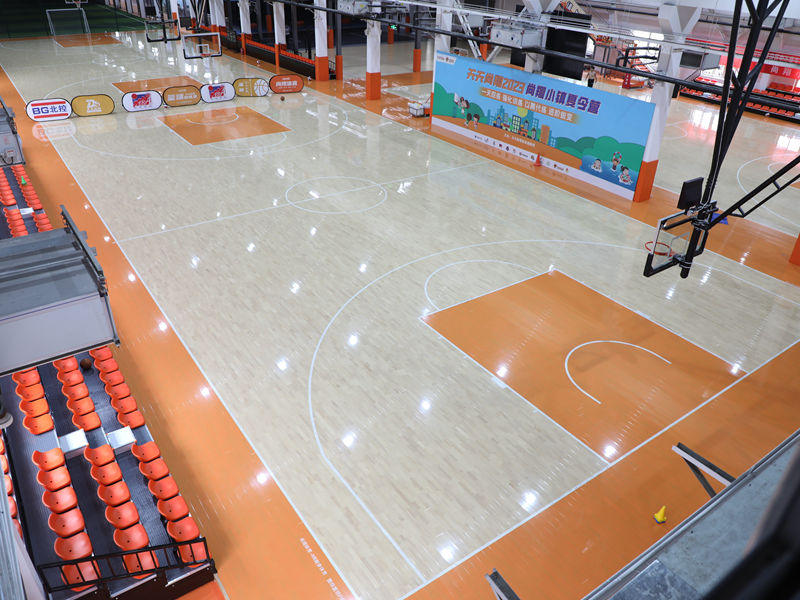
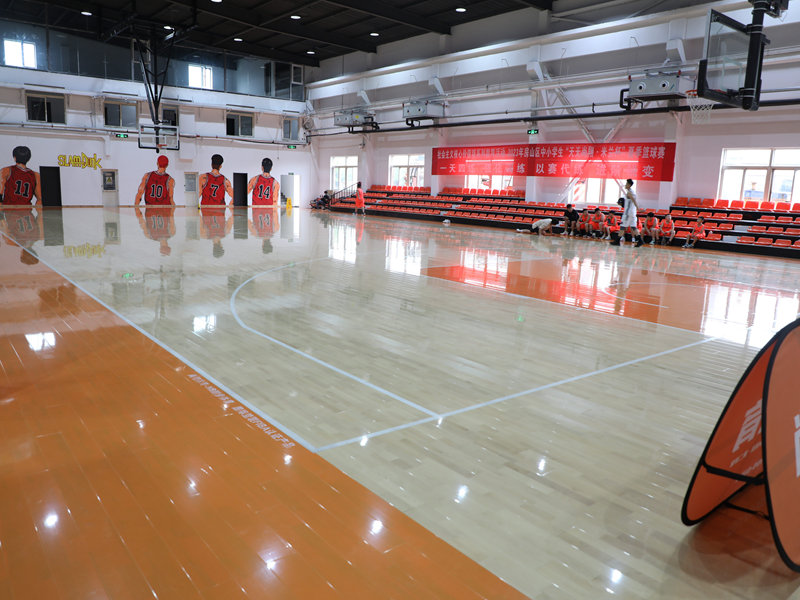
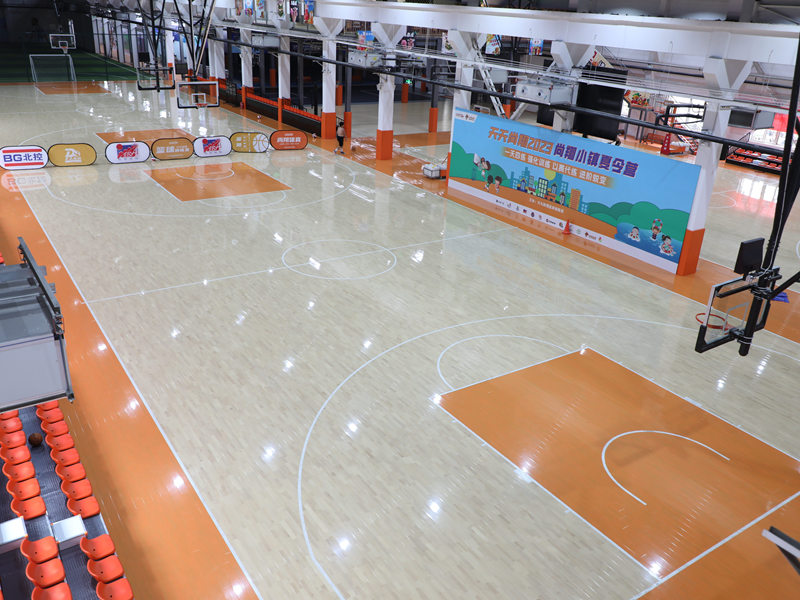
An indoor basketball court hardwood floor can last anywhere from 10 to 40 years, depending on a wide range of factors. Understanding what determines lifespan is critical for facility managers who want to maximize their return on investment and for players who depend on a consistent, safe playing surface. This article examines every factor that influences how long a hardwood basketball court will last.

Factor 1: Wood Species and Grade
The species of wood used is the single most important determinant of lifespan. Hard maple, with its high density and tight grain, is the most durable option and can last 30 to 40 years with proper maintenance. White oak is also very durable, with a lifespan of 25 to 35 years. Softer species, such as red oak or pine, are not suitable for basketball courts and would wear out in 5 to 10 years.
Within a species, the grade matters. Select grade hardwood, which has fewer defects and a more uniform appearance, tends to be denser and more durable than Better grade. First and Second grade, while beautiful, is too soft and inconsistent for athletic use.
Factor 2: Thickness of the Planks
Thicker planks last longer because they have more material to sand and refinish. A 3/4-inch plank can typically be refinished 4 to 6 times over its life, while a 7/16-inch plank may only be refinished 2 to 3 times. Each refinishing removes a thin layer of wood (approximately 1/32 inch), so a thicker plank simply has more to give.
Factor 3: Installation Quality
A poorly installed floor will fail prematurely, regardless of the quality of the wood. Common installation errors that shorten lifespan include inadequate subfloor preparation (leading to movement and squeaking), improper acclimation (leading to cupping and crowning), and insufficient fastening (leading to loose planks and uneven wear).
Factor 4: Traffic Volume and Intensity
The amount and type of use a court receives directly affects its lifespan. A court used daily by a varsity basketball team will wear out faster than a court used a few times a week by recreational players. The position of wear also matters — the free-throw lane and the key see the most traffic and will need refinishing first.
Factor 5: Climate Control
Hardwood is a natural material that expands and contracts with changes in temperature and humidity. Facilities that maintain a consistent climate — ideally 60 to 80 degrees Fahrenheit and 30 to 50 percent relative humidity — will see significantly less movement, cupping, and cracking. Facilities with poor climate control may see their floors fail in half the expected time.
Factor 6: Maintenance Practices
As discussed in previous articles, maintenance is the single most controllable factor in floor lifespan. A court that is swept daily, mopped weekly, and recoated every three to five years will outlast a court that is neglected by a factor of two or more.
Factor 7: Subfloor and Cushioning System
The quality of the subfloor and underlayment affects not only performance but also longevity. A well-built subfloor with proper cushioning distributes impact forces evenly, reducing localized wear. A poor subfloor can cause uneven wear, squeaking, and premature failure.
Putting It All Together
A hardwood basketball court installed with high-quality maple, proper subfloor preparation, expert installation, good climate control, and consistent maintenance can easily last 30 to 40 years. A court with any of these factors compromised may last only 10 to 15 years. The difference is not in the wood — it is in how the wood is selected, installed, and cared for.