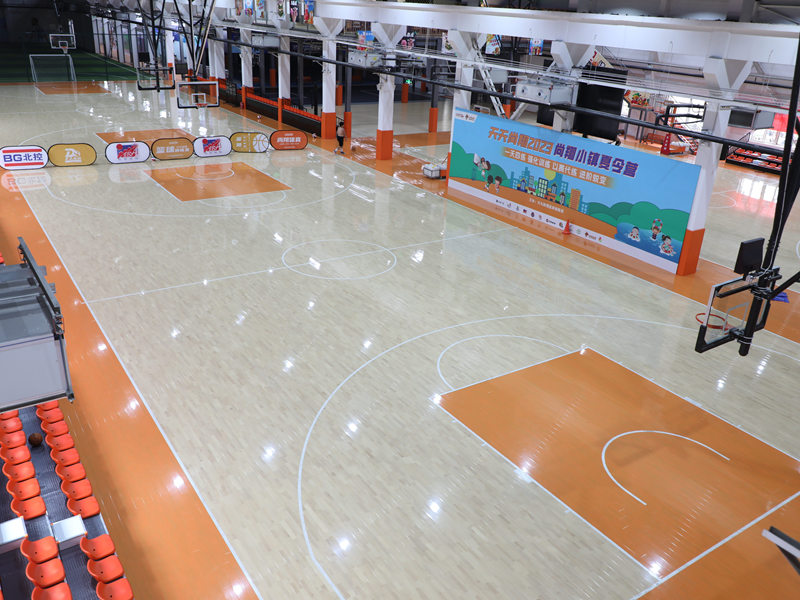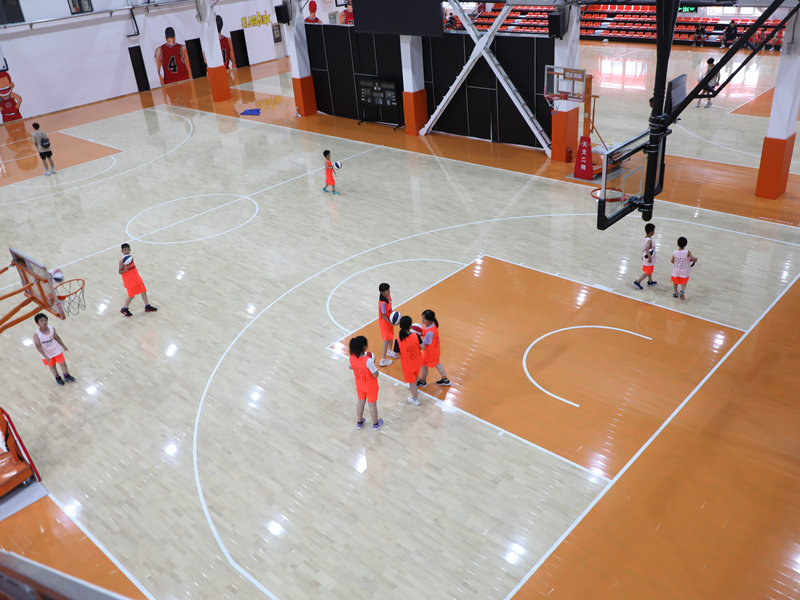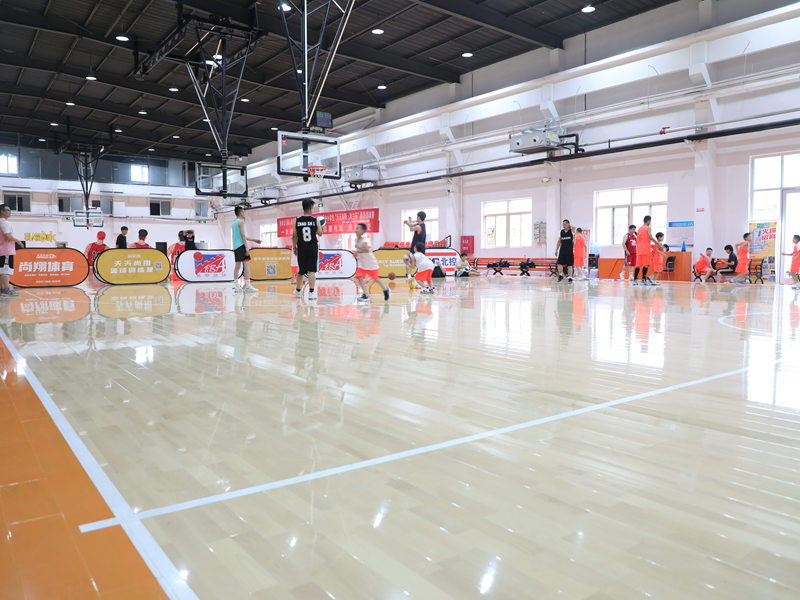
The subfloor is the unsung hero of indoor basketball court hardwood flooring. While the hardwood gets all the attention — the look, the feel, the ball bounce — it is the subfloor that determines whether the hardwood performs well or fails prematurely. A poorly designed or installed subfloor can cause squeaking, uneven wear, movement, and even structural damage. This article explores everything you need to know about the subfloor system.
What Is the Subfloor?
The subfloor is the layer of material installed directly over the structural floor (typically a concrete slab) and directly under the hardwood. It serves as the foundation for the entire flooring system. The most common subfloor materials for basketball courts are plywood and oriented strand board (OSB).
Plywood is the preferred choice for basketball courts because of its dimensional stability and strength. It is made of thin layers of wood veneer glued together with alternating grain directions, which makes it resistant to warping and movement. The standard thickness for basketball court subfloor is 3/4 inch, though 1/2-inch plywood is sometimes used in residential settings.
OSB is a less expensive alternative made of compressed wood strands. While it is adequate for some applications, it is generally not recommended for basketball courts because it is less stable and more prone to movement under heavy loads.
Subfloor Requirements for Basketball Courts
The subfloor for a basketball court must meet several strict requirements:
Flatness. The subfloor must not deviate more than 3/16 inch over any 10-foot span. This is the single most important subfloor requirement. Any deviation beyond this tolerance will cause the finished floor to feel uneven and will lead to premature wear.
Levelness. The entire subfloor must be level within 1/8 inch over the entire court. This ensures that the hardwood lays flat and that ball bounce is consistent.
Strength. The subfloor must be strong enough to support the weight of the hardwood, the players, and the equipment. A minimum of 19/32-inch plywood or equivalent is typically required.
Dryness. The subfloor moisture content must be below 12 percent before hardwood installation. Moisture testing should be conducted before the subfloor is covered.
The Role of the Moisture Barrier
A moisture barrier is installed between the concrete slab and the subfloor (or between the subfloor and the hardwood, depending on the design). This barrier prevents moisture from the concrete from migrating into the wood. The most common barrier is a 6-mil polyethylene sheet, but specialized moisture-retarder underlayments are also available.
The Role of the Cushioning System
In many basketball court installations, a cushioning system is installed between the subfloor and the hardwood. This system provides shock absorption and helps meet the vertical deformation requirements set by governing bodies. Common cushioning materials include rubber pads, foam underlayment, and spring-based systems.
The cushioning system must be compatible with the hardwood installation method. For nail-down installations, the cushioning is typically installed as individual pads or a continuous sheet. For floating installations, the cushioning is part of the underlayment system.
Common Subfloor Problems and Solutions
Squeaking is the most common subfloor-related complaint. It is caused by movement between the subfloor and the concrete slab, usually due to inadequate fastening or moisture. The solution is to add fasteners or to install a layer of construction adhesive between the subfloor and the slab.
Uneven wear is typically caused by an uneven subfloor. The solution is to shim the low areas or, in severe cases, to remove and replace the subfloor.
Movement or bouncing of the floor is caused by an inadequately fastened or insufficiently thick subfloor. The solution is to add fasteners or to install a thicker subfloor.
The Bottom Line
The subfloor is the foundation of the entire flooring system. Investing in a high-quality, properly installed subfloor is one of the best decisions a facility can make. It ensures that the hardwood performs at its best, lasts as long as possible, and provides a safe, consistent playing surface.