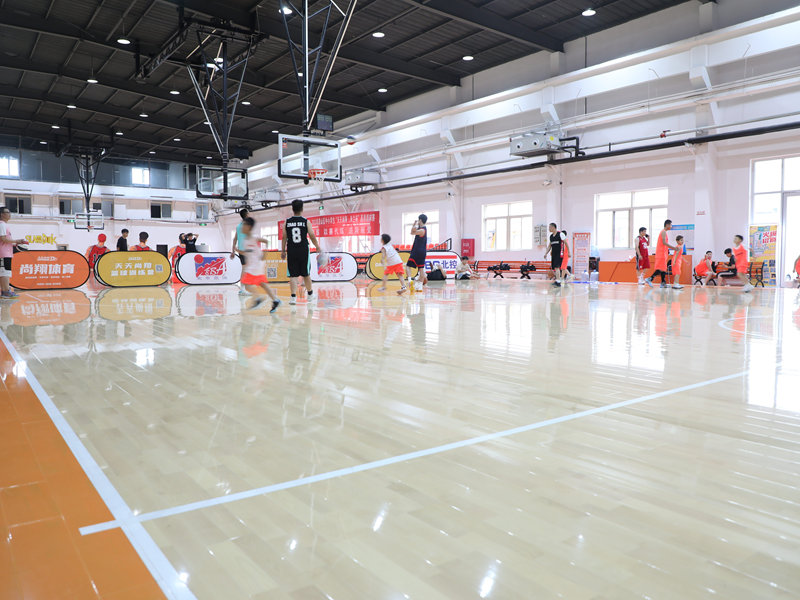
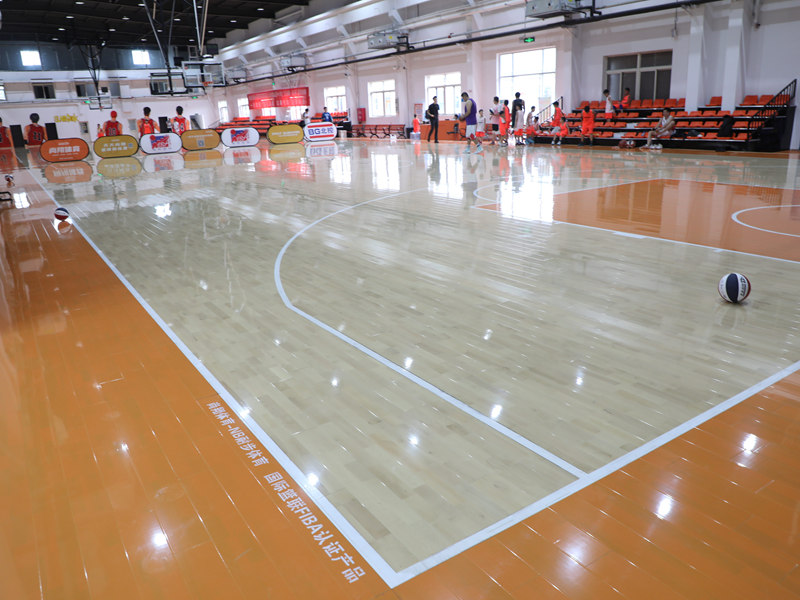
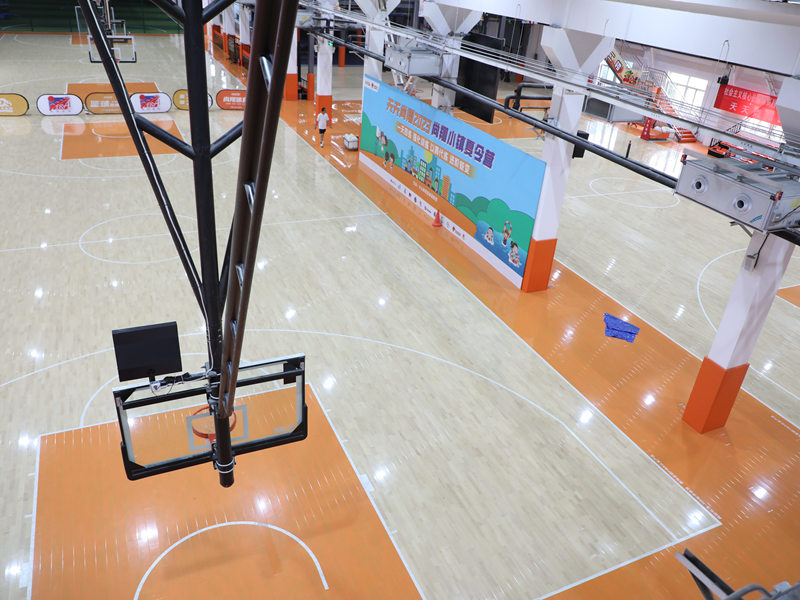
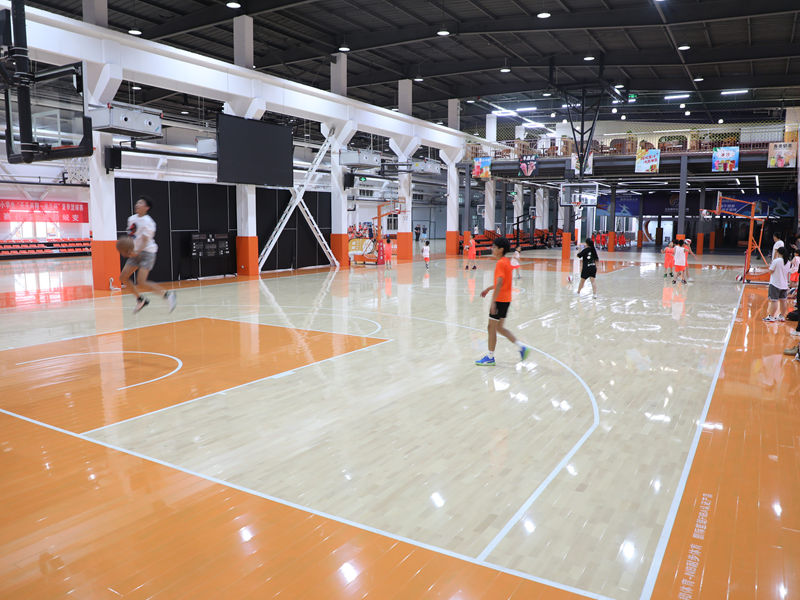
The finish on a basketball court wood floor is not just a protective layer. It is a critical performance component that directly affects ball response, traction, and the overall playing experience. Understanding how the finishing and coating process works can help you appreciate the complexity and precision involved in creating a quality court floor.

The process begins after the wood flooring is installed and sanded. The sanding removes any imperfections and creates a perfectly smooth, even surface. The floor is then cleaned to remove all dust and debris. Any remaining gaps or seams are filled with a flexible filler that moves with the wood.
The first coat applied is typically a sealer or primer. This coat penetrates the wood grain and creates a base for the subsequent finish coats. It also helps to even out any color variations in the wood. The sealer is allowed to dry completely before the next coat is applied.
The next coats are the finish coats themselves. These are the coats that give the floor its final appearance and performance characteristics. For basketball courts, the finish is a specialized athletic coating, not a standard polyurethane. Athletic finishes are formulated to provide a specific level of gloss, traction, and ball response. The gloss level is typically between 10 and 30 percent, which is low enough to reduce glare but high enough to give the floor a clean, professional look.
The finish is applied in multiple thin coats, usually three to five coats total. Between each coat, the floor is lightly sanded with a very fine grit sandpaper to ensure adhesion and smoothness. This process is time-consuming and requires a high level of skill. Too many coats can make the finish too thick, which can affect ball response. Too few coats can leave the floor under-protected and prone to wear.
After the final coat of finish is applied, the floor must cure for a specified period, typically 24 to 72 hours, depending on the product. During this time, the floor must be protected from foot traffic, moisture, and dust.
Once the finish is fully cured, the court lines are painted. The paint used for court lines is also a specialized athletic paint that is designed to adhere to the finish without peeling or flaking. The lines are applied using stencils to ensure precision and consistency.
The entire finishing process, from sealer to final line painting, can take five to ten days. It is a process that requires patience, precision, and expertise. Rushing any step can compromise the performance of the entire floor.
One important note: the finish is not permanent. It will wear down over time, particularly in high-traffic areas. This is why periodic touch-ups and full refinishing are necessary. A well-maintained finish is the key to a long-lasting, high-performing court.