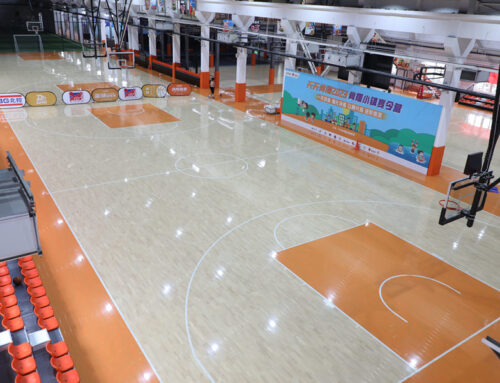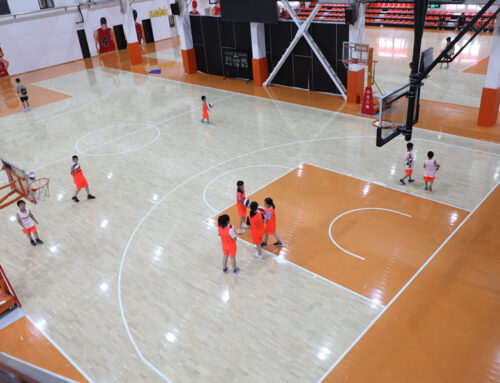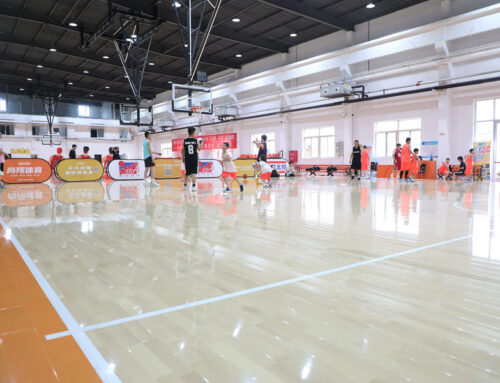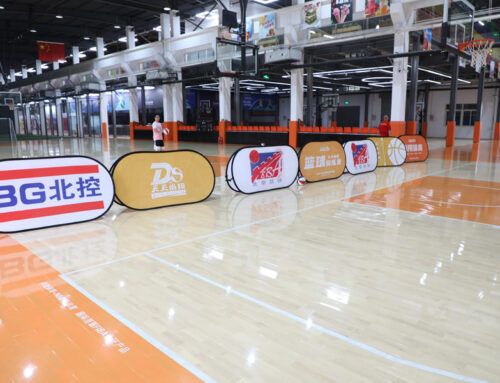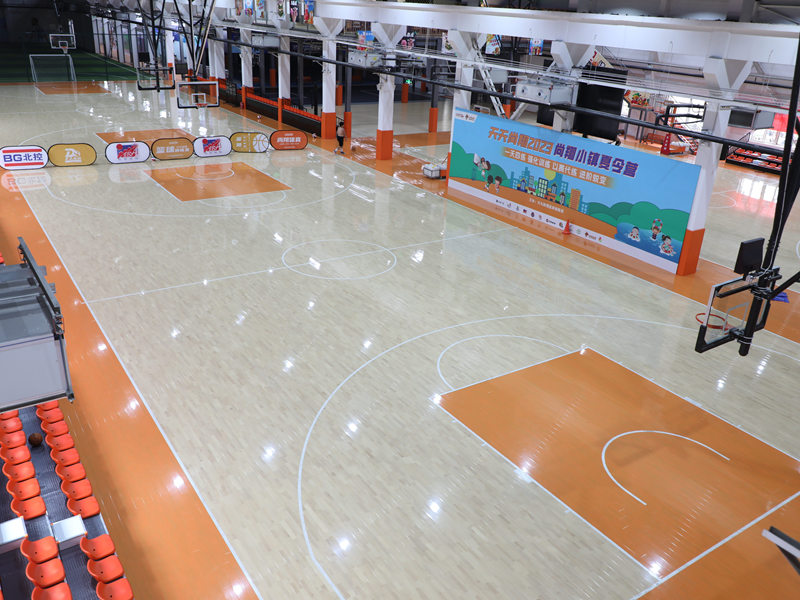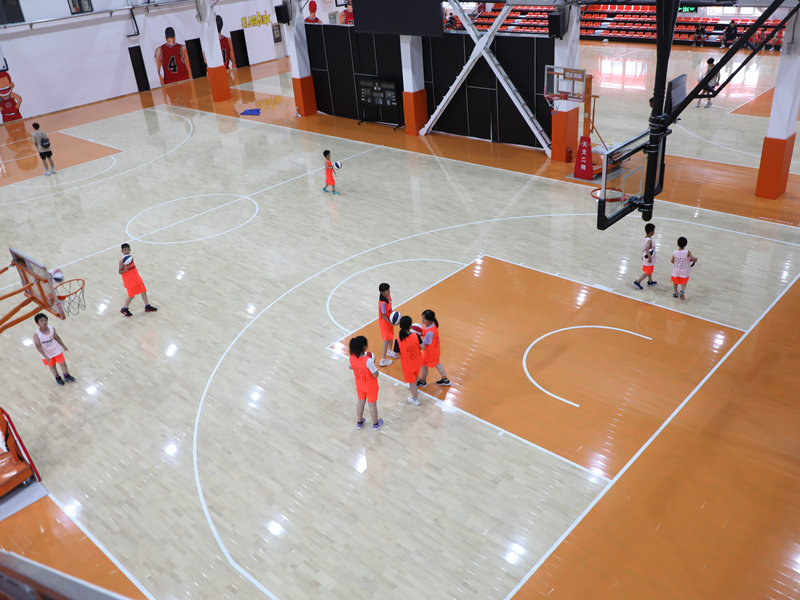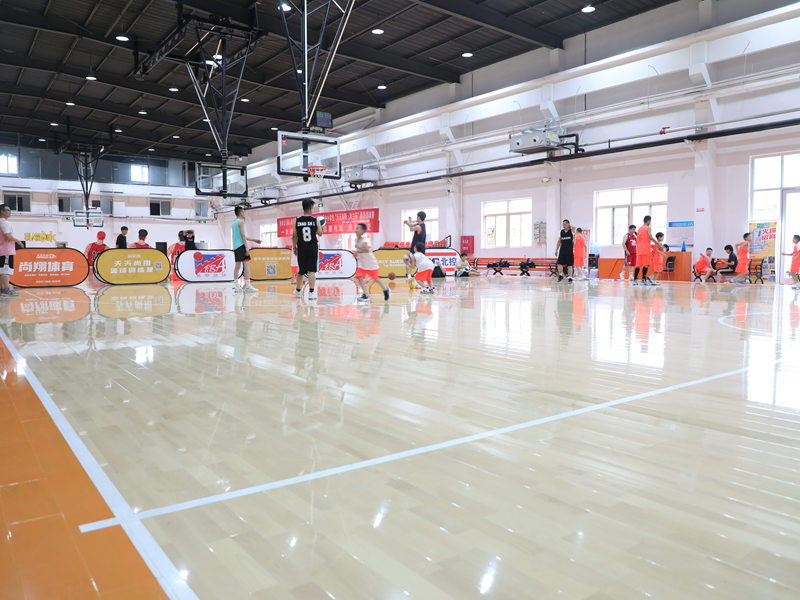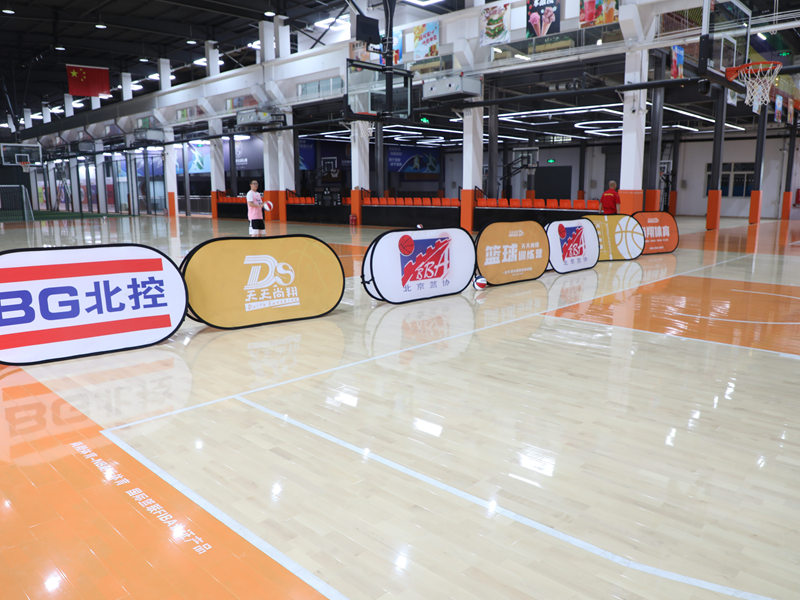
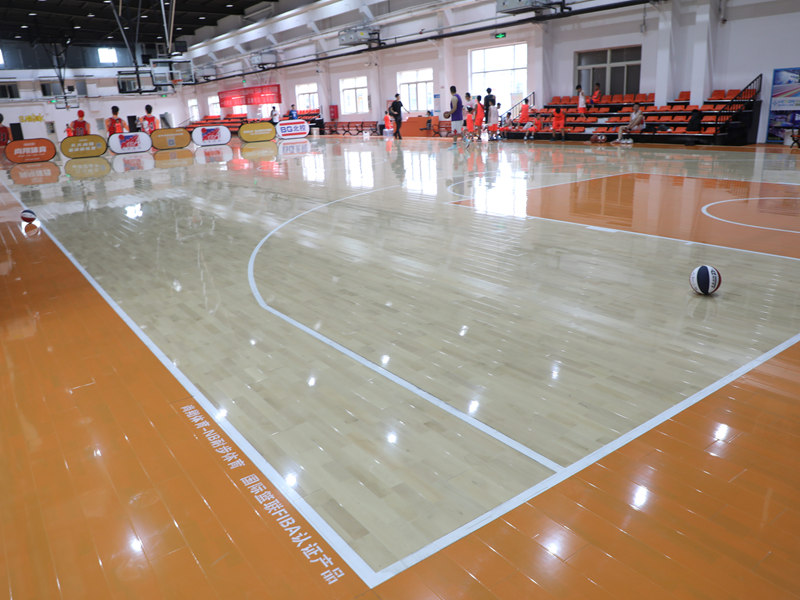
Basketball court wood flooring has been around for over a century, and the basic technology has not changed much. Sugar maple, nail-down installation, polyurethane finish — these are the same standards used in professional arenas today that were used 50 years ago. But the industry is evolving. New materials, new finishes, new installation methods, and new sustainability practices are reshaping the future of basketball court flooring. Here is what to expect in the coming years.
Wider Planks and Longer Lengths
One of the most visible trends in basketball court flooring is the move toward wider and longer planks. Traditional court planks are 2.25 inches wide and 3 to 7 feet long. Newer installations are using planks that are 3 to 5 inches wide and up to 10 feet long. Wider planks create fewer seams, which means a smoother playing surface with more consistent ball bounce. Longer planks reduce the number of joints, which improves durability and reduces maintenance. This trend is already popular in professional arenas and is slowly making its way to college and high school gyms.
Engineered Wood Is Gaining Ground
Engineered wood is becoming the preferred choice for more basketball court installations, especially in schools, recreational facilities, and international markets. Advances in manufacturing have produced engineered products with thicker wear layers (up to 8 millimeters) that can be sanded 2 to 3 times. These products offer the performance of solid hardwood with the dimensional stability and moisture resistance of engineered construction. As costs continue to decrease and quality continues to improve, engineered wood will likely become the dominant choice for basketball court flooring within the next decade.
Water-Based Finishes Are Replacing Oil-Based Ones
Traditional polyurethane finishes are oil-based, which means they emit volatile organic compounds (VOCs) during application and curing. This is a health concern for players, staff, and the environment. The industry is shifting toward water-based polyurethane finishes, which have significantly lower VOC emissions while providing comparable durability and performance. Water-based finishes also dry faster, reducing downtime between coats. This trend is driven by both environmental regulations and consumer demand for healthier indoor spaces.
Sustainability Is No Longer Optional
Sustainability is rapidly becoming a requirement, not a preference, for basketball court flooring. Gym owners and school districts are demanding FSC-certified wood, low-VOC finishes, and responsibly sourced materials. Bamboo and cork are emerging as eco-friendly alternatives to traditional maple, though they have not yet reached the performance level required for professional play. The future of basketball court flooring will be defined by how well the industry balances performance with environmental responsibility.
Smart Flooring Technology
While still in its early stages, smart flooring technology is beginning to appear in basketball courts. Sensors embedded in the floor can track player movement, measure jump height, monitor ball bounce consistency, and even detect early signs of floor damage. This data can be used to optimize training, prevent injuries, and schedule maintenance proactively. While smart flooring is currently limited to professional and collegiate facilities, it will likely become standard in all basketball courts within the next 15 to 20 years.
The Enduring Dominance of Maple
Despite all these innovations, one thing is unlikely to change: sugar maple will remain the dominant species for basketball court flooring for the foreseeable future. No other wood matches maple’s combination of hardness, grain uniformity, dimensional stability, energy return, and aesthetic appeal. New materials may complement maple in certain applications, but they will not replace it as the gold standard for basketball.
The future of basketball court wood flooring is bright. It is more sustainable, more durable, more consistent, and more technologically advanced than ever before. And at its core, it is still the same beautiful, high-performance surface that has defined the game of basketball for over a century.