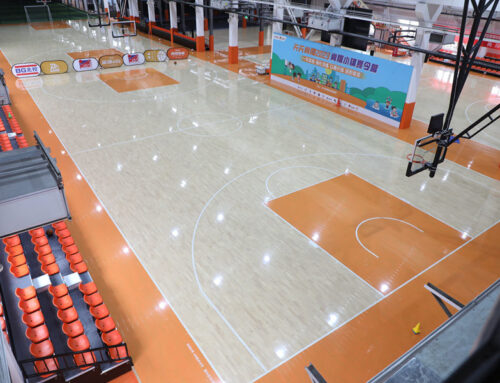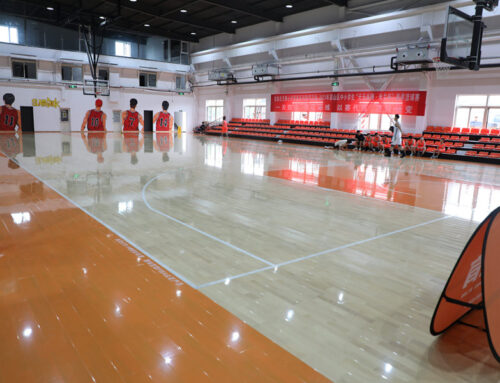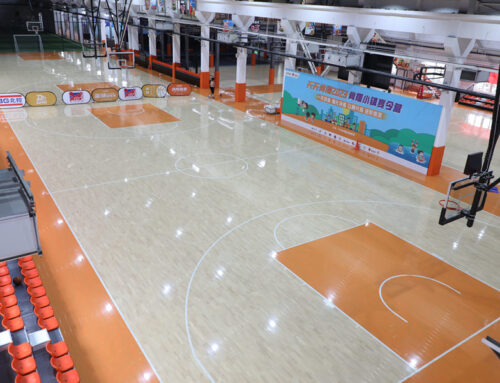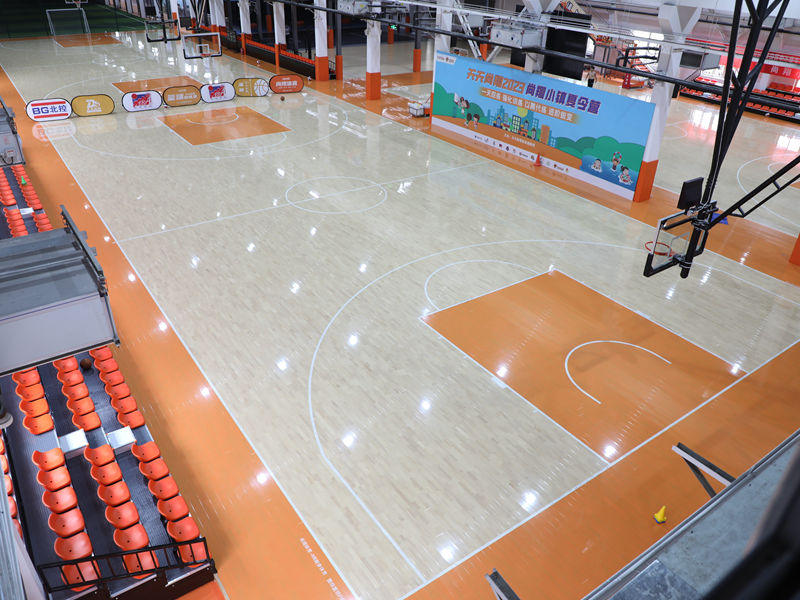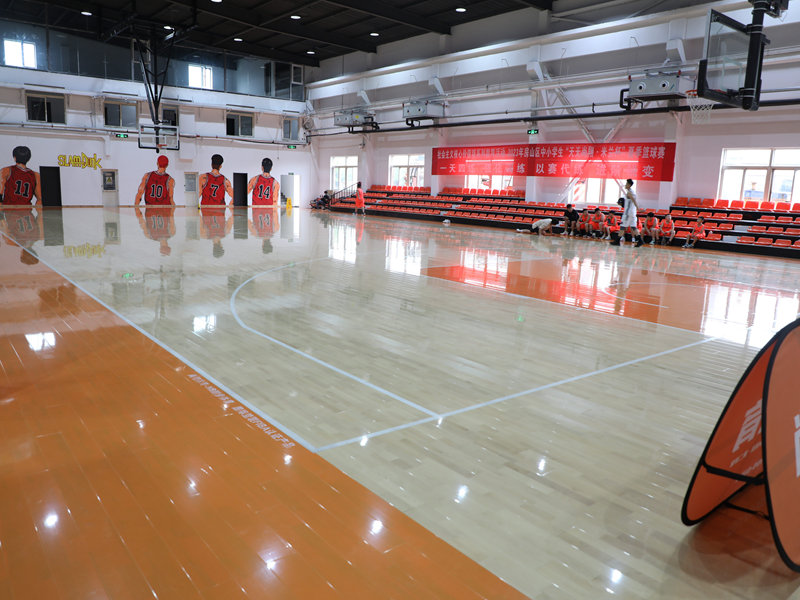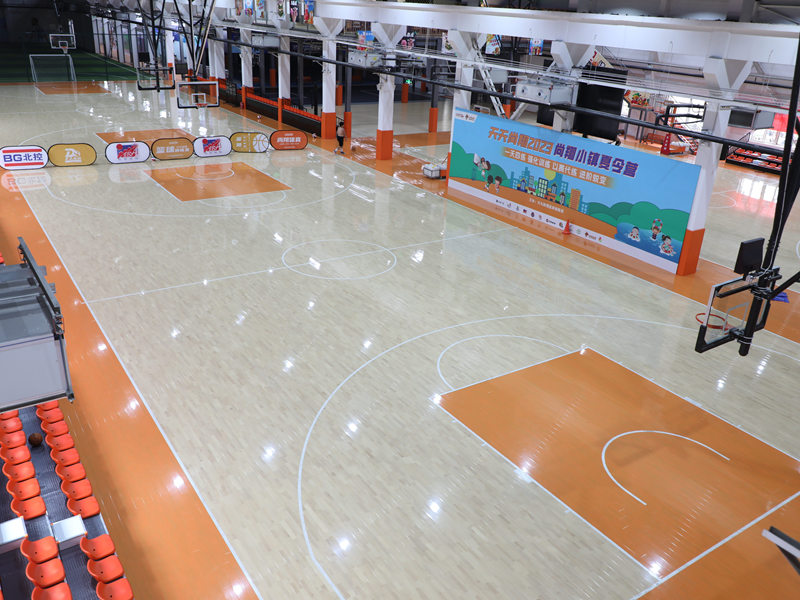
When people talk about basketball court hardwood, they often assume there is only one type of wood involved. In reality, the selection of wood species is one of the most important decisions in the entire flooring process. Different woods offer different characteristics in terms of hardness, grain pattern, color, cost, and durability. Choosing the right wood can mean the difference between a court that performs beautifully for decades and one that shows wear and tear within a few years.
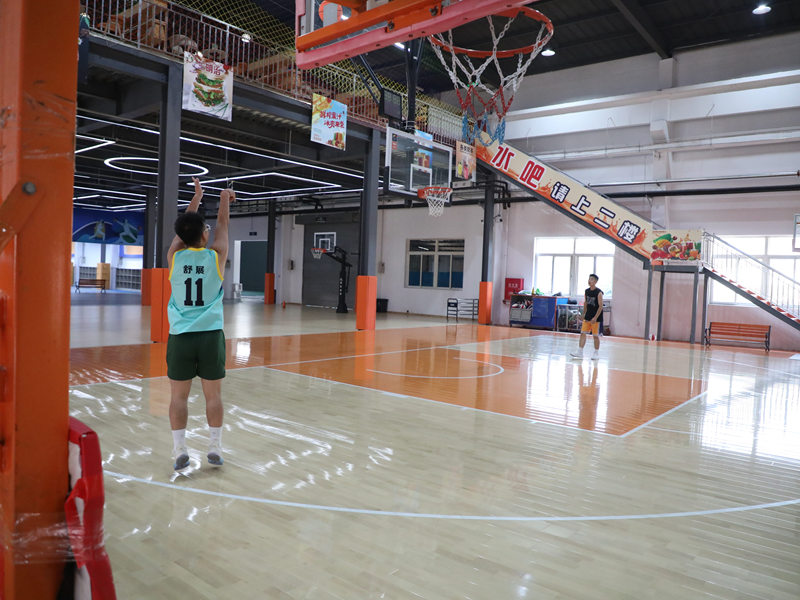
In this article, we will explore the most common types of wood used in basketball court construction, their unique properties, and why certain species are preferred over others.
Maple: The Undisputed Champion
If you walk into any professional basketball arena in the world, chances are the floor is made of hard maple. Specifically, sugar maple (Acer saccharum) or black maple (Acer nigrum) are the two species most commonly used. Maple has become the standard for basketball court flooring for very good reasons.
First, maple is extremely hard. On the Janka hardness scale, which measures a wood’s resistance to denting and wear, sugar maple scores around 1,450 pounds of force. This makes it one of the hardest domestic woods available. For a basketball court, which endures constant impact from players’ shoes, dropped balls, and sliding movements, this hardness is essential.
Second, maple has a tight, uniform grain. This means the surface is smooth and consistent, which translates to a predictable ball bounce and even wear over time. Woods with loose or irregular grain patterns can develop uneven surfaces as they age, leading to inconsistent bounce and potential safety hazards.
Third, maple has a beautiful, light color that is perfect for basketball courts. The pale blonde to creamy white tone of maple provides excellent contrast with court markings and creates a bright, clean playing surface. This is why you see maple in virtually every professional and collegiate arena.
Oak: A Strong Alternative
Red oak (Quercus rubra) and white oak (Quercus alba) are sometimes used as alternatives to maple, particularly in recreational facilities and high school gymnasiums where budget constraints are a factor. Oak is slightly softer than maple, with a Janka hardness of around 1,290 to 1,360 pounds, but it is still more than adequate for basketball use.
Oak has a more pronounced grain pattern than maple, which gives it a distinctive look. Some facility owners actually prefer this aesthetic, as it adds character to the court. However, the more open grain of oak can make it slightly more susceptible to moisture absorption, which is a concern in humid environments.
Oak is also generally less expensive than maple, making it an attractive option for schools and community centers that need to balance quality with cost.
Birch: The Budget-Friendly Option
Yellow birch (Betula alleghaniensis) is another wood that appears in basketball court construction, though less frequently than maple or oak. Birch is harder than oak but slightly softer than maple, with a Janka rating of around 1,260 to 1,500 pounds depending on the specific variety.
Birch has a similar appearance to maple but tends to be slightly more yellowish in tone. It is often used in facilities where the budget does not allow for full maple construction but the owners still want a hardwood surface. Birch floors can be refinished just like maple, though they may not last quite as long under heavy use.
Ash: The Forgotten Contender
White ash (Fraxinus americana) was actually used in some early basketball courts and is still occasionally specified today. Ash has a Janka hardness of around 1,320 pounds, placing it between oak and maple. It has a straight grain and a light color similar to maple.
However, ash has fallen out of favor in recent years due to the emerald ash borer, an invasive insect that has devastated ash populations across North America. This has made ash more expensive and less reliable as a supply source, leading most specifiers to choose maple or oak instead.
Exotic Hardwoods: Beautiful but Problematic
Some facility owners have experimented with exotic hardwoods such as teak, ipe, cumaru, and jarrah for basketball courts. These woods are incredibly dense and durable — ipe, for example, has a Janka hardness of over 3,600 pounds, making it one of the hardest woods on the planet.
However, exotic hardwoods come with significant drawbacks. They are much more expensive than domestic species, often costing three to five times as much. They can also be difficult to source sustainably, and some species are so dense that they do not provide the same ball bounce characteristics as maple. The extremely hard surface can make the ball bounce too high or too unpredictably, which is why professional organizations do not recommend exotic woods for competitive play.
The Role of Engineered vs. Solid Wood
It is also worth noting that basketball court floors can be constructed from either solid wood planks or engineered wood. Solid wood is exactly what it sounds like — a single piece of wood milled to the required thickness. Engineered wood consists of multiple layers of wood bonded together, with a hardwood veneer on top.
Solid wood is preferred for professional courts because it can be sanded and refinished many times. Engineered wood, on the other hand, has a limited veneer thickness — typically 3 to 6 millimeters — which means it can only be refinished a few times before the veneer is worn through. For high-traffic basketball courts, solid wood is almost always the better choice.
Conclusion
The type of wood you choose for your basketball court flooring matters enormously. Maple remains the gold standard for its hardness, consistency, and beauty. Oak offers a solid, cost-effective alternative. Birch provides a budget-friendly option with good performance. And while exotic hardwoods may look stunning, they are generally impractical for basketball use. Understanding these differences will help you make the best decision for your facility, your budget, and your players.