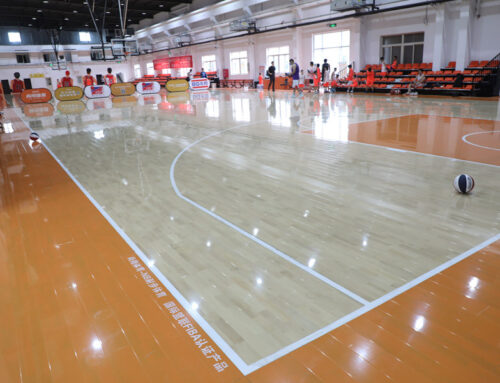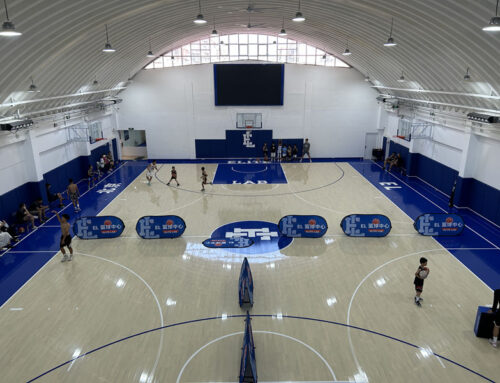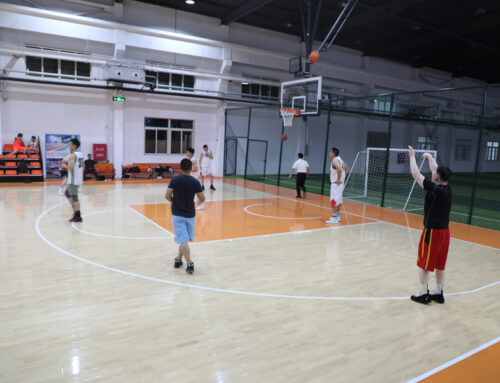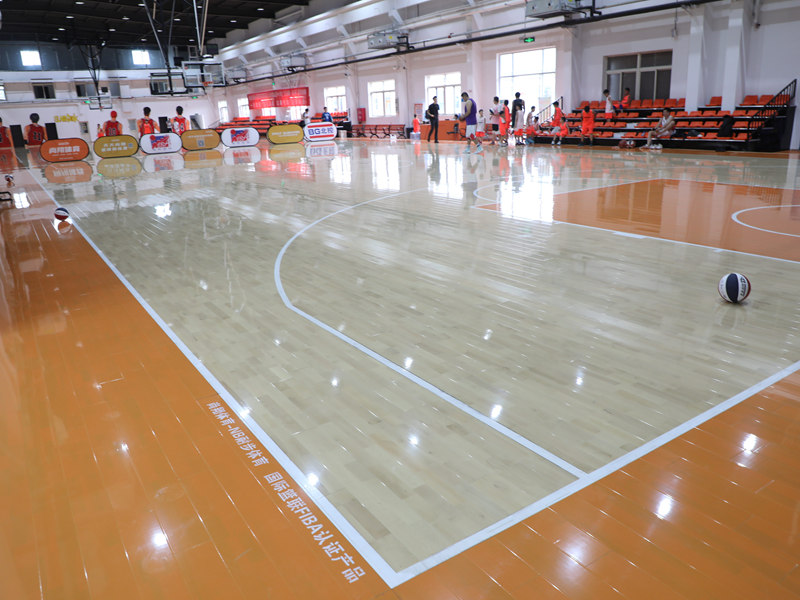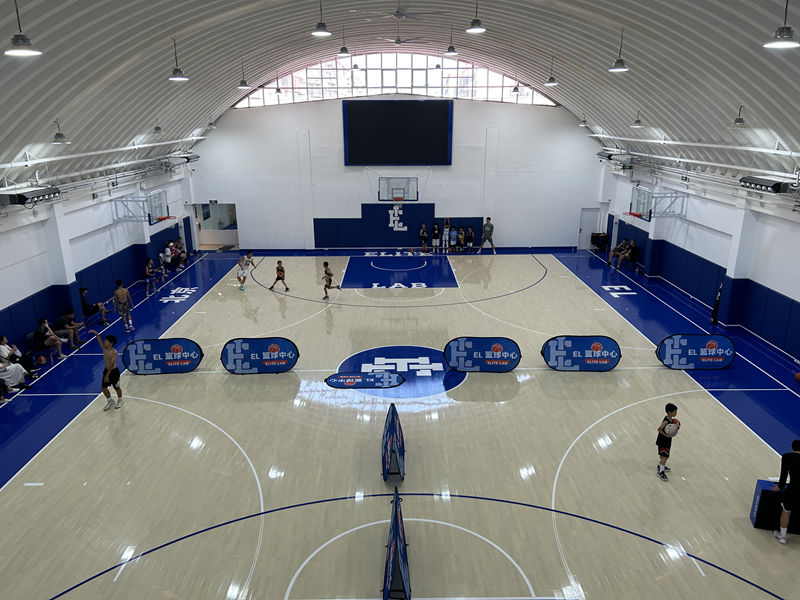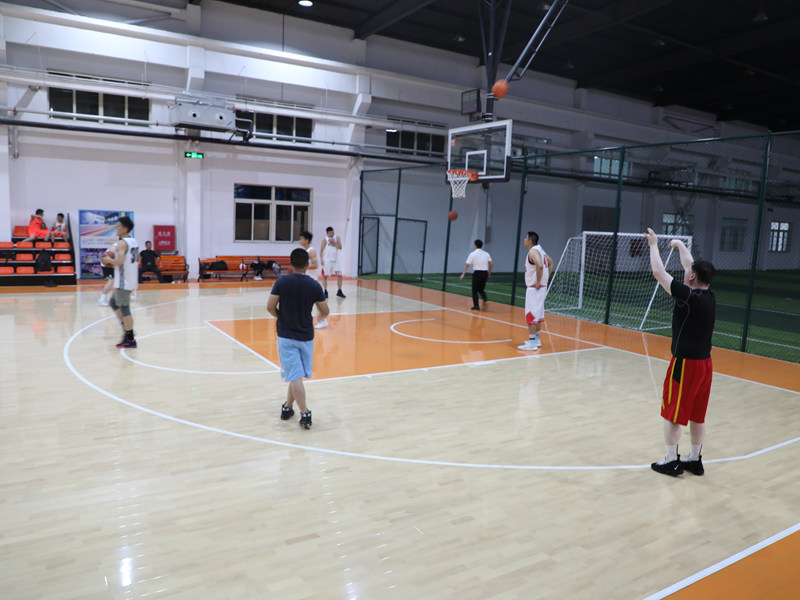
When athletes step onto a basketball court, they have very specific expectations. They expect the ball to bounce true. They expect the floor to grip their shoes when they need it and release when they need to move. They expect the surface to feel solid under their feet, not spongy or unstable. Interlocking wooden flooring has been engineered to meet all of these expectations, and its sports performance is one of the primary reasons it has become the flooring of choice for indoor basketball courts worldwide.
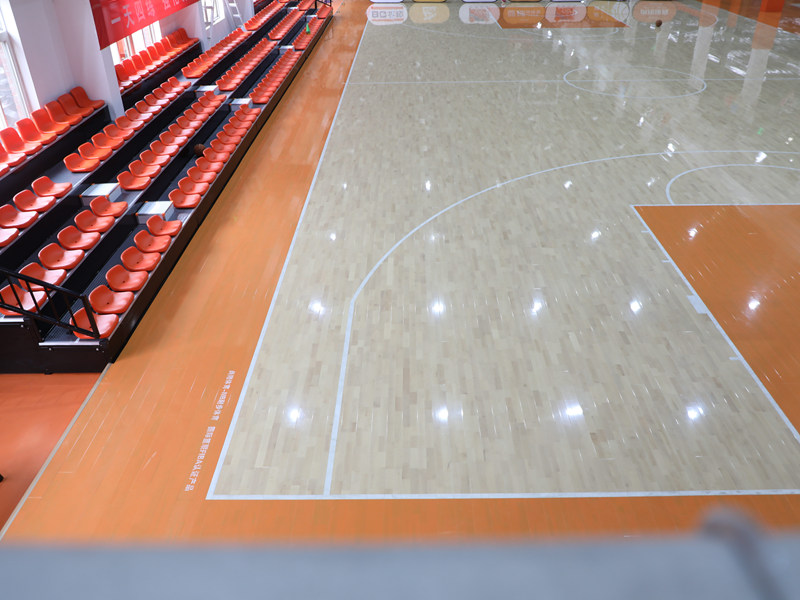
Ball response is the foundation of basketball performance, and interlocking wooden flooring excels in this area. The hardwood surface provides a dense, uniform playing field that returns the ball’s energy consistently. Whether the ball hits the floor at a steep angle from a three-point shot or at a shallow angle from a layup, the bounce is predictable and reliable. This consistency is critical for players at all levels, from beginners learning to dribble to professionals executing complex plays under pressure.
Traction is the second critical performance factor. Basketball requires players to change direction rapidly, often on a dime. The floor must provide enough grip to allow these movements without causing the foot to stick. Interlocking wooden flooring achieves this balance through its finish. The surface is not slippery like polished concrete, nor is it so sticky that it grabs the shoe. It sits in the sweet spot that allows players to push off explosively and stop quickly without risking injury.
Energy return is a more subtle but equally important performance characteristic. When a player pushes off the floor to jump or sprint, they want the floor to give some energy back. A completely dead floor feels like running on sand. Interlocking wooden flooring provides a moderate level of energy return that makes movement feel efficient and natural. The combination of a firm wood surface and a responsive core layer ensures that players do not feel like they are fighting the floor.
Surface temperature also affects performance. Concrete and synthetic floors can feel cold, especially in air-conditioned gyms. Wood, by contrast, has a natural warmth that feels comfortable underfoot. This may seem like a minor detail, but it contributes to the overall playing experience and can help players stay loose and relaxed.
Vertical deformation, as discussed in previous articles, is tuned to provide enough cushioning to protect joints without compromising stability. Players need to feel planted on the court, not floating. Interlocking flooring delivers this planted feeling while still absorbing the impact of landings.
In competitive settings, every fraction of a second and every millimeter of bounce matters. Interlocking wooden flooring provides the consistent, high-performance surface that athletes need to play their best game. It is not just a floor. It is a performance platform.