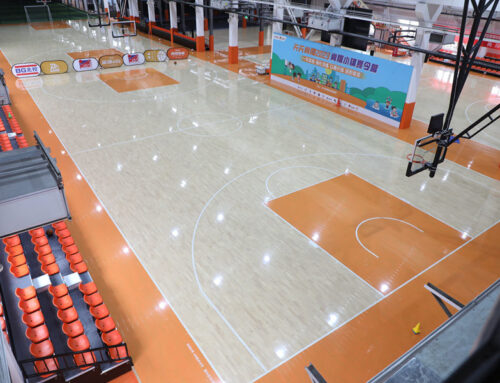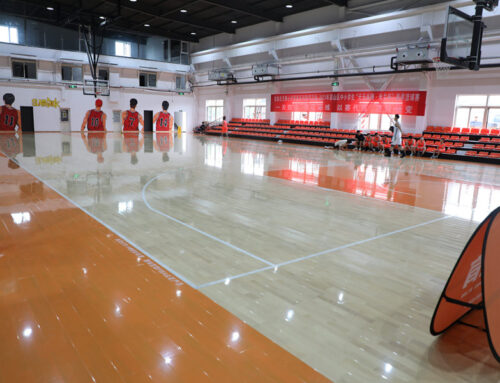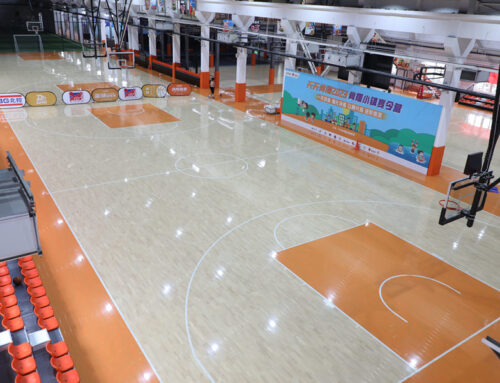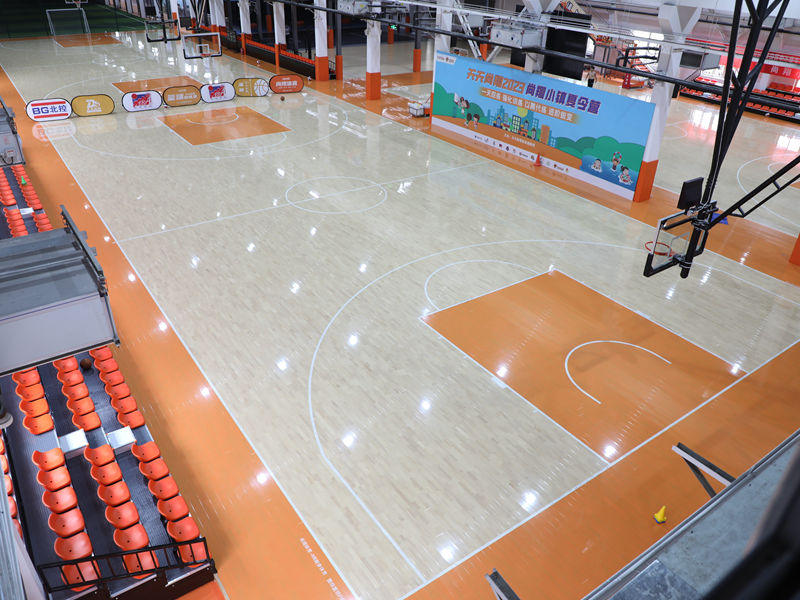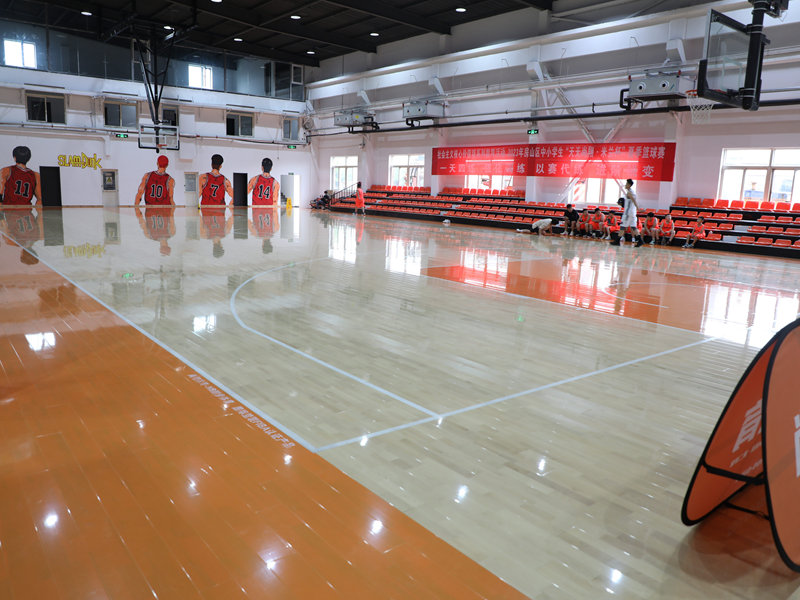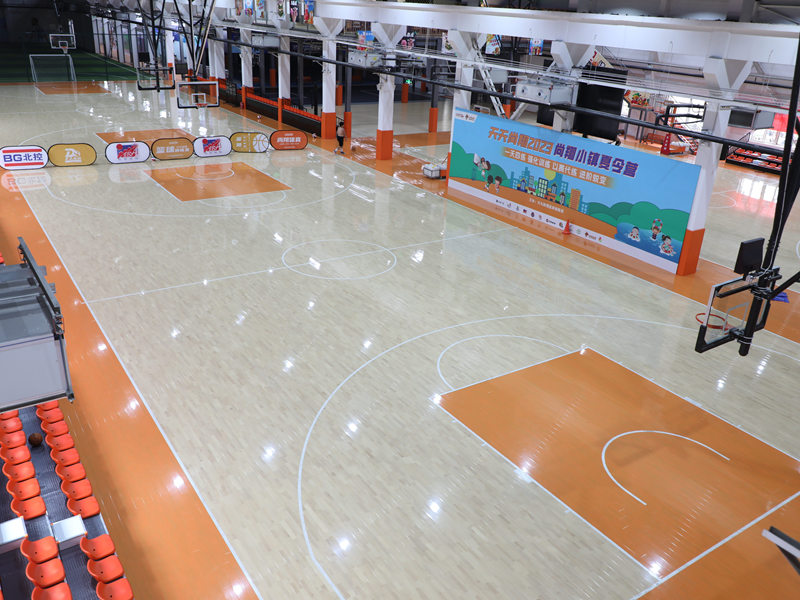
Over time, the finish on an indoor sports wooden floor will wear down due to foot traffic, shoe abrasion, and cleaning. When the finish becomes dull or shows signs of wear, it is time to refinish the floor. Refinishing is the process of removing the old finish and applying a new one, restoring the floor to its original performance and appearance. In this article, we will walk through the refinishing process step by step.
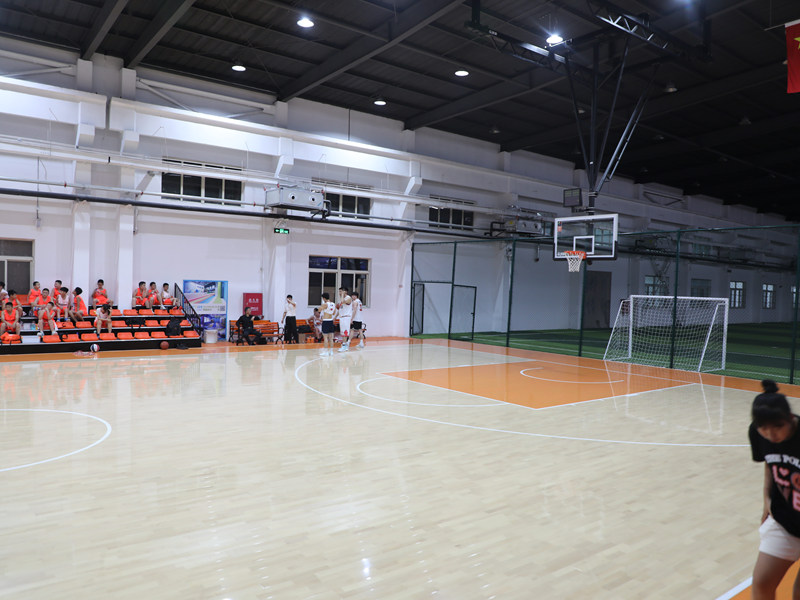
The first step in the refinishing process is to assess the condition of the floor. This involves inspecting the surface for scratches, dents, stains, and areas of uneven wear. The inspector will also measure the thickness of the remaining wood each sanding stage, the floor is cleaned thoroughly to remove all dust and debris. Any gaps between the panels are filled with a wood filler that matches the color of the wood. The filler is sanded smooth once it has dried.
Once the floor is completely sanded and clean, the new finish is applied. For lacquered floors, the finish is applied in multiple thin coats using a roller or a spray system. Each coat is allowed to dry completely before the next one is applied. Typically, three to five coats are applied, with light sanding between each coat to ensure a smooth, even finish.
For oiled floors, the oil is applied using a mop or a roller, and it is allowed to soak into the wood for a specified period. Excess oil is then removed, and the floor is left to dry. Multiple coats may be applied, depending on the desired level of protection and appearance.
After the finish has cured, the line markings are reapplied. The lines are painted or taped onto the floor using specialized sports paint that is designed to adhere to the new finish without damaging it.
The entire refinishing process typically takes three to five days, depending on the size of the facility and the number of coats of finish required. During this time, the facility is usually closed to allow the finish to cure properly.
The cost of refinishing is significantly less than the cost of replacing the entire floor, making it a cost-effective way to extend the life of the floor. A properly refinished floor can look and perform like new, providing many more years of reliable service.
In conclusion, refinishing is an essential part of maintaining an indoor sports wooden floor. By following a systematic process of assessment, sand can cause the wood to lose moisture and shrink.
To combat these challenges, modern sports wooden floors are designed with climate adaptation in mind. Engineered wood flooring, for example, is more dimensionally stable than solid wood because the multiple layers of wood are arranged in alternating directions, which counteracts the natural tendency of wood to expand and contract. This makes engineered flooring a better choice for facilities in climates with significant seasonal variations.
The installation process also plays a crucial role in moisture management. A moisture barrier is installed between the subfloor and the wooden panels to prevent moisture from the concrete from migrating upward into the wood. The subfloor is also tested for moisture content before installation, and any excess moisture is addressed before the floor is laid.
HVAC systems are used to control the temperature and humidity in the facility. The ideal relative humidity for a sports wooden floor is between 40 and 60 percent, and the ideal temperature is between 18 and 22 degrees Celsius. These conditions can be maintained using a combination of humidifiers, dehumidifiers, and air conditioning.
In facilities where the climate cannot be fully controlled, such as outdoor or semi-outdoor courts, special measures must be taken. The floor may need to be covered when not in use to protect it from rain and humidity. Dehumidifiers may need to run continuously to maintain the ideal moisture level.
Regular monitoring of the moisture content is essential for maintaining the floor. Moisture meters can be used to check the moisture content of the wood at various points on the floor. If the moisture content is outside the ideal range, corrective action should be taken immediately.
The finish on the floor also plays a role in moisture management. A by wooden flooring. The consistent traction of a wooden surface allows athletes to make sharp cuts and pivots without losing their footing. On surfaces that are too grippy, such as rubber, the foot can get “stuck” during a direction change, slowing the athlete down and increasing the risk of injury. On surfaces that are too slippery, the foot can slide, causing the athlete to lose balance.
Reaction time is another performance factor that is influenced by the floor. A consistent, predictable surface allows athletes to develop muscle memory and react more quickly to changing situations. On an uneven or inconsistent surface, the athlete’s brain must constantly adjust to variations in the terrain, which slows reaction time. Wooden flooring provides a uniform surface that allows for fast, automatic reactions.
Jump height is directly affected by the shock absorption and energy return of the floor. A floor with good shock absorption reduces the impact force on landing, which means that the muscles do not have to work as hard to decelerate the body. This allows the athlete to rebound more quickly and with more power, resulting in higher jumps. Studies have shown that athletes jump an average of two to three centimeters higher on a properly installed wooden floor compared to a hard surface.
Endurance is also improved on wooden flooring. The reduced impact forces mean that the muscles and joints do not fatigue as quickly, allowing athletes to maintain their performance level for longer periods. This is particularly important in sports that involve sustained high-intensity activity, such as basketball and handball.
Consistency is perhaps the most important performance benefit of wooden flooring. A well-maintained wooden floor performs the same way every time an athlete steps on it. The ball b, is the key metric. For sports wooden flooring, the ideal friction coefficient is between 0.4 and 0.6. A coefficient below 0.4 is too slippery, while a coefficient above 0.6 is too grippy, which can cause the foot to get stuck during quick direction changes.
The finish on the floor is the primary factor that determines the friction coefficient. A high-gloss lacquer finish provides a smooth surface with a lower friction coefficient, which is ideal for sports like basketball where quick footwork is essential. A matte or satin finish provides a higher friction coefficient, which is better for sports like badminton and volleyball where grip is more important.
The texture of the wood also affects the anti-slip properties. Wood with a fine, tight grain provides a smoother surface with lower friction, while wood with a more open grain provides a slightly rougher surface with higher friction. Maple, the most common species for basketball courts, has a very fine grain that provides an ideal balance of smoothness and grip.
Shoe selection is another important factor in anti-slip performance. Athletes should wear shoes that are specifically designed for indoor sports and for the type of floor they will be playing on. Shoes with a flat, non-marking sole provide the best grip on a wooden floor. Shoes with a herringbone pattern on the sole are particularly effective, as the pattern provides multiple points of contact with the floor.
The maintenance of the floor also affects its anti-slip properties. A floor that is covered in dust, dirt, or sweat can become slippery, even if the finish is in good condition. Regular cleaning is essential for maintaining the floor’s grip. industry is responding with innovative solutions that promise to make sports floors better, more durable, and more environmentally friendly than ever before. In this article, we will explore the trends and innovations that are shaping the future of indoor sports wooden flooring.
One of the most exciting trends is the development of hybrid flooring systems that combine the best properties of wood with other materials. For example, some manufacturers are experimenting with wood-composite panels that incorporate recycled plastic or bio-based resins. These hybrid floors offer the look and feel of wood with improved durability and moisture resistance.
Sustainability is driving many of the innovations in the industry. As the demand for environmentally responsible products grows, manufacturers are developing new wood species, finishes, and production processes that reduce the environmental impact of sports flooring. Bio-based finishes, which are made from renewable resources rather than petroleum, are becoming increasingly common. These finishes offer the same performance as traditional finishes but with a lower carbon footprint.
Smart flooring technology is another area of rapid development. Sensors embedded in the floor can monitor performance metrics such as shock absorption, ball rebound, and temperature in real time. This data can be used to optimize the floor’s performance, predict maintenance needs, and even provide feedback to athletes. In the future, smart floors may be able to adjust their properties in response to changing conditions, providing a truly adaptive playing surface.
The use of bamboo and other fast-growing grass species is also gaining traction. Bamboo is one of the fastest-growing plants on Earth, making it a highly sustainable alternative to traditional hardwood. While bamboo does not yet match the performance of maple or oak, ongoing research is improving its shock absorption and ball rebound characteristics.
3D printing and digital manufacturing are also beginning to make their mark on the sports flooring industry. These technologies allow for the production of highly precise panels with complex geometries that would be impossible to achieve with traditional milling. This could lead to floors with optimized shock absorption zones, improved drainage, and other performance-enhancing features.
The trend toward multi-purpose facilities is also influencing the development of sports flooring. Floors that can accommodate multiple sports with minimal reconfiguration are in high demand. This requires floors with versatile performance characteristics, such as moderate shock absorption, good ball rebound, and a finish that provides adequate grip for all sports.
Climate change is also shaping the future of sports flooring. As temperatures and humidity levels become more extreme, floors must be designed to perform in a wider range of conditions. This is driving the development of more dimensionally stable wood products, better moisture management systems, and more robust finishes.
The aesthetic trends in sports flooring are also evolving. While the classic light maple look remains popular, there is a growing interest in darker wood tones, custom colors, and decorative patterns. Advances in finish technology make it possible to achieve a wide range of colors and effects without compromising performance.
Finally, the global sports industry is growing, and with it, the demand for high-quality sports flooring. Emerging markets in Asia, Africa, and South America are investing heavily in sports infrastructure, creating new opportunities for the sports flooring industry. This growth is driving innovation and competition, which ultimately benefits athletes and facility owners around the world.
In conclusion, the future of indoor sports wooden flooring is bright and full of possibilities. From hybrid materials and smart technology to sustainability and climate adaptation, the industry is evolving rapidly to meet the changing needs of the sports world. For facility owners and athletes who invest in a wooden sports floor today, the future promises even better performance, durability, and environmental responsibility.