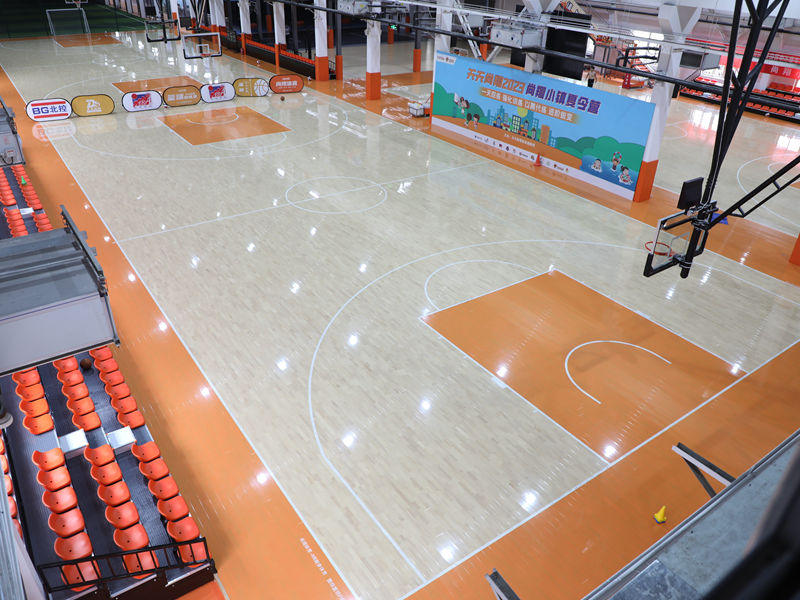
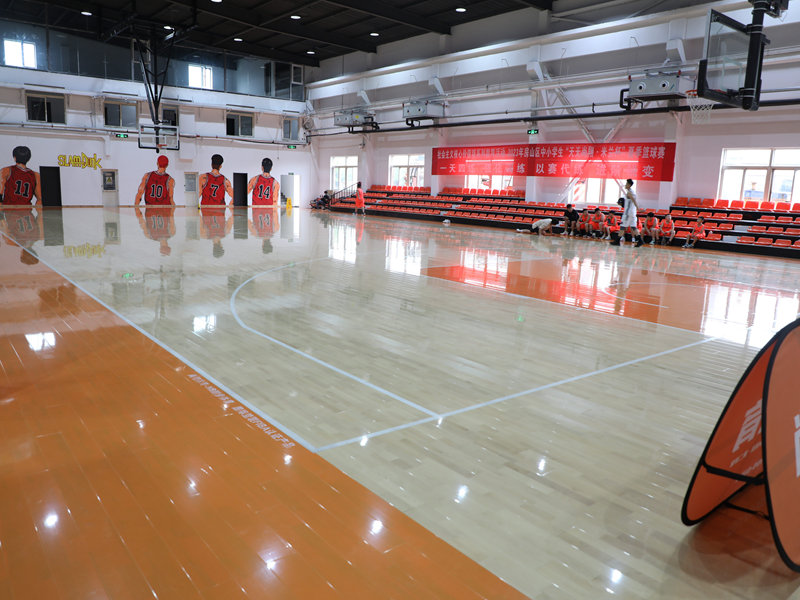
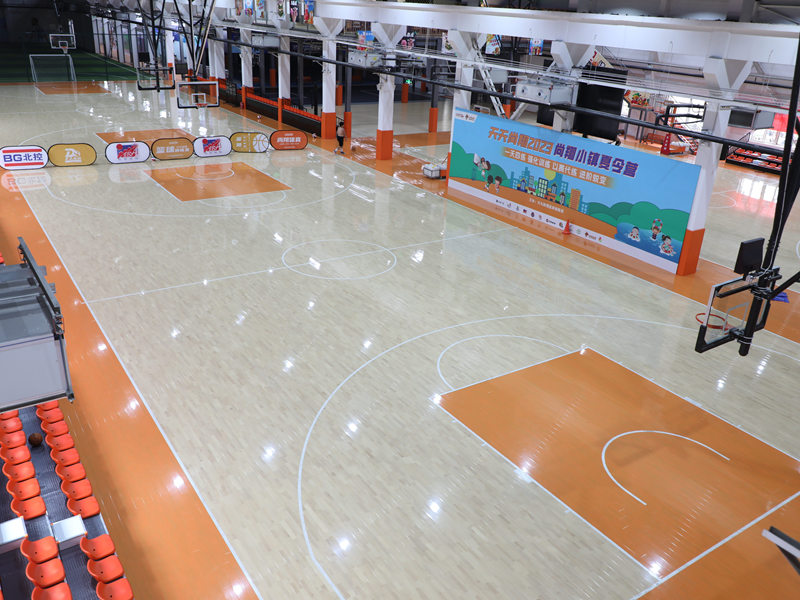
The history of indoor sports wooden flooring is a fascinating journey that mirrors the evolution of organized sports themselves. From the simple wooden planks laid over dirt floors in 19th-century gymnasiums to the precision-engineered systems of today, sports wood flooring has undergone a remarkable transformation driven by advances in material science, manufacturing technology, and our understanding of athletic performance.

The earliest indoor sports were played on whatever surface was available. In the mid-1800s, basketball was invented by James Naismith in a gymnasium with a wooden floor — albeit a very basic one. The original basketball courts were made of wooden planks nailed directly to the joists, with no sub-floor, no shock absorption, and no finish. The floor was rough, uneven, and dangerous by today’s standards, but it was the best that was available at the time.
As basketball and other indoor sports grew in popularity, the need for better playing surfaces became apparent. In the early 1900s, the first dedicated indoor sports arenas were built, and with them came the first attempts at engineering a proper sports floor. The floors of this era were still relatively simple — hardwood planks over a plywood sub-floor — but they represented a significant improvement over the makeshift courts of the past.
The mid-20th century saw the introduction of synthetic materials into sports flooring. Vinyl and rubber floors were developed as cheaper alternatives to wood, and they gained popularity in schools and recreational facilities. However, professional and collegiate athletics continued to rely on hardwood, recognizing its superior performance characteristics.
The real revolution in indoor sports wooden flooring came in the 1970s and 1980s, with the introduction of the multi-layer construction system that is still used today. Engineers discovered that by adding an elastic layer between the hardwood surface and the plywood sub-floor, they could dramatically improve the shock absorption of the floor without sacrificing ball bounce or traction. This innovation transformed sports wood flooring from a simple hardwood surface into a sophisticated performance system.
The 1990s and 2000s brought further advances in materials and manufacturing. Water-based finishes replaced solvent-based finishes, reducing VOC emissions and improving worker safety. Computer-controlled sanding and finishing equipment allowed for more precise and consistent results. The development of engineered hardwood — where multiple thin layers of wood are bonded together with alternating grain directions — improved the dimensional stability of the wearing surface.
Today, indoor sports wooden flooring is a highly engineered product that meets the strictest international standards. The floors used in the Olympics, the NBA, and other top-level competitions are the result of decades of research and development. They are designed to optimize every aspect of performance — ball bounce, shock absorption, traction, flatness, and consistency — while also meeting the highest standards of durability, safety, and environmental sustainability.
Looking to the future, the evolution of indoor sports wooden flooring continues. New materials, such as nano-coatings and advanced polymers, are being tested for use in the elastic layer. Smart sensors are being embedded in floors to monitor performance in real time. Sustainable sourcing practices are becoming more sophisticated, with some manufacturers now using wood from forests that are certified not just for sustainability but for biodiversity and carbon sequestration.
In conclusion, the history of indoor sports wooden flooring is a story of continuous improvement, driven by the desire to create the best possible playing surface for athletes. From its humble beginnings to its current state as a high-tech performance system, sports wood flooring has come a long way — and the best is yet to come.