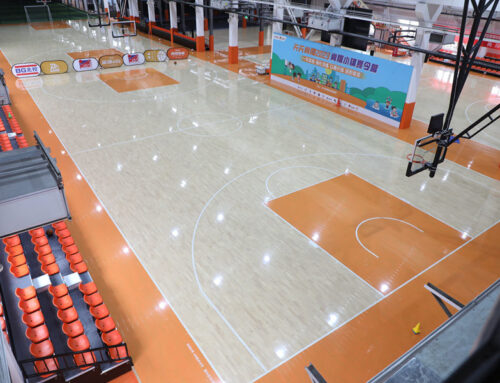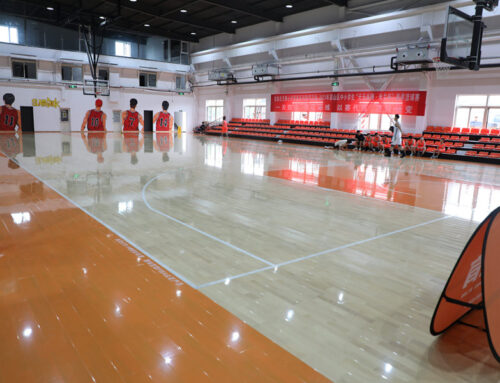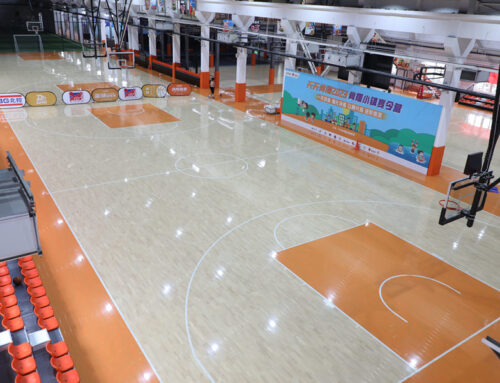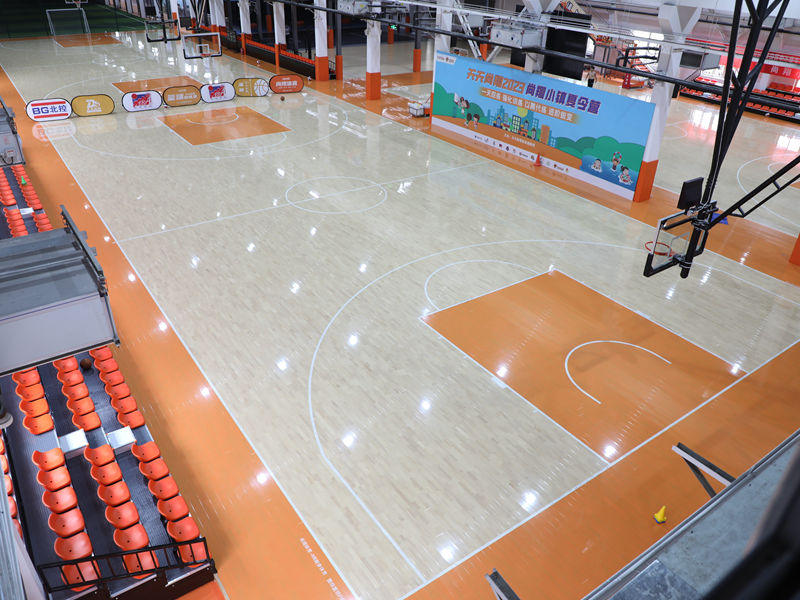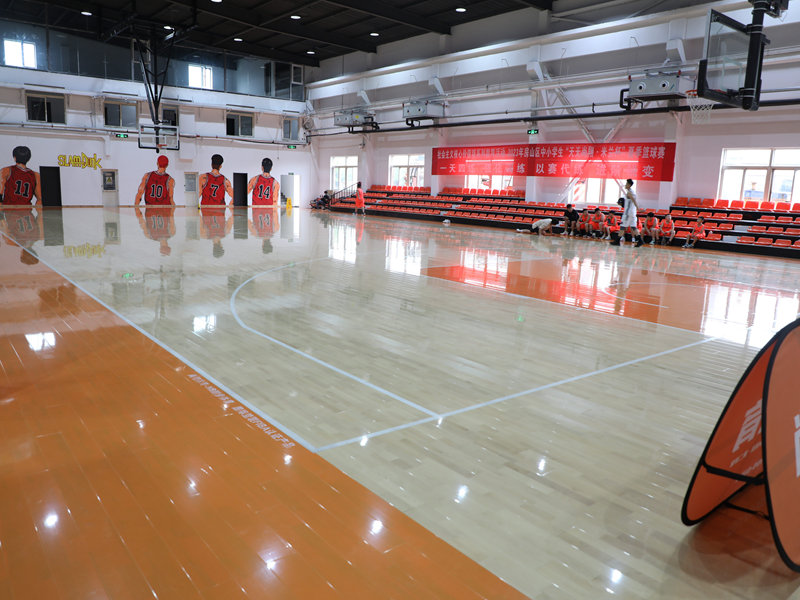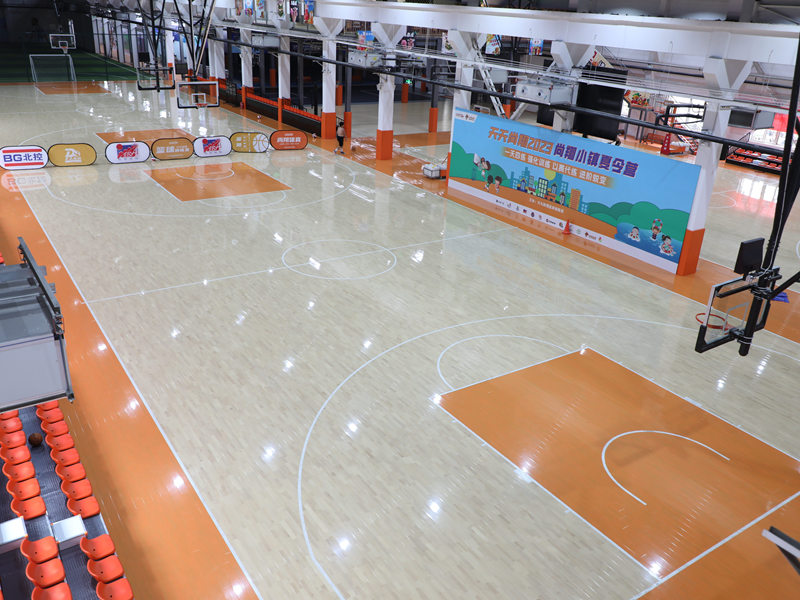
The finish on an indoor basketball wood floor is one of the most critical — and most misunderstood — components of the entire system. It is the thin layer between the player and the wood, and it determines everything from traction to glare to durability. Get the finish wrong, and even the best-built floor will underperform.
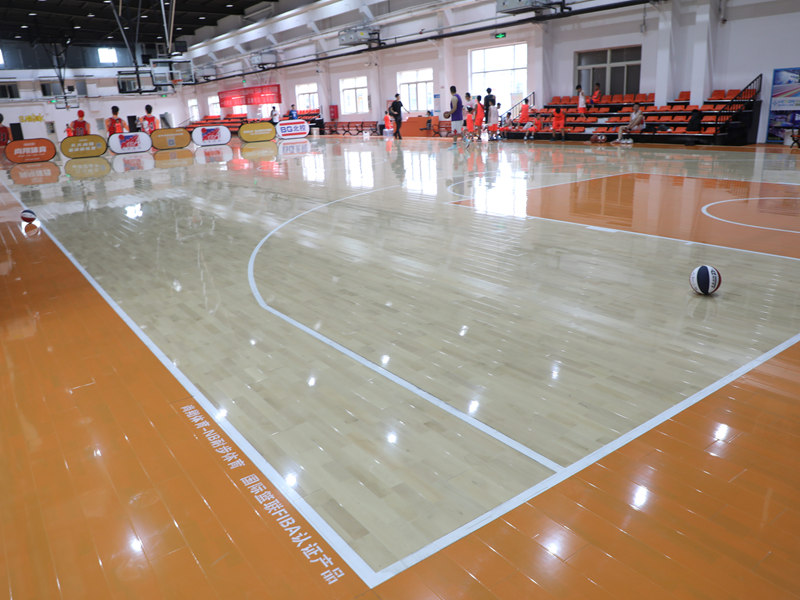
Let us start with traction, because it is the most performance-critical function of the finish. In basketball, players need a surface that grips their shoes firmly during push-off, cutting, and stopping. But the surface must also allow the foot to release cleanly during pivoting and jumping. This is a delicate balance. Too much grip, and the foot sticks, creating dangerous torque on the knee and ankle. Too little grip, and the player slides, losing control and increasing the risk of falls.
The finish is engineered to achieve a specific friction range. For basketball, the target is typically a DIN friction value between 0.4 and 0.6. This range provides enough grip for explosive movements while allowing clean foot release. The finish achieves this through its chemical composition and its surface texture. A smooth, high-gloss finish tends to be more slippery. A textured, matte finish tends to be grippier. The ideal basketball finish is somewhere in between — smooth enough to allow clean release, but textured enough to provide secure grip.
Glare is the second function of the finish. Basketball is a fast-paced sport played under bright arena lights. If the floor reflects too much light, players can be temporarily blinded, especially when looking up at the ball against a bright ceiling. A good finish reduces glare by diffusing light rather than reflecting it. Matte and satin finishes are best for glare control. High-gloss finishes, while visually appealing, can create dangerous glare and are generally avoided on basketball courts.
Durability is the third function. The finish must withstand thousands of footfalls, ball impacts, and cleaning cycles without wearing through. When the finish wears through, the bare wood is exposed, and the floor loses its traction and becomes vulnerable to moisture and staining. A quality sports finish can last seven to ten years before it needs to be recoated. Cheaper finishes may need recoating every three to five years.
There are two main types of finishes used on basketball courts. The first is water-based polyurethane. This is the most common type. It is environmentally friendly, has low VOC emissions, and provides good performance. The second is UV-cured urethane. This type is harder and more durable than water-based finishes, but it can be more slippery and is more expensive to apply. The choice between them depends on the specific requirements of the facility.
The application process is also critical. The finish is applied in multiple coats, typically three to five, with light sanding between each coat. The number of coats affects both performance and durability. Too few coats, and the finish will wear through quickly. Too many coats, and the surface becomes too thick, which can affect the feel of the floor and make it more slippery.
Maintenance of the finish is an ongoing process. The floor should be cleaned regularly with a neutral pH cleaner designed for sports wood floors. Harsh chemicals, bleach, and acidic cleaners must be avoided because they can damage the finish. Over time, the finish will wear down in high-traffic areas, particularly near the basket and along the sidelines. These areas may need spot recoating before the entire floor is recoated.
The finish is the last line of defense between the player and the wood. It is also the component that most directly affects day-to-day performance. Investing in a high-quality finish is one of the smartest decisions you can make for a basketball court.