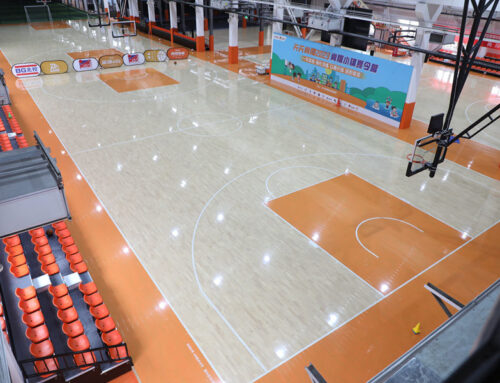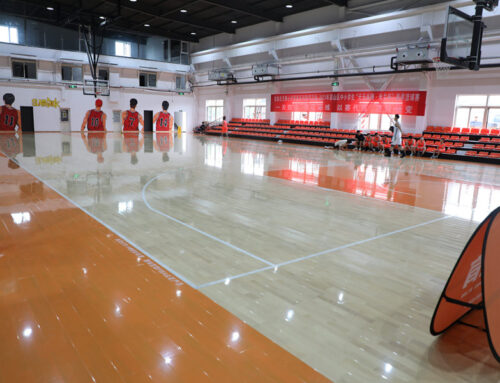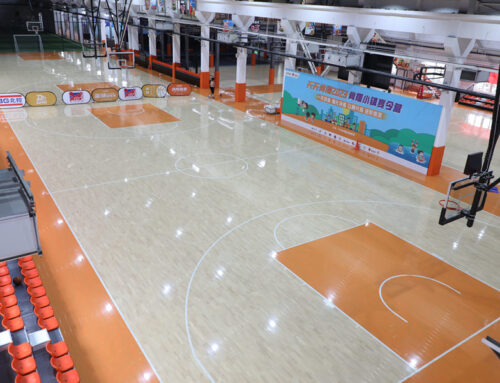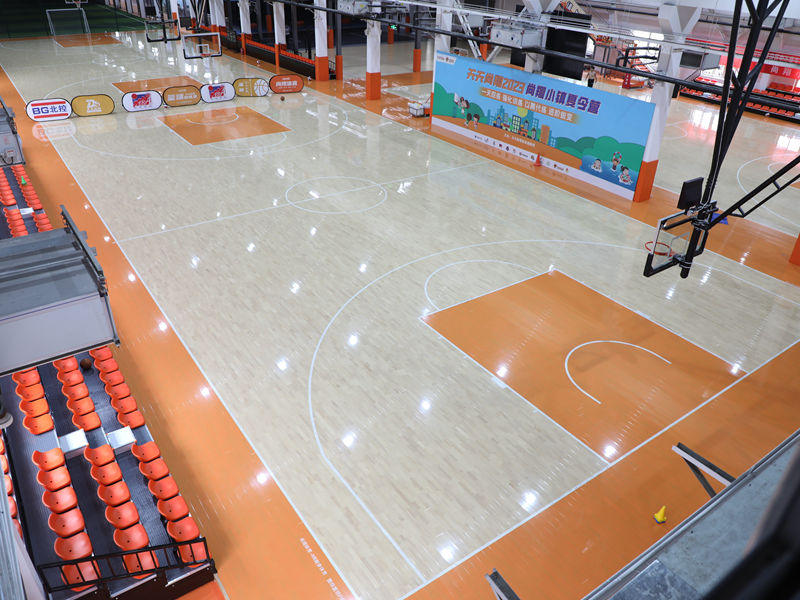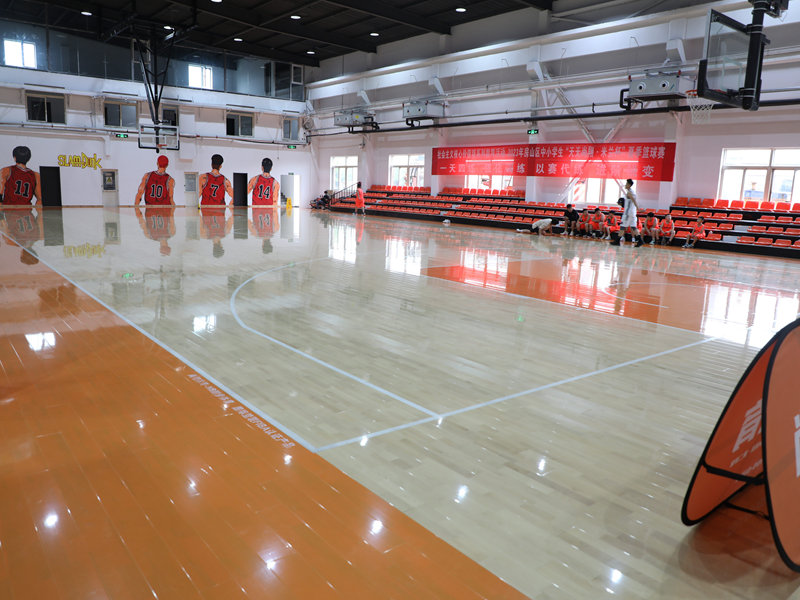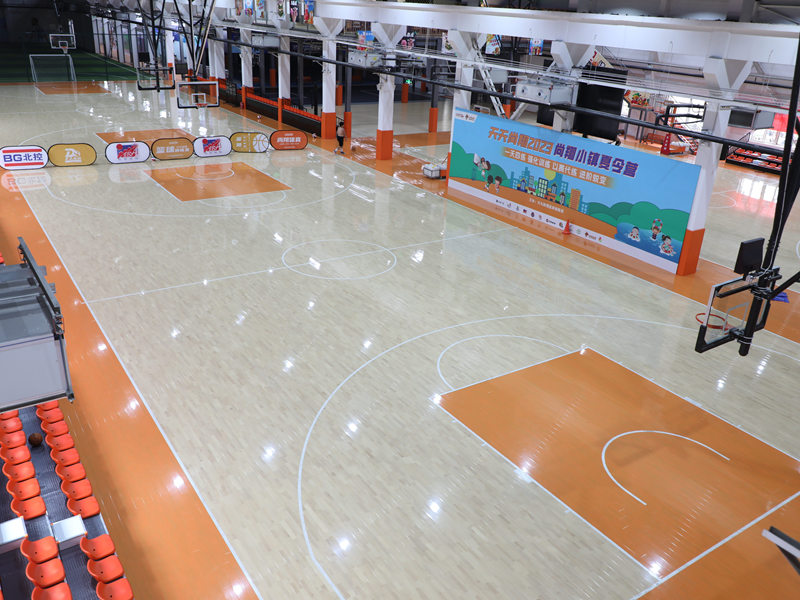
When people think about basketball flooring, they usually think about ball bounce and traction. These are the visible performance factors. But the most important function of a basketball wood floor is the one you cannot see: shock absorption. This invisible property is the primary reason why hardwood courts produce fewer injuries than any other surface.
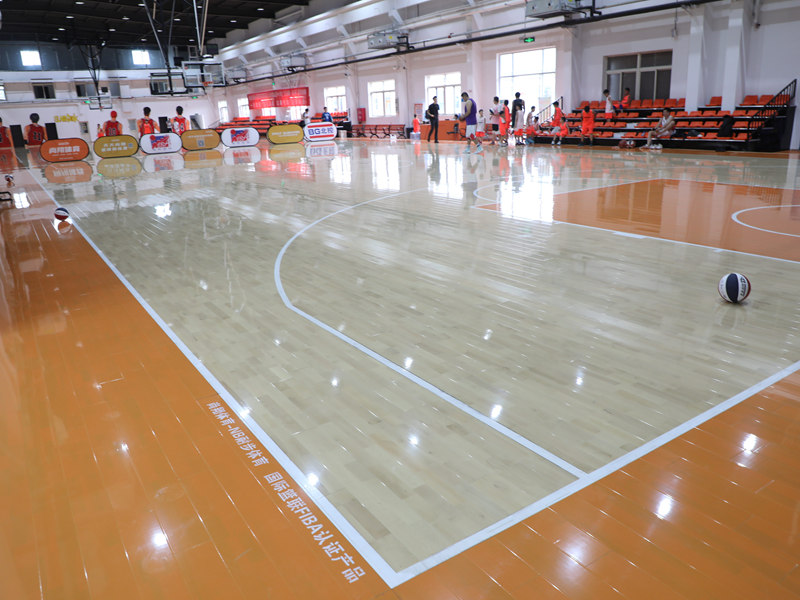
The physics of landing in basketball are brutal. When a player jumps for a rebound or a dunk, they leave the ground with significant force. When they land, the impact force can be three to five times their body weight. For a 90-kilogram player, that means each landing generates 270 to 450 kilograms of force. This force must go somewhere. If the floor is rigid, like concrete, nearly all of it is transmitted directly into the joints — the ankles, knees, hips, and spine. Over the course of a game, a player may land 50 to 100 times. Over a season, that is thousands of high-impact landings. The cumulative effect on the joints is enormous.
A properly engineered hardwood basketball floor with a shock-absorbing subfloor system changes this equation dramatically. The subfloor system — typically consisting of plywood, foam pads, and rubber underlayment — acts as a cushion. When the player lands, the subfloor compresses, absorbing a significant portion of the impact energy. The vertical deformation of a basketball wood floor is typically between 2.3 and 4.0 millimeters under a standard test load. This small amount of deflection is enough to reduce peak impact forces by 30 to 50 percent.
To put this in perspective, a 50 percent reduction in impact force means that a player who would otherwise absorb 400 kilograms of force per landing now absorbs only 200 kilograms. Over thousands of landings, this difference is the difference between a healthy joint and a damaged one. Studies have consistently shown that athletes playing on properly installed hardwood courts experience significantly lower rates of knee injuries, ankle sprains, and stress fractures compared to those playing on synthetic or rigid surfaces.
The most severe injury in basketball is the ACL tear. This injury typically occurs during a sudden cut or pivot when the foot is planted and the knee rotates. The torque generated in this motion can exceed the strength of the ACL. On a floor with poor traction, the foot may slide, reducing the torque but increasing the risk of other injuries. On a floor with excessive traction, the foot sticks, maximizing the torque and dramatically increasing the risk of an ACL tear. Hardwood, with its precisely calibrated friction coefficient, hits the sweet spot that minimizes ACL injury risk while maintaining safe traction for all other movements.
Patellar tendinitis, often called jumper’s knee, is another common basketball injury. It is caused by repetitive stress on the patellar tendon during jumping and landing. The shock-absorbing properties of a hardwood floor reduce this stress significantly, lowering the incidence of tendinitis among players at all levels.
Shin splints and plantar fasciitis are also related to impact forces. A floor that absorbs more impact puts less stress on the lower leg and foot, reducing the risk of these overuse injuries.
The bottom line is this: the shock absorption of an indoor basketball wood floor is not a luxury feature. It is a safety feature. It protects athletes from the cumulative damage that would otherwise shorten careers and diminish quality of life. When you invest in a quality hardwood basketball court, you are not just investing in performance. You are investing in the long-term health of every player who steps on it.