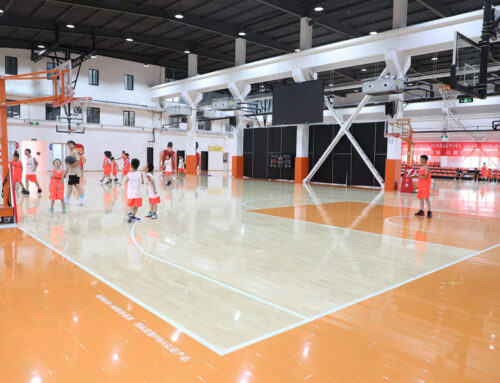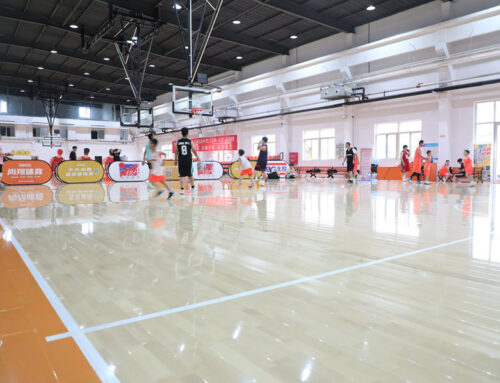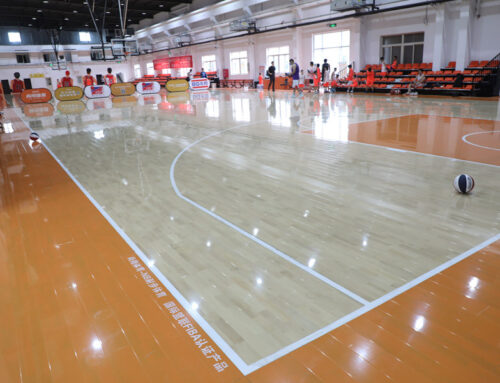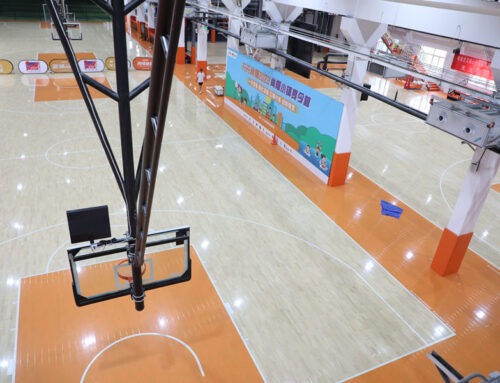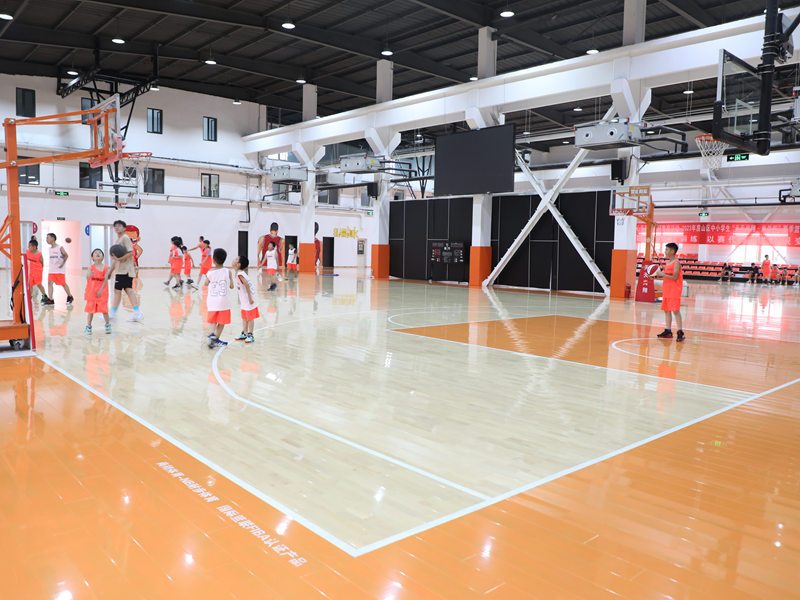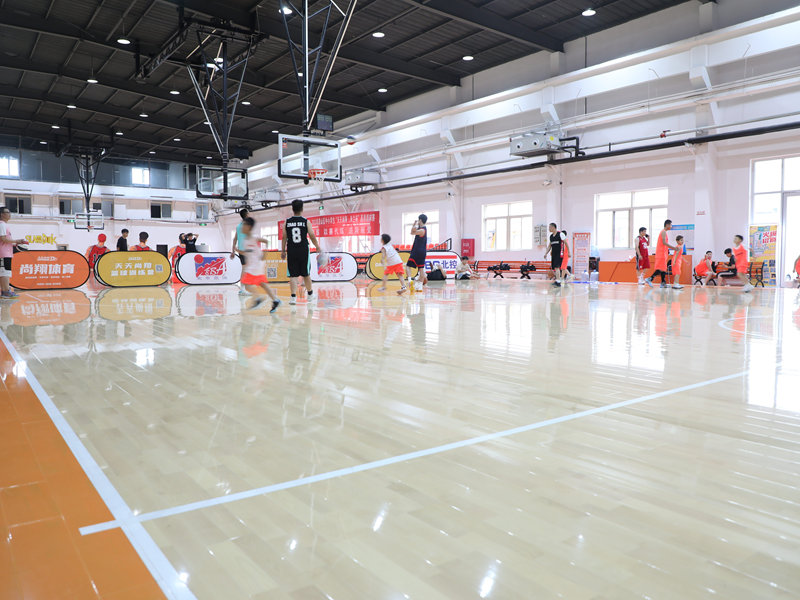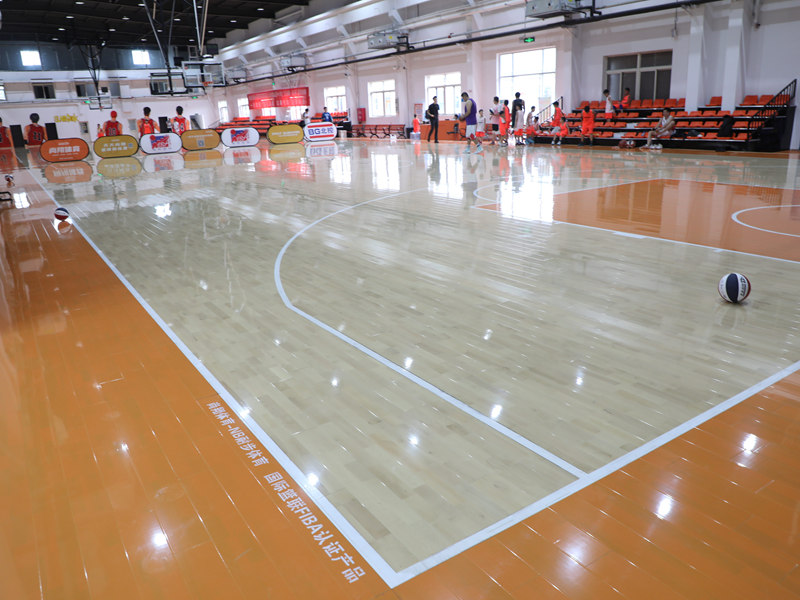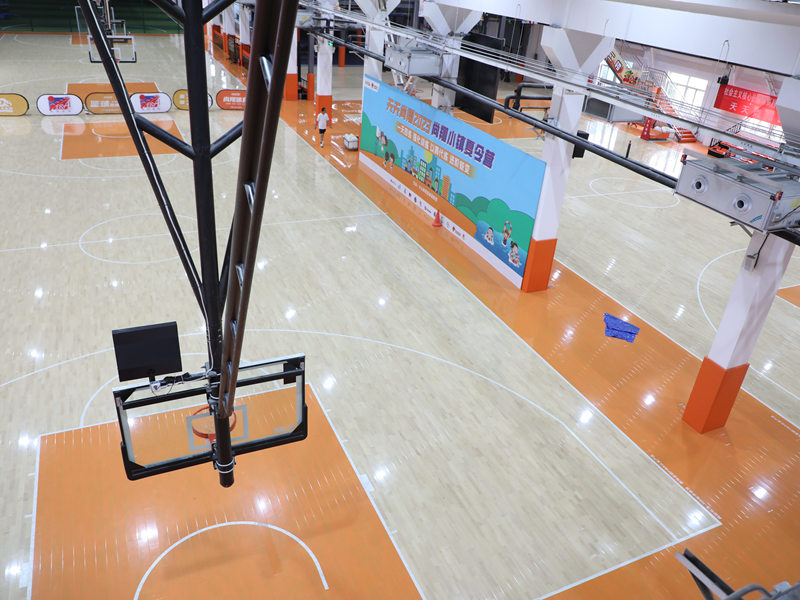
When it comes to indoor basketball court flooring, one species dominates above all others: hard maple. Specifically, sugar maple (Acer saccharum) and black maple (Acer nigrum). These two species account for the vast majority of basketball courts worldwide. But why? What makes maple so much better than oak, birch, ash, or any other hardwood?
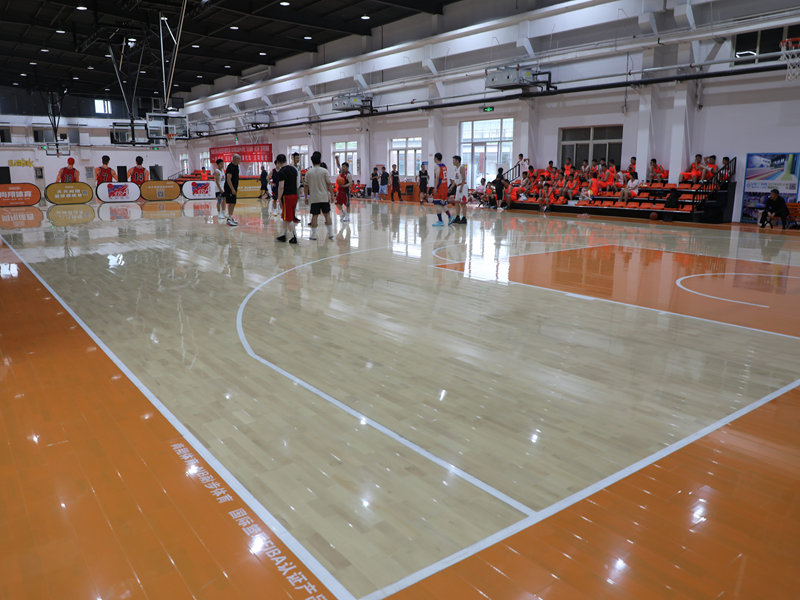
The answer lies in a combination of physical properties that are perfectly suited to the demands of basketball.
The first property is density. Hard maple is one of the densest hardwoods available, with a Janka hardness rating of 1,450 pounds. For comparison, red oak is 1,290, white oak is 1,360, and ash is 1,320. Higher density means the wood is harder, more resistant to dents and scratches, and more durable under the extreme wear of basketball. The ball bounces more consistently on a dense surface because the wood does not deform as much under impact.
The second property is uniformity. Hard maple has an exceptionally tight, consistent grain. This means the wood behaves the same way across the entire plank and across the entire court. There are no soft spots, no inconsistent density zones, no unpredictable grain patterns that could affect ball bounce or traction. This uniformity is critical for a sport where consistency is everything. A basketball player needs to know that the ball will bounce the same way at center court as it does at the free-throw line.
The third property is color. Hard maple has a light, creamy color that is universally recognized as the look of a basketball court. It is bright enough to provide good contrast with the ball and the court markings, but not so bright that it causes glare. The color is also consistent across planks, which means the court looks uniform and professional.
The fourth property is stability. Hard maple has low shrinkage and expansion rates compared to many other species. This means the wood is less likely to cup, crown, or gap as humidity and temperature change. For a basketball court, dimensional stability is essential. Any movement in the wood can cause flatness problems, which in turn affect ball bounce and player safety.
Now let us compare maple to the alternatives.
Oak is a popular hardwood, but it is less dense than maple and has a more pronounced grain pattern. The grain can create slight variations in ball bounce, which is unacceptable for competitive basketball. Oak is also more prone to movement with humidity changes.
Birch is similar to maple in density and appearance, but it is less commonly available in the large, clear planks needed for a basketball court. Birch also tends to have more color variation between planks, which can make the court look inconsistent.
Ash is a strong, flexible wood that is sometimes used for gymnasium floors. However, it is less dense than maple and has a more open grain, which can trap dirt and moisture. Ash is also more prone to surface dents.
Beech is another hardwood sometimes considered for sports flooring. It is hard and dense, but it is less stable than maple and can be more difficult to finish evenly.
The bottom line is that hard maple is not just the traditional choice for basketball courts. It is the objectively best choice based on every measurable performance criterion. Density, uniformity, color, stability, availability — maple wins on every count. This is why every professional basketball arena in the world uses hard maple, and why it will continue to do so for the foreseeable future.