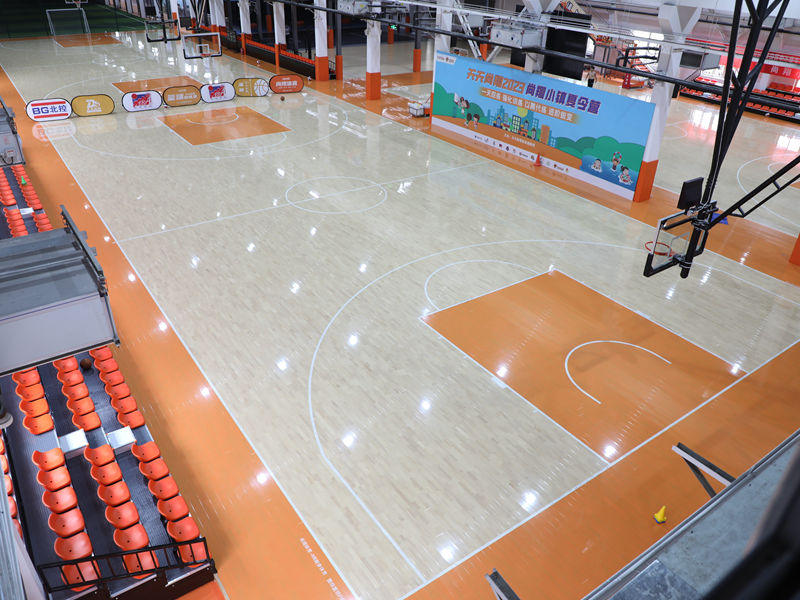
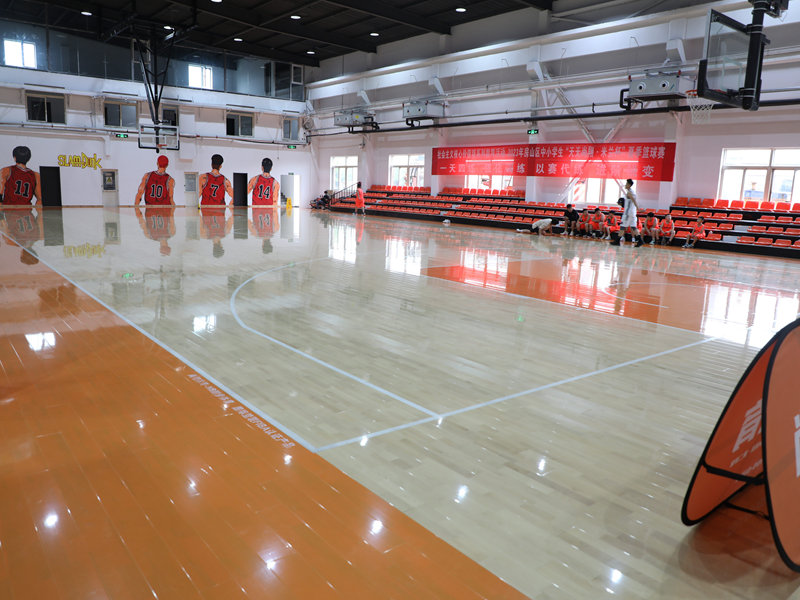
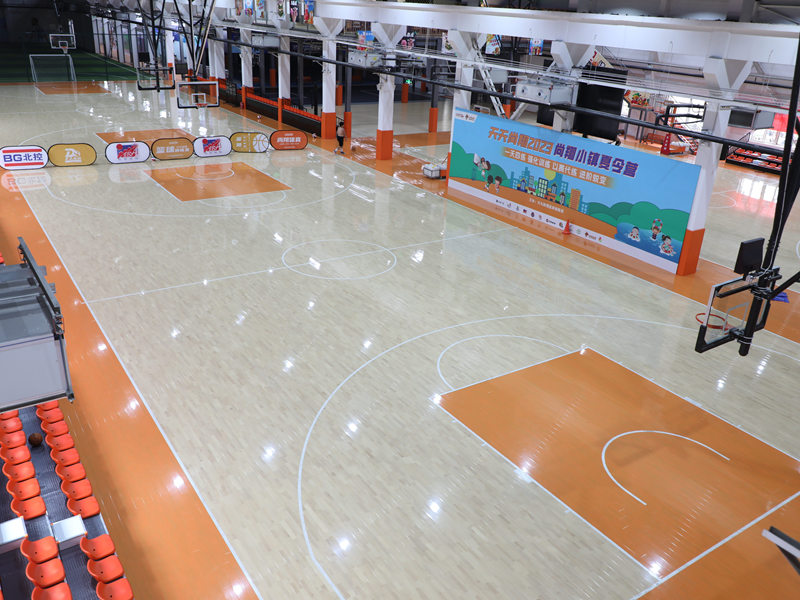
The manufacturing process also has an environmental impact. Engineered wood flooring uses less solid wood than traditional plank flooring, which means fewer trees are harvested. The adhesives and finishes used in the manufacturing process can contain VOCs, but modern water-based finishes have significantly lower VOC emissions than older solvent-based products.

The lifespan of the floor is perhaps the most important environmental factor. A wood basketball court floor can last 25 to 40 years with proper maintenance. A synthetic floor typically lasts 8 to 15 years. This means that over a 30-year period, you may need to replace a synthetic floor two or three times, while a wood floor may only need to be refinished once or twice. The cumulative environmental impact of multiple replacements is significantly higher than that of a single long-lasting wood floor.
At the end of its life, a wood floor is biode applying a thin coat of finish, and allowing it to cure. Touch-ups are relatively quick and inexpensive, typically costing a few thousand dollars for a standard court.
Full refinishing is necessary when the wear is widespread or when the finish has degraded to the point where touch-ups are no longer effective. Full refinishing involves sanding down the entire surface of the court to remove the old finish and any scratches or wear. This is a major process that requires heavy industrial sanding equipment. After sanding, the floor is cleaned, and new finish is applied in multiple coats, just as during the original installation. The entire process, including curing time, can take one to two weeks, during which the court is out of service.