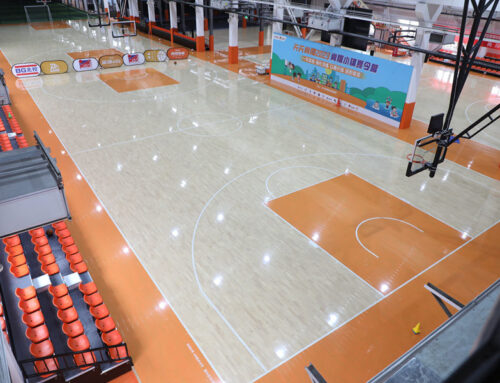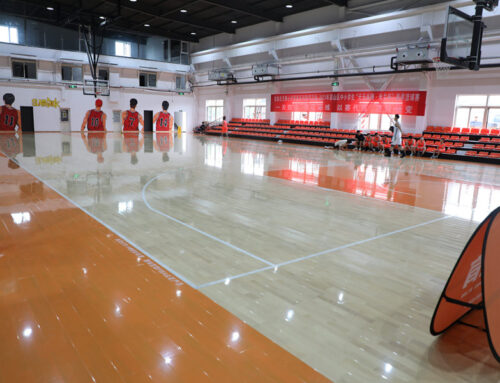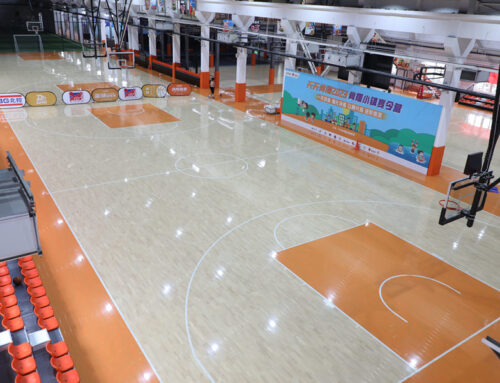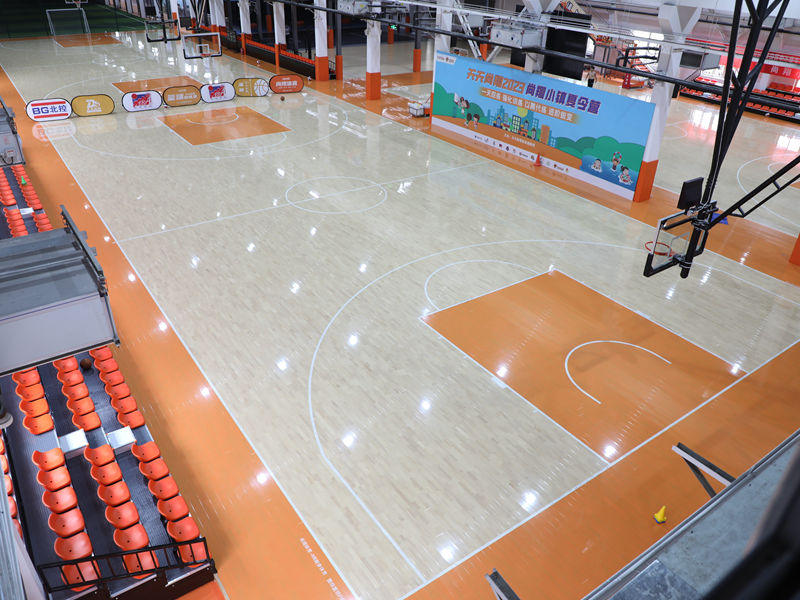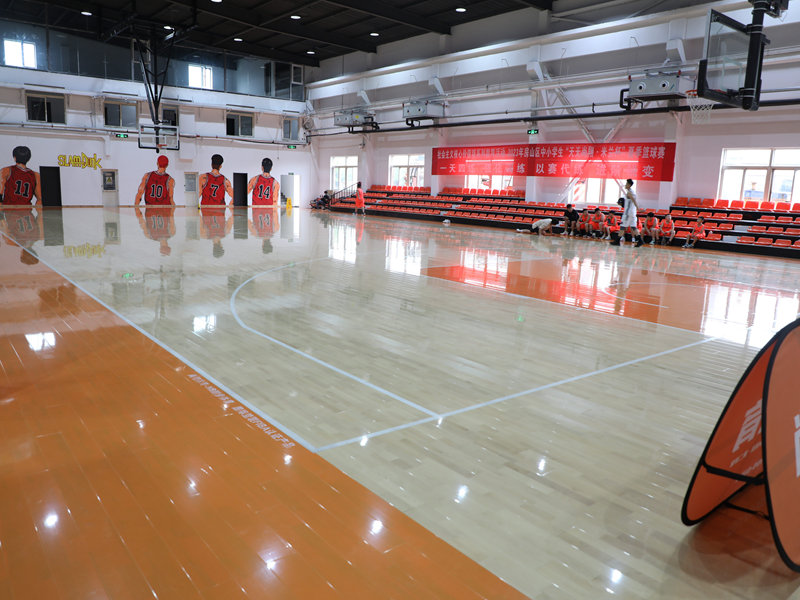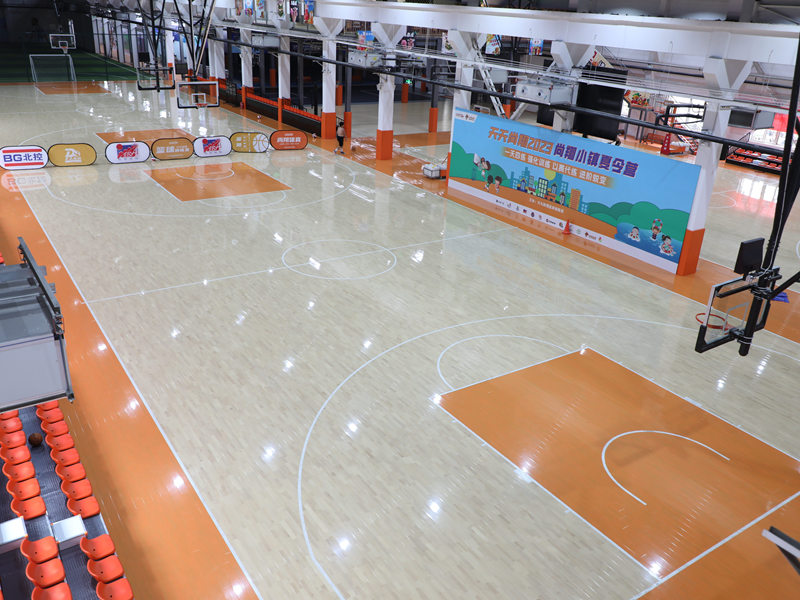
An indoor basketball wood floor is not simply planks of wood nailed to the ground. It is a precisely engineered, multi-layered system in which every component plays a specific role in performance. Understanding this anatomy is essential for anyone involved in building, maintaining, or evaluating a basketball court.
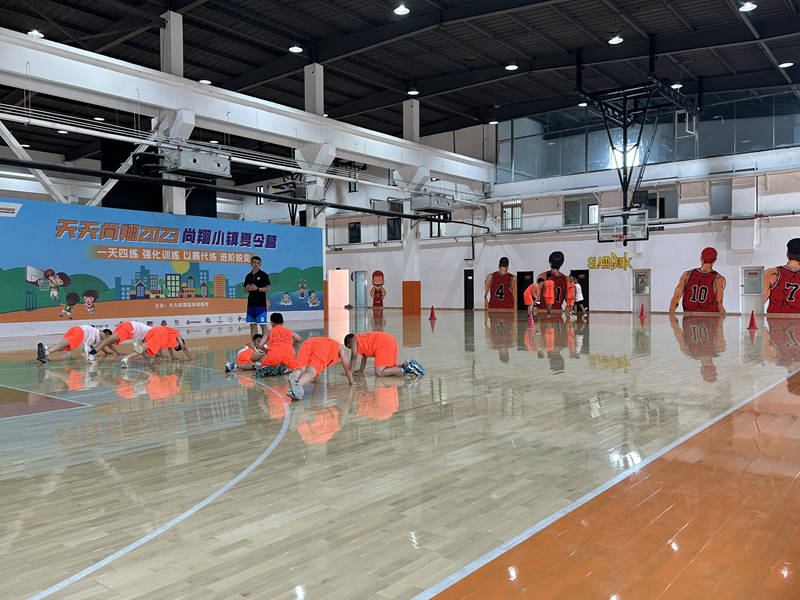
The top layer is the wearing surface. This is the hardwood that players actually see and play on. For basketball, the most common species is hard maple, specifically sugar maple or black maple. These species are chosen for their extreme density, uniform grain, and consistent color. The wearing surface is typically 18 to 22 millimeters thick. Thicker surfaces last longer and can be refinished more times. A 20-millimeter maple surface, for example, can be sanded and refinished three to four times over its lifetime, meaning the floor can serve for 30 years or more.
Beneath the wearing surface is the subfloor system. This is the hidden engineering layer that determines shock absorption, sound control, and structural stability. The subfloor system typically consists of several components. First, there is a plywood base layer, usually made from structural-grade plywood that is 12 to 19 millimeters thick. This layer provides the structural foundation and distributes loads across the floor. Second, there are shock pads, which are foam or rubber pads placed between the plywood and the hardwood. These pads compress under impact, absorbing energy and reducing the force transmitted to the player’s joints. The thickness and density of the shock pads are carefully selected based on the sport and the expected usage level. For basketball, a common configuration uses two layers of shock pads for maximum impact absorption.
The third component of the subfloor system is the moisture barrier. This is a thin layer of polyethylene or similar material placed between the concrete slab and the plywood. Its job is to prevent moisture from the concrete from migrating up into the wood. Moisture is the single greatest threat to a wood floor. If moisture reaches the hardwood, it can cause cupping, crowning, warping, and delamination. A proper moisture barrier is non-negotiable.
The fourth component is the leveling layer. Before the plywood is installed, the concrete slab must be perfectly flat. Any deviation in flatness will be transferred to the hardwood, causing uneven ball bounce and poor performance. A self-leveling compound is often used to achieve the required flatness, which for professional basketball courts is typically no more than two millimeters of deviation over any two-meter span.
The hardwood planks themselves are installed using a tongue-and-groove joint system. This means each plank has a protruding tongue on one edge and a matching groove on the other. When the planks are pushed together, they lock tightly, creating a seamless surface. The planks are typically laid in a staggered pattern, with each row offset from the previous one for structural stability. The entire floor is then either glued down, mechanically fastened, or installed as a floating system, depending on the specific design requirements.
After installation, the floor is sanded to achieve perfect flatness. This is done using large drum sanders that remove a thin layer from the entire surface. The sanding process is repeated multiple times with progressively finer grits of sandpaper, typically starting at 60 grit and ending at 100 or 120 grit. The result is a surface that is perfectly smooth and level.
The final layer is the finish. The finish is a specialized sports coating, usually water-based polyurethane or UV-cured urethane, applied in multiple coats. The finish provides traction, reduces glare, protects the wood from moisture and wear, and gives the floor its final appearance. The number of coats varies, but typically three to five coats are applied, with light sanding between each coat.
Every layer of an indoor basketball wood floor exists for a reason. Remove or compromise any one of them, and the entire system suffers. This is why quality matters at every level, not just at the surface.