Introduction: The Invisible Performance Factor
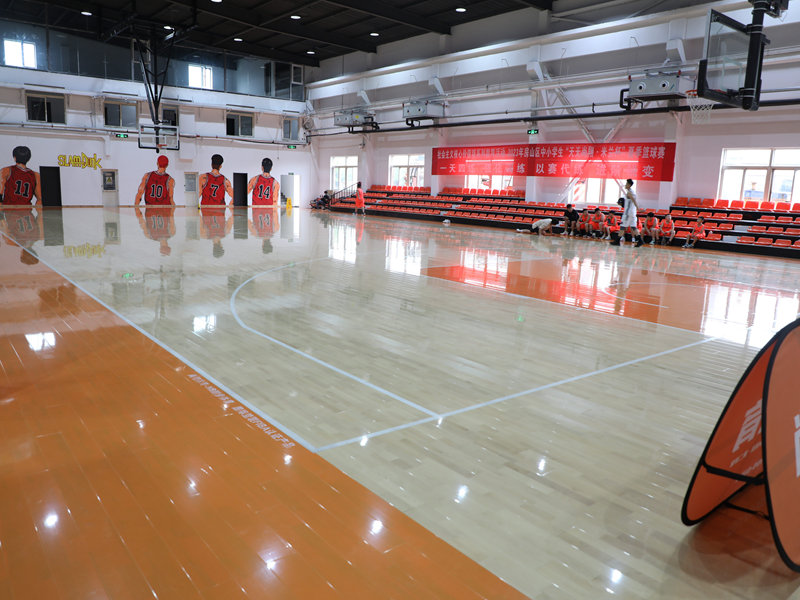
Walk into any professional basketball arena and watch the players. Notice how they stop on a dime, cut sharply, and accelerate explosively — all without slipping. Now imagine the same players on a freshly waxed, ultra-smooth surface. They’d be sliding all over the place. The difference? Surface finish and friction.
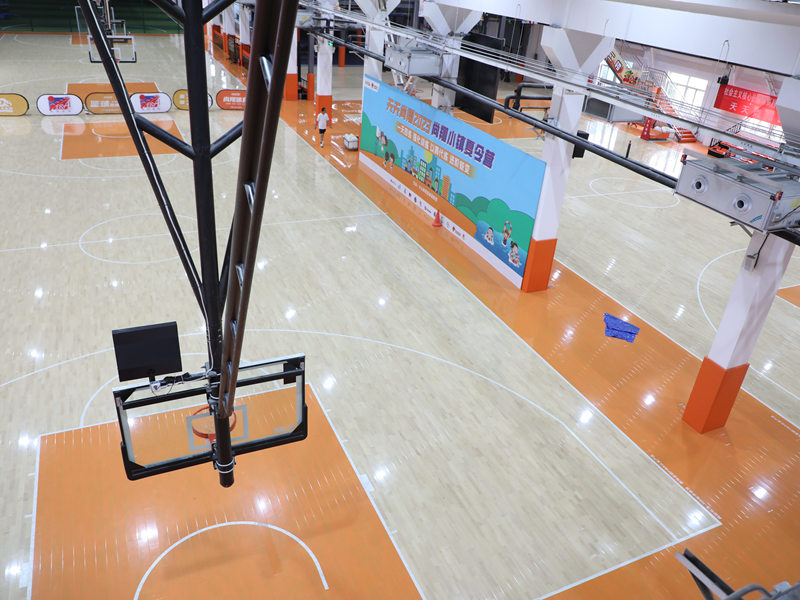
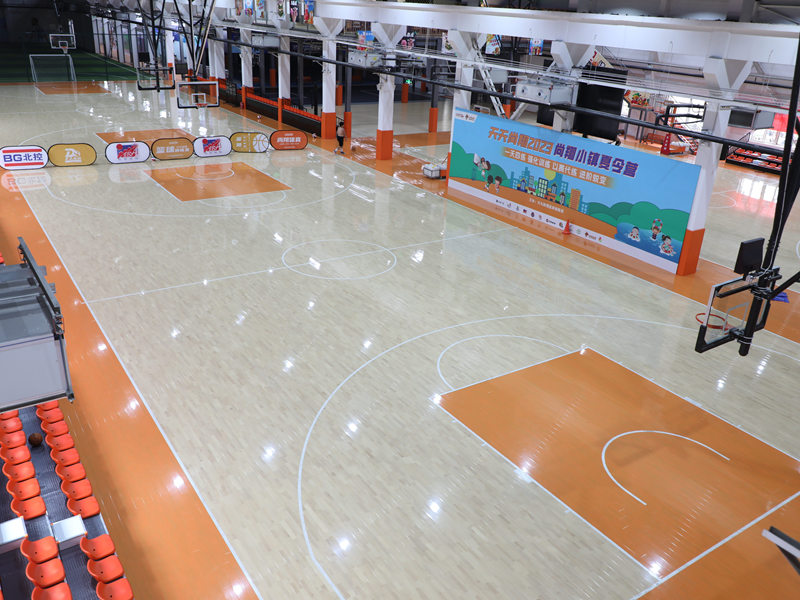
Surface finish is arguably the most underappreciated aspect of indoor sports wooden flooring. It doesn’t get the attention that wood species or subfloor systems receive, yet it directly affects every interaction between athlete and floor — traction, ball behavior, cleaning efficiency, and even injury risk.
This article explores the science of surface friction, the types of finishes used in sports flooring, how they’re applied, and how to specify the right finish for your facility.
Understanding Friction: The Science
Friction is the force that resists relative motion between two surfaces in contact. In sports flooring, we’re concerned with the friction between an athlete’s shoe sole and the floor surface.
Friction is measured using a tribometer — a device that drags a standardized slider (simulating a shoe sole) across the floor surface under controlled load and speed. The result is expressed as a coefficient of friction (COF):
- Static COF: Friction when the surfaces are not moving relative to each other (e.g., an athlete planting their foot to stop)
- Dynamic COF: Friction when the surfaces are sliding (e.g., an athlete sliding into a base)
For sports applications, static COF is more important because most athletic movements involve brief periods of static contact (foot plant) followed by movement.
Target Friction Values by Sport
| Sport | Recommended Static COF | Recommended Dynamic COF |
|---|---|---|
| Basketball | 0.4 – 0.6 | 0.3 – 0.5 |
| Volleyball | 0.5 – 0.7 | 0.4 – 0.6 |
| Handball | 0.4 – 0.6 | 0.3 – 0.5 |
| Badminton | 0.4 – 0.5 | 0.3 – 0.4 |
| Indoor Tennis | 0.5 – 0.7 | 0.4 – 0.6 |
Note: These values are based on standardized testing (DIN 18032-2, EN 14904). Actual feel can vary based on shoe type, dust level, and humidity.
The Paradox: Too Much Friction Is Also Bad
It’s tempting to think more friction is always better — more grip, less slipping. But excessive friction creates its own problems:
- Abrasion injuries: When the shoe grips too strongly, the foot is “locked” to the floor while the leg continues rotating. This puts enormous stress on the knee (ACL injuries), ankle (sprains), and hip. Research shows that surfaces with very high friction actually increase the rate of non-contact knee injuries.
- Surface wear: High-friction finishes wear out faster because the abrasive interaction between shoe and floor accelerates finish degradation.
- Cleaning difficulty: Textured, high-friction surfaces trap dirt and require more aggressive cleaning.
The ideal is a “sweet spot” — enough friction for control, not so much that it causes injury or excessive wear.
Types of Surface Finishes
- Polyurethane (PU) Finish
The most common finish for sports wood floors. Available in water-based and solvent-based formulations.
- Water-based PU: Lower VOC, faster drying, slightly less durable. The industry trend is moving toward water-based due to environmental regulations.
- Solvent-based PU: Higher durability, deeper penetration into wood, better long-term performance. Still preferred for high-traffic professional facilities.
- Film thickness: Typically 30-60 microns (dry film) for sports applications. Thicker films (up to 80 microns) for high-wear areas.
PU finishes create a smooth, consistent surface with good friction characteristics. They can be formulated for matte, satin, or semi-gloss appearances.
- Sports-Specific Polyurethane
These are specially formulated PU finishes designed specifically for athletic surfaces. They contain additives that:
- Optimize friction (often using fine silica or polymer particles)
- Resist scuffing and marking from shoe soles
- Maintain consistent friction over time (don’t become too slippery as they wear)
- Provide UV stability (important for facilities with skylights)
Brands in this category (without naming specific companies) typically offer friction-tuned formulations for different sports.
- Oil-Based Finishes
Traditional oil finishes (tung oil, linseed oil, Danish oil) penetrate the a surface film. They provide a natural, matte appearance and moderate friction.
- Advantages: Natural look, easy to touch up, penetrate to protect wood fibers
- Disadvantages: Lower durability, require more frequent reapplication, friction can be inconsistent
Oil finishes are rarely used in professional sports facilities but are common in high-end residential gymnasiums and training centers.
- Wax Finishes
Floor wax (typically acrylic or polyurethane-based wax) provides a temporary, easily removable finish.
- Advantages: Very easy to apply and remove, inexpensive, provides good initial friction
- Disadvantages: Very short lifespan (days to weeks), builds up with repeated application, can become slippery when dirty
Wax is sometimes used in temporary facilities or for specific sports (like curling, though that’s ice) but is not suitable for permanent sports installations.
- Lacquer Finishes
Nitrocellulose or acrylic lacquers form a very hard, thin film. They were common in older sports facilities but have largely been replaced by polyurethane.
- Advantages: Very hard surface, quick drying
- Disadvantages: Brittle (can crack with wood movement), difficult to repair, yellowing over time
Application Methods
The application method significantly affects finish quality:
- Factory Finishing (Pre-Finished Panels)
The most common approach for sports flooring. Panels are finished in a controlled factory environment using:
- Multiple coats entire floor.
- Uses the same finish system as the original
- Applied with rollers, pads, or spray equipment
- Blended into surrounding area by feathering edges
- Can be done while the facility is in use (with proper ventilation)
The Relationship Between Finish and Ball Behavior
Surface finish affects ball rebound and behavior. A glossy, smooth finish provides more consistent ball bounce. A matte, textured finish can create slight variations.
For basketball specifically, the finish contributes about 1-2% to overall ball rebound — a small but measurable effect. More importantly, the finish affects how the ball interacts with the surface during dribbling: a too-slick finish makes dribbling difficult (ball skips), while a too-grippy finish makes dribbling feel “sticky.”
Maintenance of Surface Finish
Proper maintenance extends finish life and maintains consistent friction:
- Daily: Dust mop or vacuum with soft brush
- Weekly: Damp mop with pH-neutral cleaner (never use soap, vinegar, or abrasive cleaners)
- Monthly: Apply sports floor cleaner/polish to maintain friction and appearance
- Annually: Full recoat or polish application (professional service)
- Every 3-5 years: Light sanding and recoating (if not doing full refinish)
- Every 8-12 years: Full sanding and refinishing
Signs That Finish Needs Attention:
- Water beading on surface (finish is worn, wood is exposed)
- Visible scuff marks that don’ verifies consistent bounce
- Visual inspection — checks for uniformity, gloss, defects
- Adhesion testing — cross-cut tape test to verify finish bonding
Conclusion
Surface finish is the final — and often most critical — layer of performance in indoor sports wooden flooring. It determines how athletes interact with the floor, how the ball behaves, how long the floor lasts, and how easy it is to maintain.
When specifying a sports floor, don’t just ask about the wood species and subfloor system. Ask about the finish: what type, how many coats, what is the target friction, and what is the expected maintenance schedule. A great floor with a poor finish will underperform. A good floor with an excellent finish will exceed expectations.
Invest in a quality finish system, maintain it diligently, and test it regularly. Your athletes’ performance — and safety — depends on it.