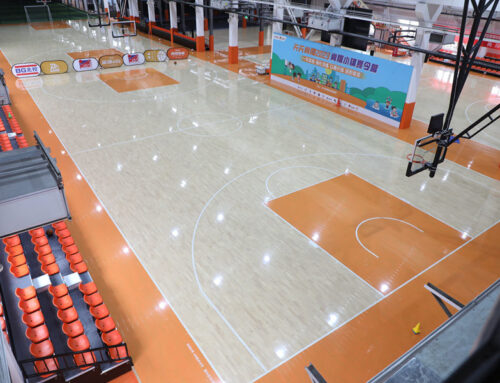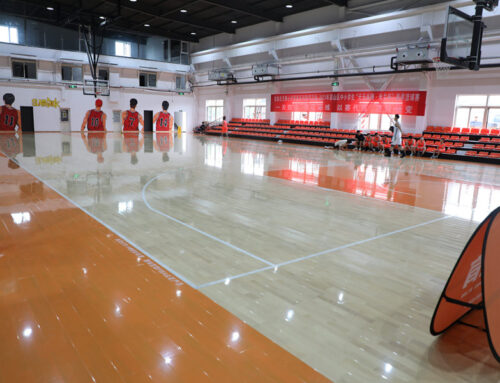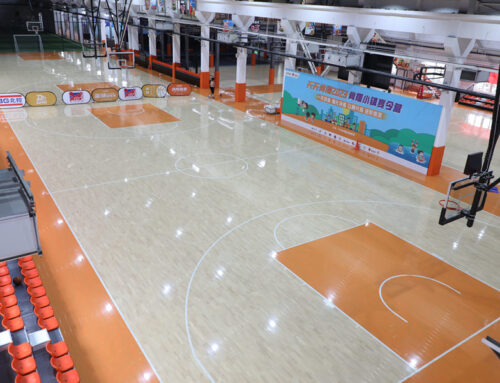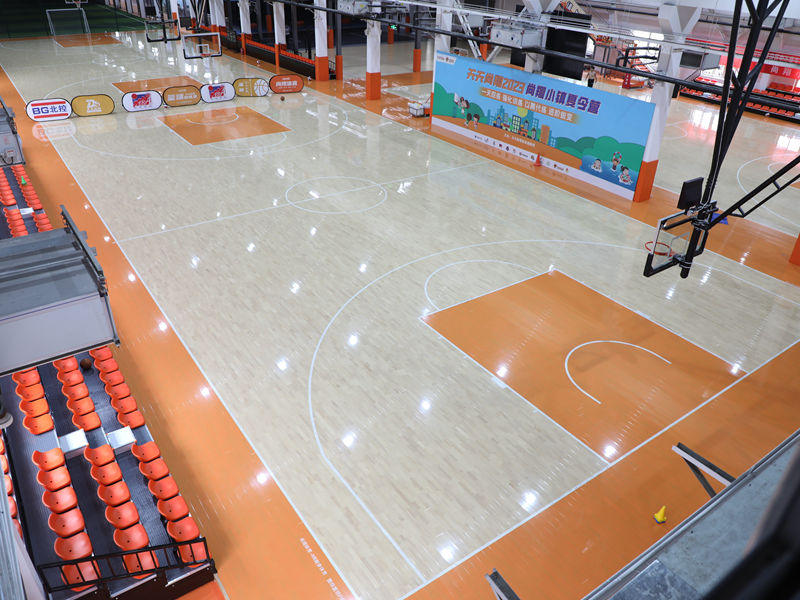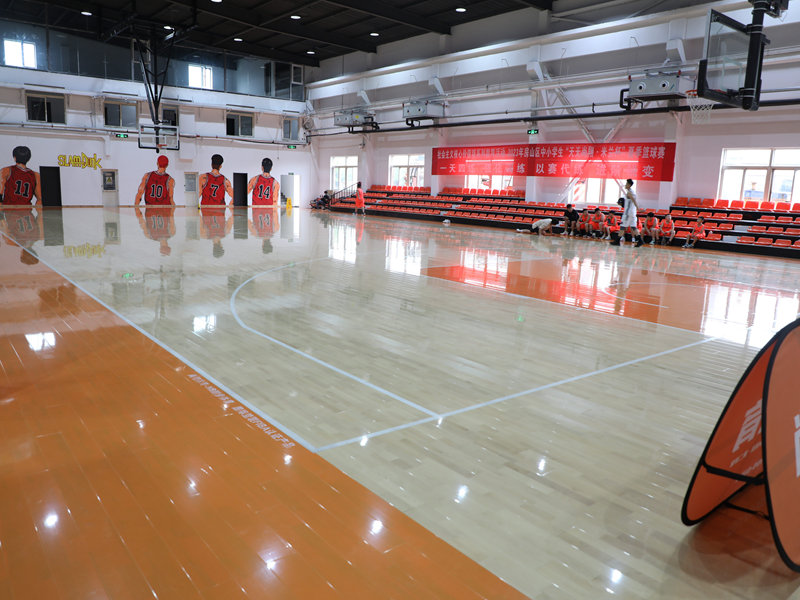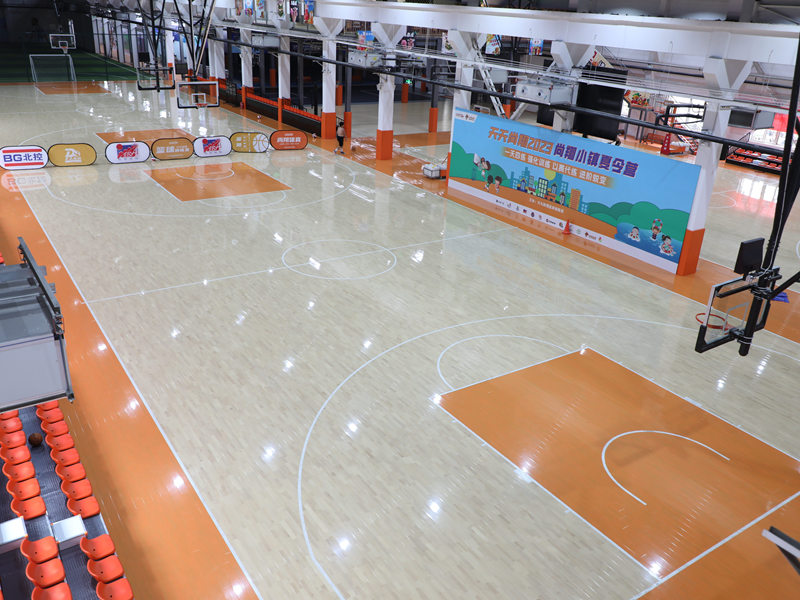
The optical properties of sports wooden flooring have traditionally received less attention than mechanical performance characteristics, but they play a crucial role in both athletic performance and spectator experience. Poor visual conditions—whether from glare, insufficient contrast between court markings and background, or uneven lighting reflection—can negatively impact player performance, officiating accuracy, and broadcast quality for televised events. Modern printing technology applied to modular sports wooden flooring allows for precise engineering of optical characteristics that address these challenges, creating surfaces that enhance visibility under the specific lighting conditions found in sports facilities. This optical enhancement begins with careful control of surface reflectivity, ensuring that lighting is optimally distributed without creating distracting glare points that could interfere with athlete concentration.
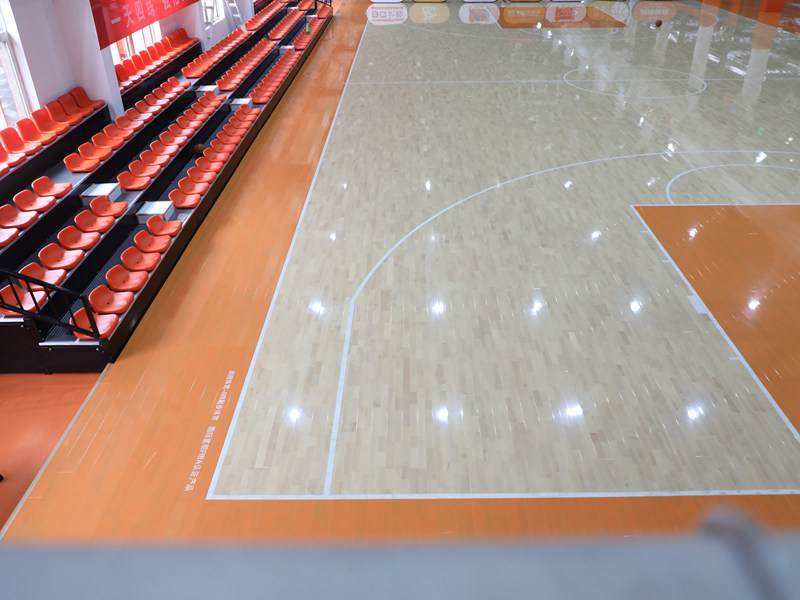
The reflectivity engineering is achieved through nano-scale structuring of the printed surface and through precise pigment selection that controls how different wavelengths of light interact with the floor. Unlike traditional finishes that might create a uniformly glossy or matte appearance, advanced printed surfaces can be designed with directional reflectivity properties that minimize glare for athletes while maximizing light efficiency for television broadcasts. This is particularly important for facilities that host televised events, where lighting directors need consistent, predictable reflection patterns to properly illuminate the playing area without creating “hot spots” that overwhelm cameras or shadows that obscure action. The printed surface can even be engineered differently in various court zones to compensate for uneven lighting distribution, creating a visually uniform playing surface regardless of the specific lighting installation.
Contrast optimization represents another area where printed surface technology enhances sports wooden flooring performance. The relationship between court markings and the background floor color is critical for quick visual processing by athletes making split-second decisions during play. Through precise color formulation in the printing process, manufacturers can create ideal contrast ratios that make lines, boundaries, and other markings instantly recognizable without being visually distracting. This is more sophisticated than simply choosing light and dark colors—it involves understanding how the human visual system processes information under dynamic conditions and designing surface colors that optimize this processing. The result is sports wooden flooring that helps athletes maintain spatial awareness and boundary perception even during fast-paced action when direct visual attention is focused elsewhere.
For broadcast applications, the optical properties of printed sports wooden flooring can be specifically tuned for television and digital media reproduction. Colors can be formulated to reproduce accurately under the specific color temperature of broadcast lighting and through various camera sensors, ensuring that the floor appears consistent across different broadcast systems and viewer displays. This attention to broadcast optimization is increasingly important as sports consumption shifts toward high-definition and ultra-high-definition formats where every visual detail is magnified. The optical enhancement extends even to considerations of how the floor appears under strobe lighting for slow-motion replays, ensuring that there are no unusual visual artifacts that could distract from the action being analyzed. This comprehensive approach to optical design through printing technology represents how modern sports surfaces are engineered for the complete ecosystem of athletic competition, from the athletes on the court to the viewers at home.