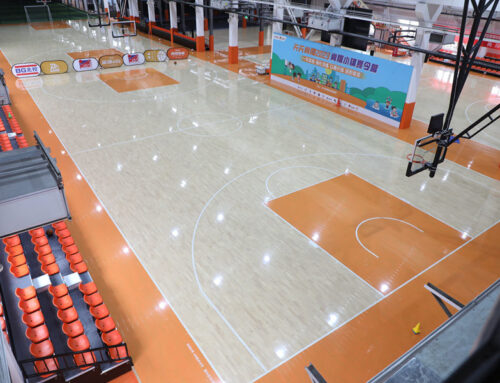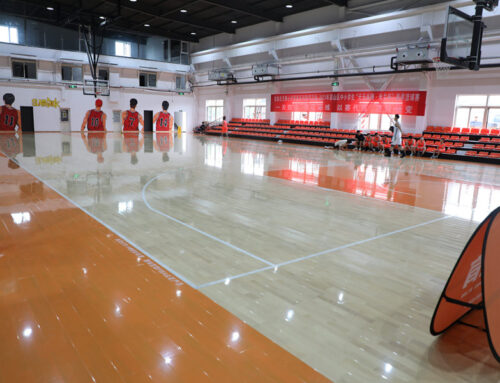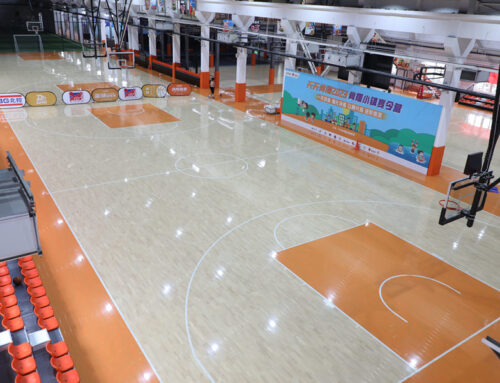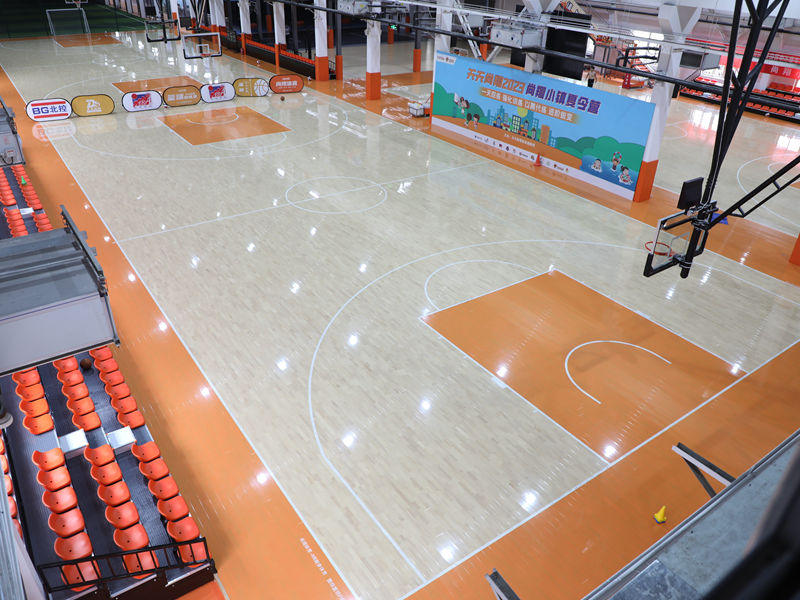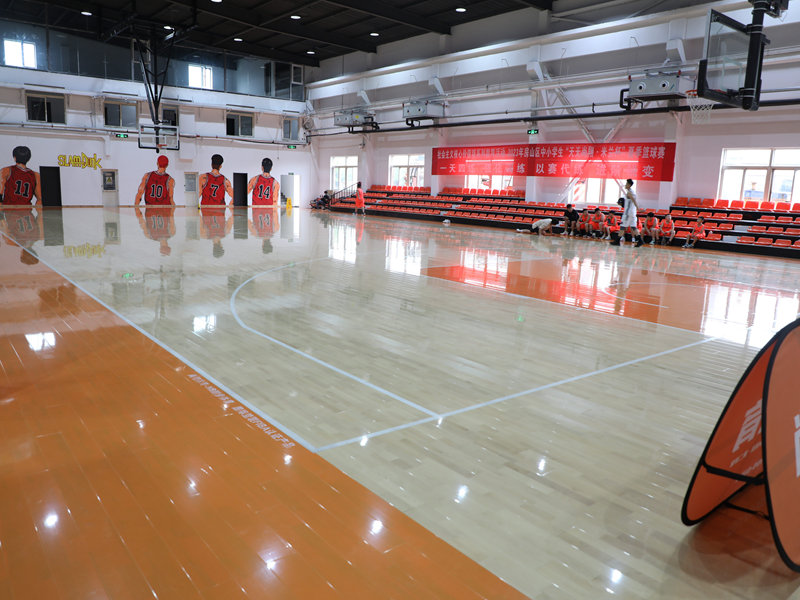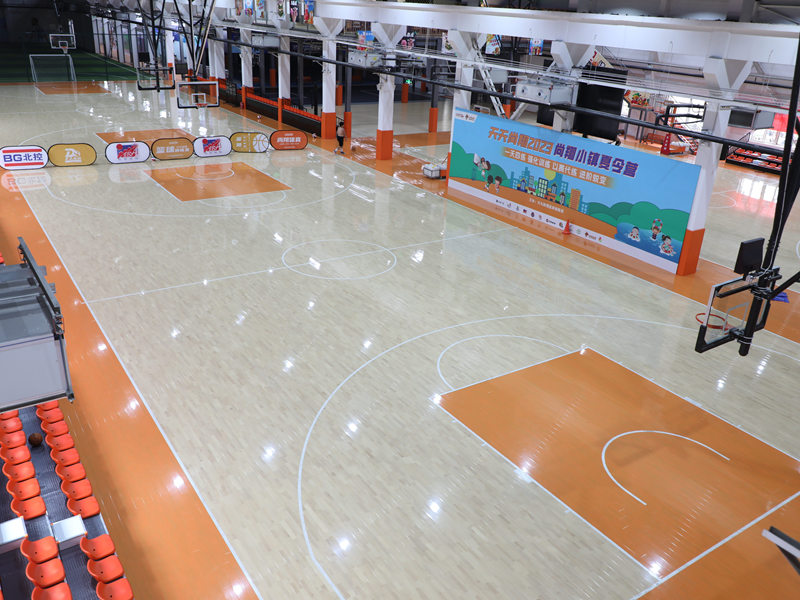
The true potential of printing technology in sports wooden flooring is fully realized through its integration with advanced modular connection systems that transform individual panels into unified athletic surfaces. Early modular flooring systems faced challenges with visible seams, differential movement between panels, and uneven wear patterns at connection points. Modern systems address these challenges through printed interface technologies that create seamless transitions between panels both visually and functionally. The printing process extends beyond the visible surface to include precisely applied connection elements, alignment markers, and even conductive pathways for integrated sensor systems, creating modular sports wooden flooring that performs as a single continuous surface despite its segmented construction.
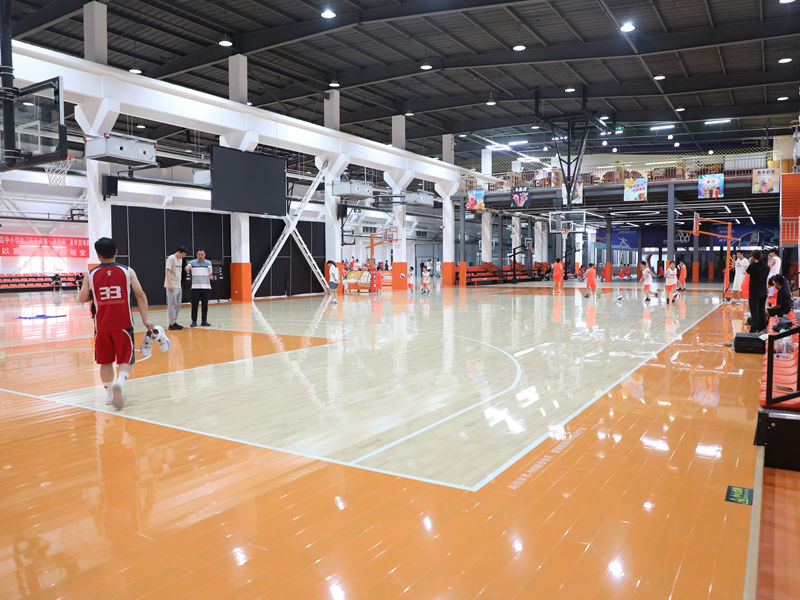
The printed interface systems begin with precision alignment features that are applied to the edges of each modular panel during the manufacturing process. Unlike mechanical alignment devices that can wear or deform over time, printed alignment markers maintain their accuracy throughout the lifespan of the flooring system. These markers are read by installation equipment or even by augmented reality systems that guide installers in creating perfectly aligned installations with minimal tolerance for error. The printing process ensures that every panel has identical alignment features regardless of when it was manufactured, allowing for perfect integration even when replacing individual panels years after the original installation. This level of manufacturing consistency was previously unattainable with mechanical alignment systems that inevitably experienced slight variations during production.
Beyond alignment, printed interface systems include specialized edge treatments that create moisture seals, acoustic barriers, and even load-transfer mechanisms between adjacent panels. Rather than relying on separate gaskets or seals that can degrade over time, these features are printed as integral components of each panel’s edge profile, creating durable, maintenance-free connections that maintain their integrity through years of use. The printing technology allows for these edge features to be applied with microscopic precision, ensuring perfect mating between panels without the gaps or height variations that could create tripping hazards or affect ball roll consistency. This attention to the interface between panels is what elevates modern modular sports wooden flooring from a collection of individual pieces to a truly integrated system.
Perhaps the most innovative application of printed interface technology in sports wooden flooring is the integration of conductive pathways that enable smart floor functionalities. These printed circuits, applied to the subsurface layers of each panel, can connect sensors embedded throughout the flooring system, creating networks that monitor everything from impact forces and athlete movements to environmental conditions and structural integrity. The printing process allows these conductive pathways to be integrated without affecting the playing surface characteristics, creating “smart” sports wooden flooring that can provide valuable data for performance analysis, injury prevention, and facility management. As these sensor systems become more sophisticated, the printed interface technology that enables their integration represents a foundational advancement that will support future innovations in connected athletic environments.