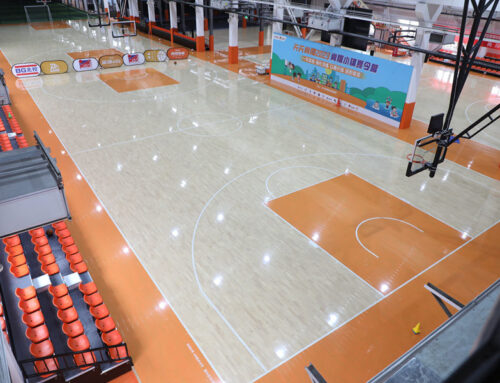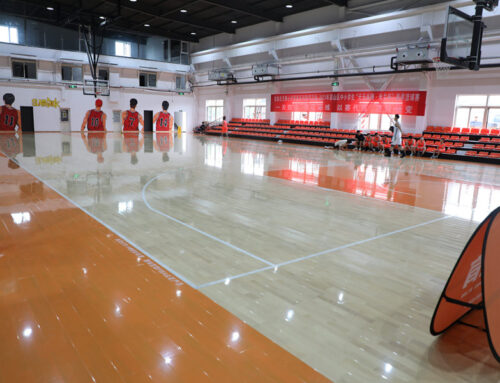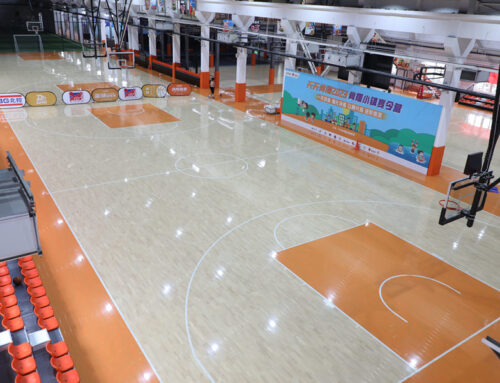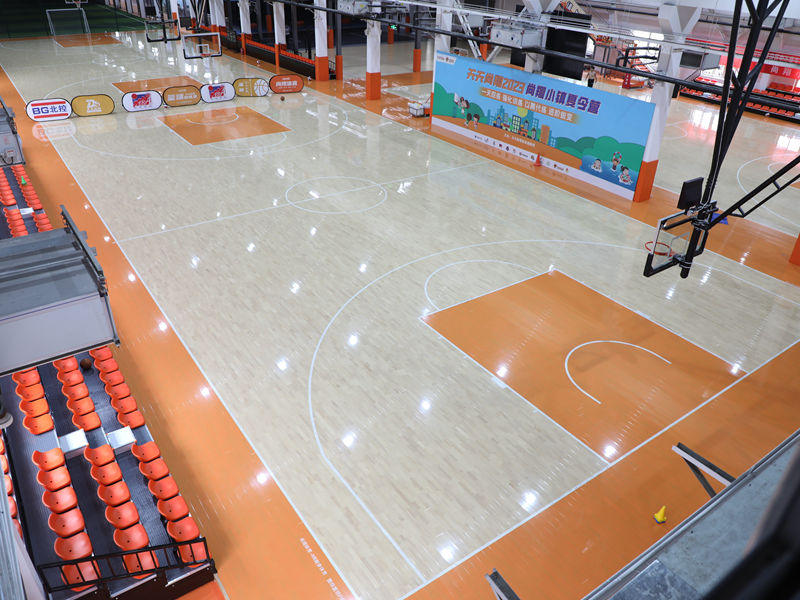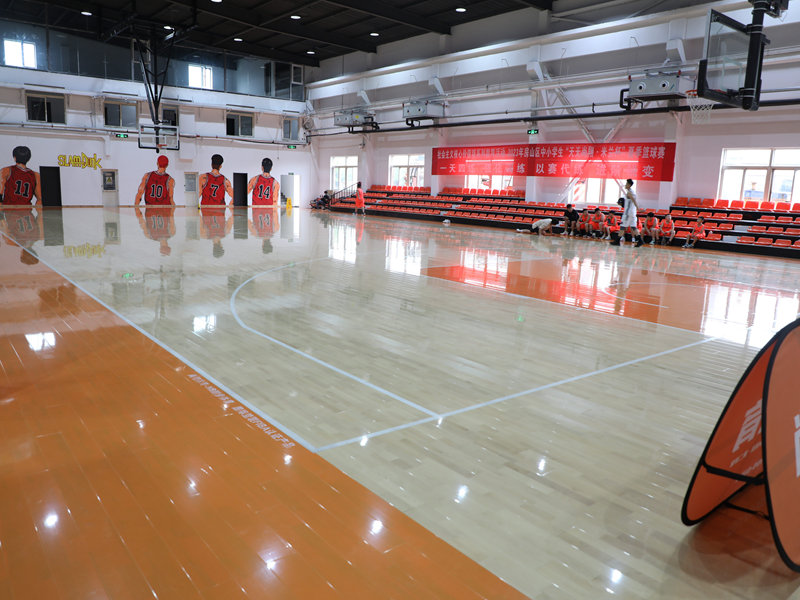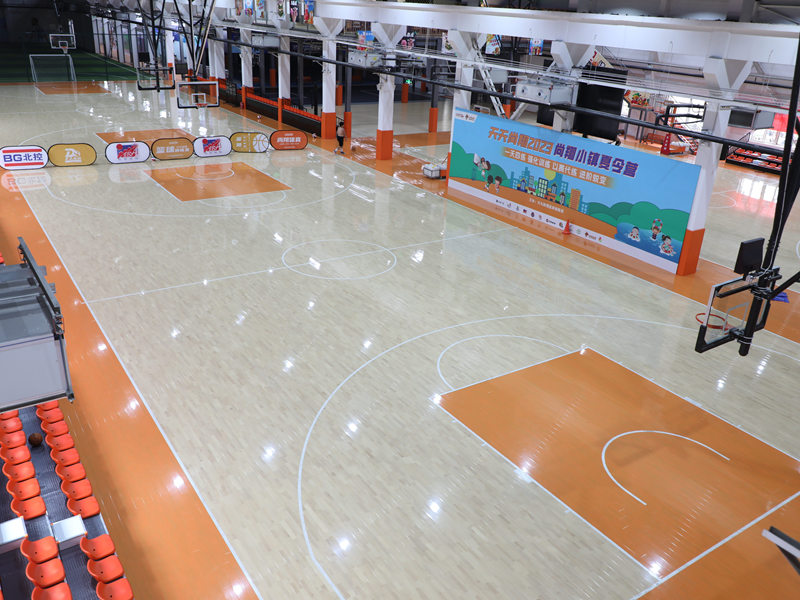
The science of impact absorption in sports wooden flooring has evolved dramatically with the advent of advanced printing technologies that allow for precise engineering of surface and subsurface characteristics. Traditional wood floors provided impact protection primarily through their inherent flexibility and through the design of their substructure, but the playing surface itself offered relatively little energy dissipation. Modern printed modular systems introduce a new dimension to impact management through the strategic design of the printed layers themselves, which can be formulated and applied in ways that specifically enhance the floor’s ability to absorb and dissipate the kinetic energy generated during athletic movements. This represents a significant advancement in athlete safety, particularly for sports involving frequent jumping and landing where impact forces can be several times body weight.
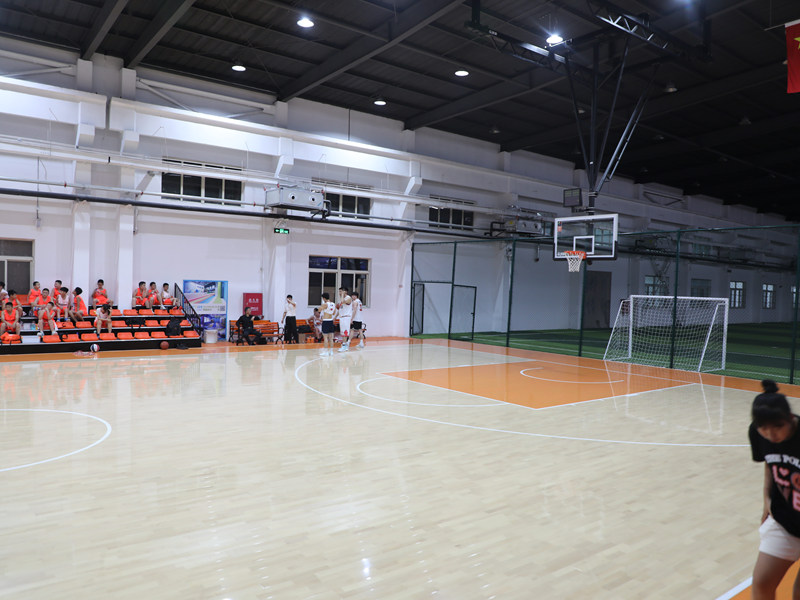
The impact absorption engineering begins with a detailed understanding of how different forces propagate through the sports wooden flooring system. Using sophisticated modeling software, engineers can simulate the shock waves generated by various athletic movements and design printed layer structures that optimally dissipate this energy before it reaches the athlete’s joints. Unlike uniform padding that affects all movements equally, printed layers can be designed with variable density and elasticity across different zones of the modular panels. Areas that typically receive direct impact from landings can be printed with formulations that provide more cushioning, while surrounding areas maintain the firmness needed for explosive takeoffs and quick directional changes. This zoned approach to impact management represents a more sophisticated understanding of athletic biomechanics than previous one-size-fits-all solutions.
The printed layers contribute to impact absorption through several complementary mechanisms. Viscoelastic materials within the printing formulations can convert mechanical energy into heat through internal friction, effectively damping the shock waves that travel through the flooring system. Micro-engineered air pockets within the printed structure provide additional cushioning through controlled compression, while maintaining the overall structural integrity needed for ball bounce consistency and athlete stability. Perhaps most innovatively, some advanced systems use printed piezoelectric materials that generate small electrical charges when mechanically stressed, actively converting impact energy into electrical energy that is then dissipated as harmless heat. This multi-mechanism approach to impact absorption allows sports wooden flooring to provide superior protection without compromising the responsive feel that athletes require for peak performance.
The benefits of engineered impact absorption extend beyond immediate injury prevention to long-term athlete health and career longevity. By reducing the cumulative stress on joints, tendons, and ligaments over thousands of training hours and competitions, properly designed sports wooden flooring can help prevent the overuse injuries that often plague serious athletes. The reduction in impact forces also decreases overall fatigue during extended play, allowing athletes to maintain proper form and technique even in late-game situations when fatigue might otherwise lead to compensatory movements that increase injury risk. This focus on impact management through printed layer design represents how modern sports surface engineering is taking a holistic view of athlete welfare, creating environments that not only facilitate peak performance in the moment but also support long-term athletic health and development.