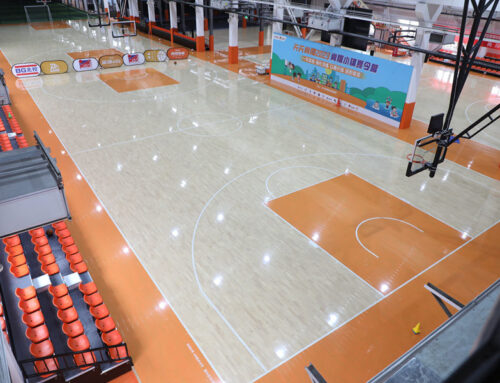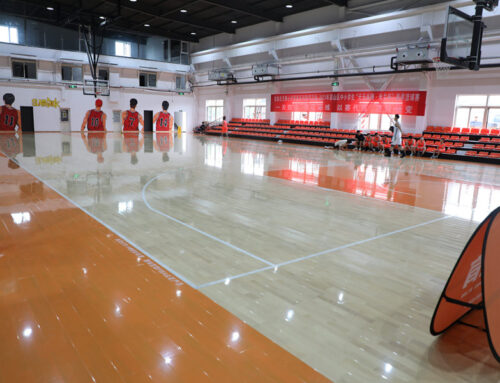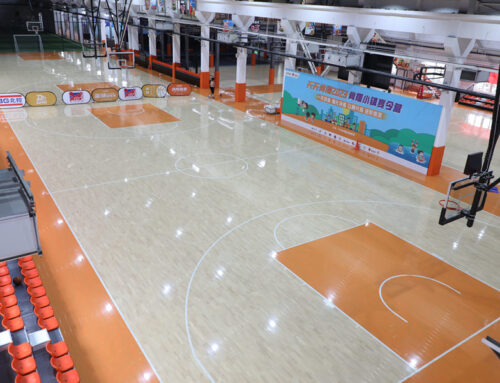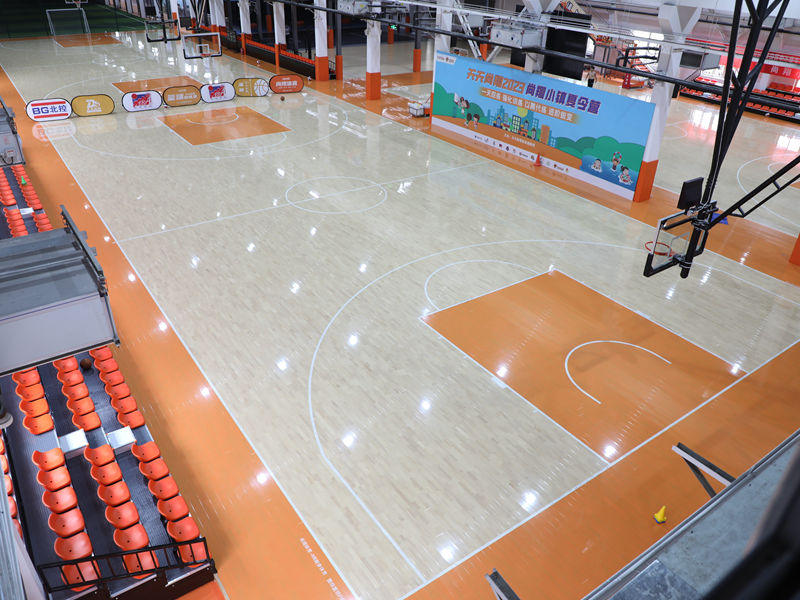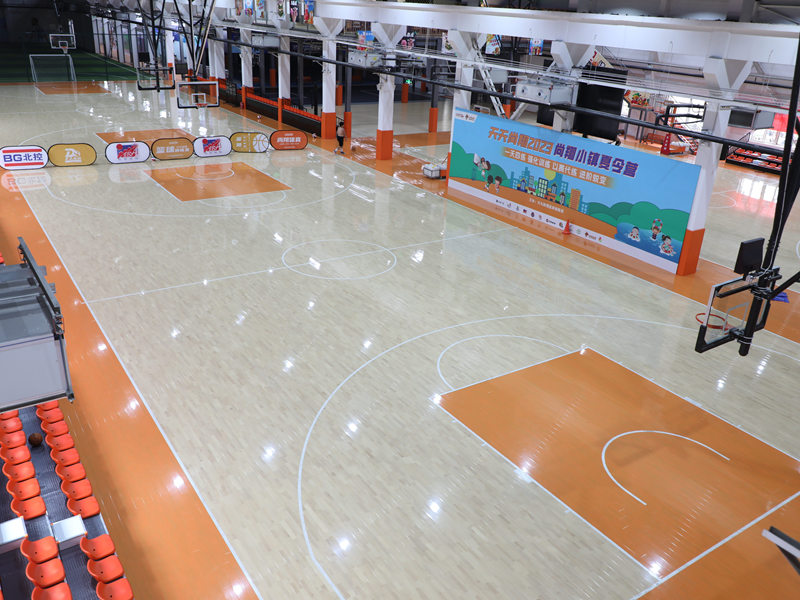
Moisture is the single greatest threat to gymnasium wooden floors. It causes cupping, crowning, gapping, mold growth, adhesive failure, finish peeling, and subfloor delamination. In severe cases, moisture damage can destroy a $100,000+ floor in a single season.
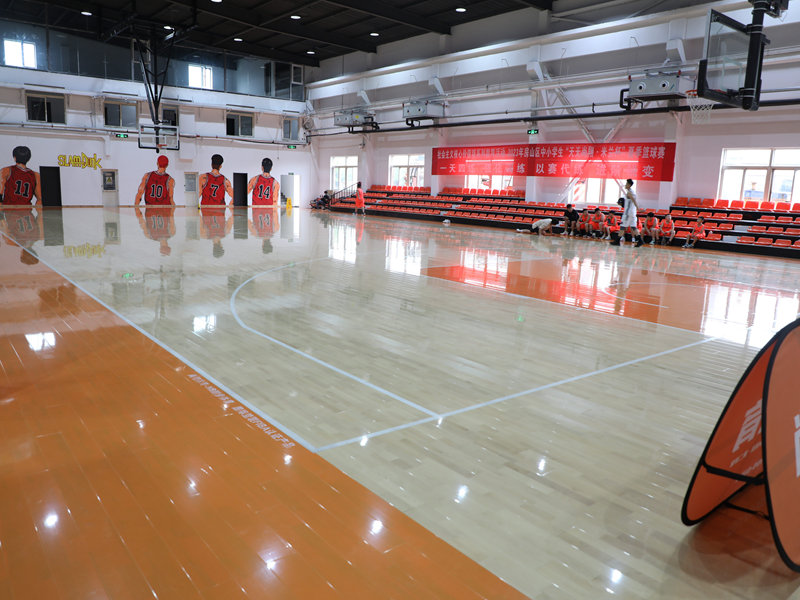
In this comprehensive guide, we’ll cover everything you need to know about moisture management in gymnasium wooden floors.
How Moisture Damages Wood Floors
Wood is hygroscopic—it absorbs and releases moisture based. Cause: Moisture degrading the adhesive.
Sources of Moisture
1. From Below (Most Common and Most Damaging)
- Concrete slab moisture: New concrete can contain 3-8 gallons of water per 1,000 sq ft. It takes 60-90 days to dry naturally.
- Plumbing leaks: Water pipes, sewer lines, or HVAC condensate lines under the floor
- Ground moisture: High water table or poor drainage around the building
- Capillary action: Moisture wicking up through concrete pores
2. From Above
- Roof leaks: The #1 cause of above-moisture damage
- HVAC condensation: Air conditioning units produce 5-20 gallons of water per day
- Spills: Water, sweat, cleaning solutions left on the floor
- Wet footwear: Athletes tracking in rain, snow, or pool water
3. From the Sides
- Exterior walls: Rain penetration, failed flashing, cracked foundation
- Interior plumbing: Leaking pipes in walls or under the floor
Moisture Testing: Before, During, and After Installation
Before Installation (CRITICAL):
| Test | Method | Acceptable Level |
|---|---|---|
| Concrete moisture | ASTM F1869 (Calcium Chloride) or ASTM F2170 (RH probe) | <3 lbs/1000 sq ft/24hr or <75% RH |
| Plywood moisture | Pin or pinless moisture meter | <12% MC |
| Wood flooring moisture | Pin moisture meter (multiple readings) | 6-9% MC |
| Subfloor flatness | 10’0% RH year-round |
- Use humidifiers in winter (heating dries the air)
- Use dehumidifiers in summer (cooling removes moisture)
- Fix any HVAC leaks immediately (condensate pans, drain lines)
- Size HVAC properly for the space (undersized systems can’t control humidity)
5. Roof and Exterior Maintenance
- Inspect roof annually (before rainy season)
- Seal all roof penetrations (vents, skylights, HVAC units)
- Repair cracked foundation walls
- Maintain exterior grading and drainage
Detecting Moisture Problems Early
Visual Signs:
- Cupping or crowning of individual planks
- Gaps between planks (wider than 1/16″)
- Discoloration or darkening of wood
- Mold smell (musty, earthy odor)
- Finish bubbling or peeling
- Soft spots when walking (indicates subfloor damage)
Instrument Detection:
- Pinless moisture meters: Scan large areas quickly (Delaminator, Wagner Meters)
- Thermal imaging cameras: Detect moisture behind walls and under floors (FLIR cameras)
- Data-logging hygrometers: Track humidity trends over time (Tempest, HOBO)
Repairing Moisture Damage
Minor cupping/crowning (single planks):
- Identify and fix the moisture source
- Allow planks to acclimate (may take 2-4 weeks)
- Lightly
School gymnasiums are among the most heavily used sports facilities in the world. A typical high school gym hosts 500+ students daily for PE classes, intramurals, practices, and games. That’s 100,000+ footfalls per year on a single floor.
Choosing the right gymnasium floor for a school is one of the most important facility decisions a school board will make. This guide covers everything facility managers and school board members need to know.
Understanding School Gymnasium Requirements
School gymnasiums have unique demands:
High usage: 8-12 hours per day, 180+ days per year
Multiple sports: Basketball, volleyball, badminton, physical education, assemblies
Variable skill levels: From 5-year-olds in PE to varsity athletes
Budget constraints: School budgets are tight; every dollar counts
Safety priorities: Schools have the highest liability exposure—injured students mean lawsuits
Aging buildings: Many school gyms are 30-50 years old with subfloor issues
The Right Floor for Schools: Specifications
Based on decades of data and school facility best practices, here’s the recommended specification for a typical K-12 school gymnasium:
Wear Layer:
- Species: North American hard maple (best) or red oak (budget)
- Thickness: 3/4″ (professional) or 1/2″ (budget)
- Width: 2.25″ standard use—more durable)
- Density: 40-50 lb/ft³
- Compression set: <15%
Adhesive:
- Moisture-cure polyurethane
- Full coverage application
- Low VOC (<50 g/L)
Finish:
- Water-based polyurethane (budget) or UV-cured (premium)
- Satin sheen (15-25 gloss units)
- 3-4 coats
Target Performance:
- Shock absorption: 40-50%
- Ball bounce: 90-95%
- Friction: 0.4-0.6
- Flatness: ±1/8″ per 10 feet
Estimated Cost: 14−20/sqftinstalled(maple),10-14/sq ft (oak)
Maple vs. Oak for Schools: The Real Math
Let’s do a 20-year cost comparison for a 5,000 sq ft school gym:
| Factor | Maple ($17/sq ft) | Oak ($12/sq ft) |
|---|---|---|
| Installation | $85,000 | $60,000 |
| Recoating (every 4 yrs) | 3,000×5=15,000 | 2,000×7=14,000 |
| Refinishing (every 12 yrs) | 10,000×1=10,000 | 7,000×1=7,000 |
| Repairs (annual avg) | 3,000×20=60,000 | 4,500×20=90,000 |
| Replacement (if needed) | $0 | $40,000 (year 18) |
| TOTAL | $170,000 | $211,000 |
Maple saves 41,000over20years—despitecosting25,000 more upfront. And maple provides better performance,
1. Bond Referendum
Most common for major floor replacements. Voters approve a bond issue (typically 10-20 year repayment). A 100,000floorcostsabout500-800/year in bond payments.
2. Capital Improvement Budget
Many districts allocate a portion of their capital budget to facility improvements. Floors typically have a 30-50 year lifespan, so they qualify as capital improvements.
3. State/Federal Grants
- Title I funds: Can be used for facility improvements in low-income schools
- State school facility grants: Many states have programs specifically for gymnasium upgrades
- ESSER funds (post-COVID): Some districts used ESSER funds for facility improvements including floors
4. P3 (Public-Private Partnerships)
Some districts partner with local businesses or foundations. A local business sponsors the floor in exchange for naming rights or advertising.
5. Fundraising
Booster clubs, PTA, and alumni campaigns can raise $20,000-50,000 for flooring projects. Many schools combine fundraising with bond referendums.
Maintenance: The School’s Ongoing Responsibility
Schools often under-maintain their floors because:
- Custodial staff are overworked
- Budgets are tight
- Nobody “owns” the floor
Solution: Create a Floor Maintenance Plan
| Task | Frequency | Who | Cost |
|---|---|---|---|
| Dust mop | Daily | Custodian | $500/year supplies |
| Wet mop | oring – Trends, Technologies, and Predictions for 2030 |
The gymnasium flooring industry is on the cusp of a revolution. New materials, smart technologies, sustainability innovations, and changing sports demands are reshaping how we think about playing surfaces. In this article, we’ll explore the trends and technologies that will define gymnasium flooring in the next decade.
Trend 1: Smart Floors with Embedded Sensors
By 2030, most premium gymnasium floors will include embedded sensor networks that monitor:
- Moisture levels in real-time (alerting facility managers to leaks before damage occurs)
- Shock absorption degradation (telling you when the shock pad needs replacement)
- Surface temperature (optimizing HVAC for athlete comfort)
- Foot traffic patterns (helping with facility scheduling and wear analysis)
- Ball bounce consistency (detecting when the floor needs reco
These sensors will be thin, flexible, and embedded during installation—invisible to players but invaluable to facility managers. Companies like Kinexon and Catapult are already developing sports surface monitoring systems.
Impact: Predictive maintenance instead of reactive repairs. Floors that “tell you” when they need attention before problems become visible.
Trend 2: Bio-Based and Carbon-Neutral Floors
Sustainability will move from a nice-to-have to a requirement:
- Bio-based adhesives: Made from soy, corn, or lignin instead of petroleum. Performance comparable to petroleum-based adhesives, with 7 be tuned for different sports or player preferences
- Zone-specific friction: Different friction levels in different areas of the court (slippery for fast breaks, grippy for the paint)
- Temperature-controlled floors: Heated/cooled floor systems for optimal athlete comfort in extreme climates
Impact: Floors that adapt to the sport, the player, and the conditions. The “one size fits all” approach will be obsolete.
Trend 6: Augmented Reality Integration
Floors will become digital canvases:
- Projection-mapped court lines: No painted lines—court markings projected from ceiling-mounted projectors, changeable instantly for different sports
- LED-embedded floors: Thin, flexible LED panels under the wear layer that display scores, animations, or training cues
- AR training systems: Floor sensors combined with AR glasses that provide real-time feedback on footwork, positioning, and movement
Impact: Multi-sport facilities that transform from basketball to volleyball to pickleball with the touch of a button. Training floors that make athletes better.
Trend 7: Health and Wellness Floors
Post-COVID, health-conscious design is booming:
- Antimicrobial surfaces: Silver-ion or copper-infused finishes that kill 99.9% of bacteria and viruses
- Air-purifying floors: Photocatalytic coatings that break down VOCs and pollutants in the air
- Wellness-optimized cushioning: Shock pads tuned to reduce joint stress for senior
The gymnasium floor of 2030 will be smarter, greener, more adaptable, and more connected than anything we have today. But the fundamentals won’t change: athletes still need a safe, responsive, consistent playing surface. The best flooring companies of the future will be those that master both the timeless fundamentals (wood science, shock absorption, friction) and the cutting-edge innovations (sensors, sustainability, modularity).
The floor under your feet today is the foundation of tomorrow’s sports. Choose wisely.