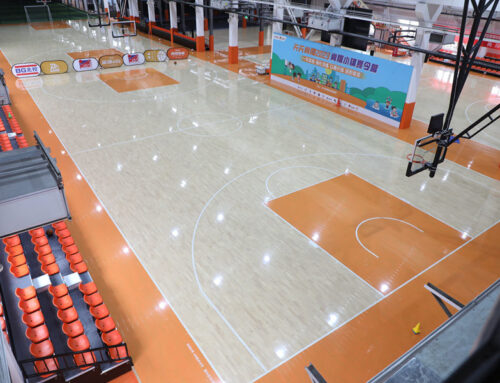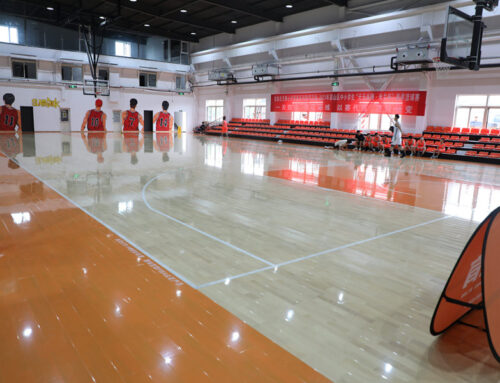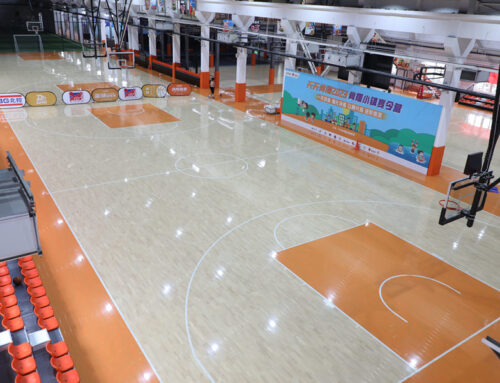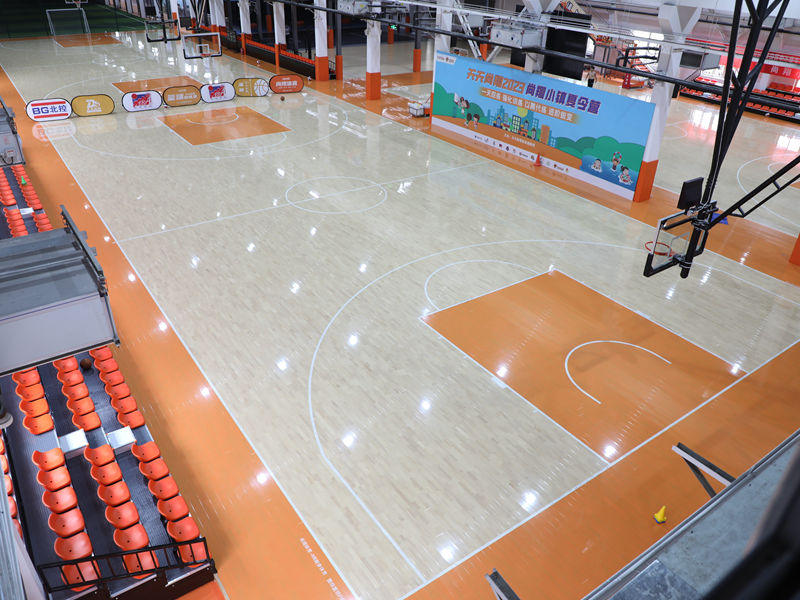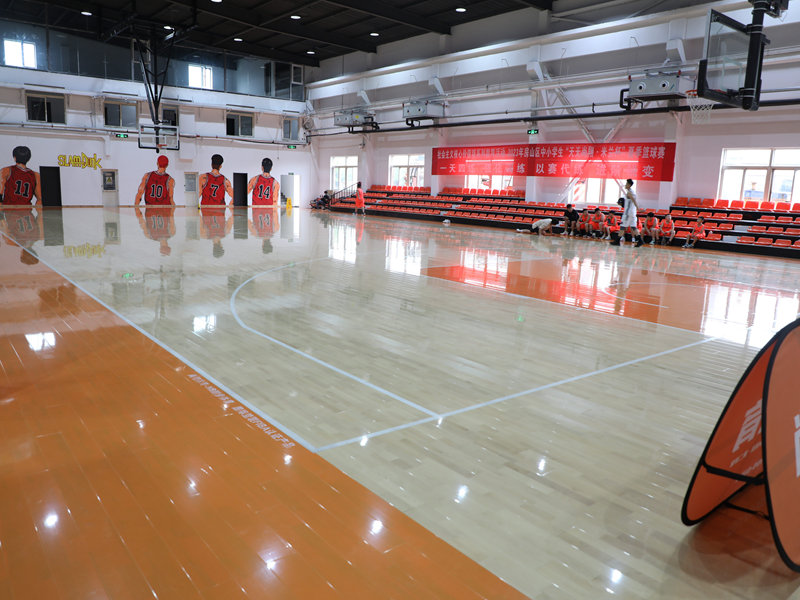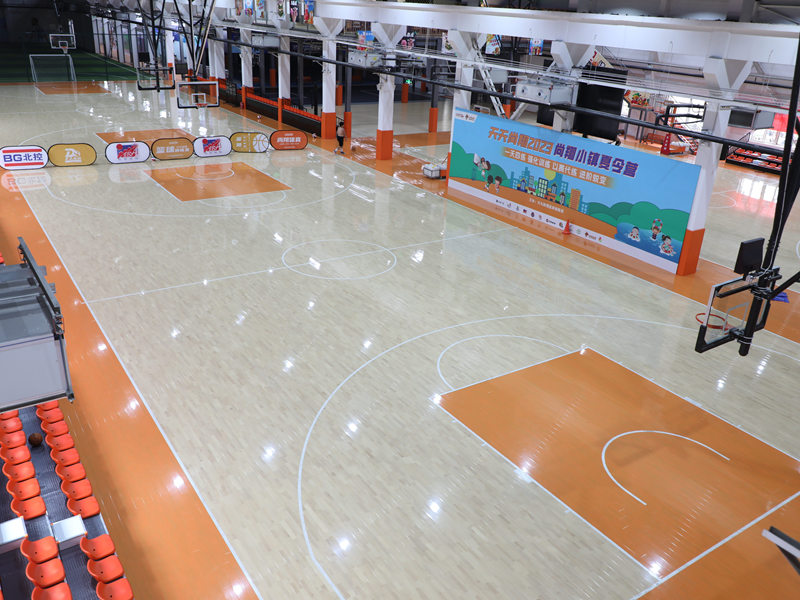
The installation of a modular indoor basketball court wood floor is a meticulous process that demands precision at every stage to achieve the required performance standards. It begins with a comprehensive assessment and preparation of the concrete subfloor, which must be clean, dry, and level within a tolerance of 3 millimeters over a 3-meter span. Any irregularities are corrected using self-leveling compounds or grinding. A vapor barrier is then rolled out over the entire area, with seams overlapped and sealed to prevent moisture migration from the substrate, a critical step in preserving the dimensional stability of the wood.
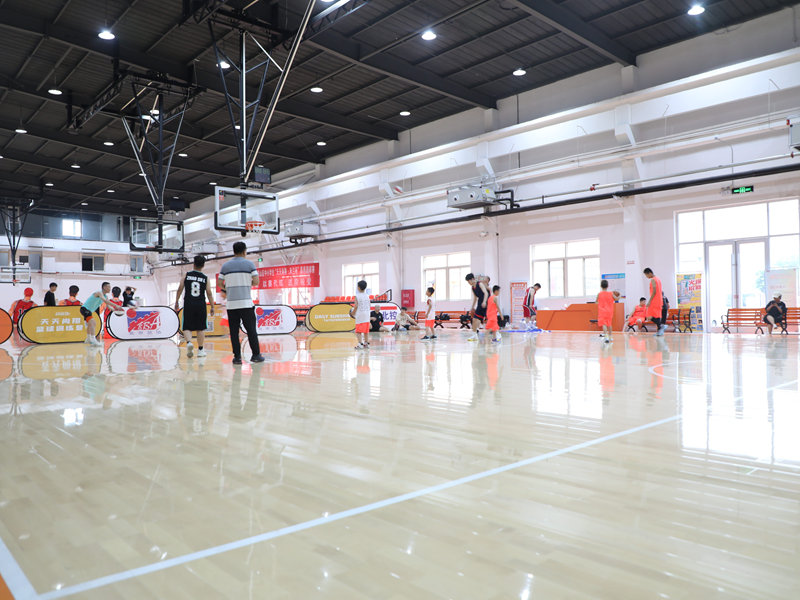
Next, the layout for the keel grid is marked with chalk lines. The keels, often made from treated softwood or composite materials, are positioned at predetermined intervals—commonly 400 millimeters on center—and each is placed on a dedicated rubber isolator pad. A laser level is used to ensure the entire grid is perfectly flat before the keels are anchored to the subfloor. The oriented strand board panels are then laid perpendicular to the keels and fastened securely, creating a rigid diaphragm. A second, thinner underlayment may be added to provide additional sound dampening and moisture protection. Finally, the hardwood planks are installed, typically starting from the centerline of the court and working outward to ensure symmetry. Each plank is blind-nailed at an angle through the tongue, pulling it tightly against its neighbor to form a seamless surface. The perimeter of the court includes an expansion gap concealed by a vented baseboard, allowing the entire floor system to breathe and move without constraint.