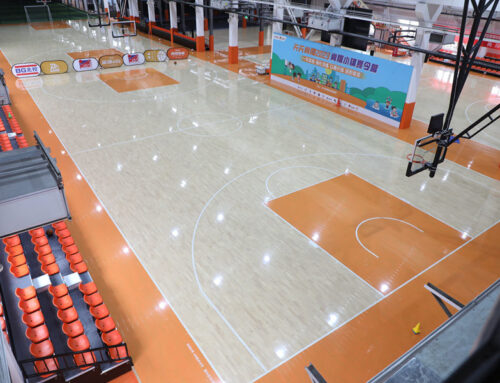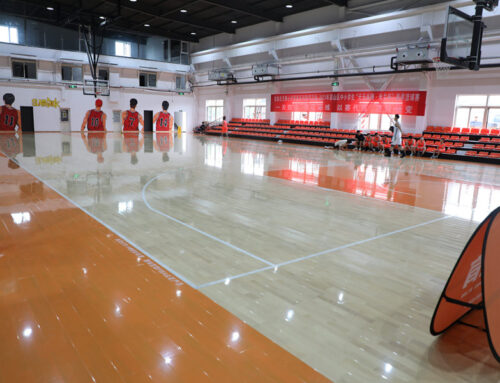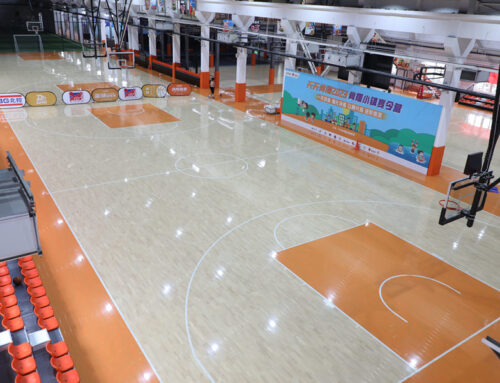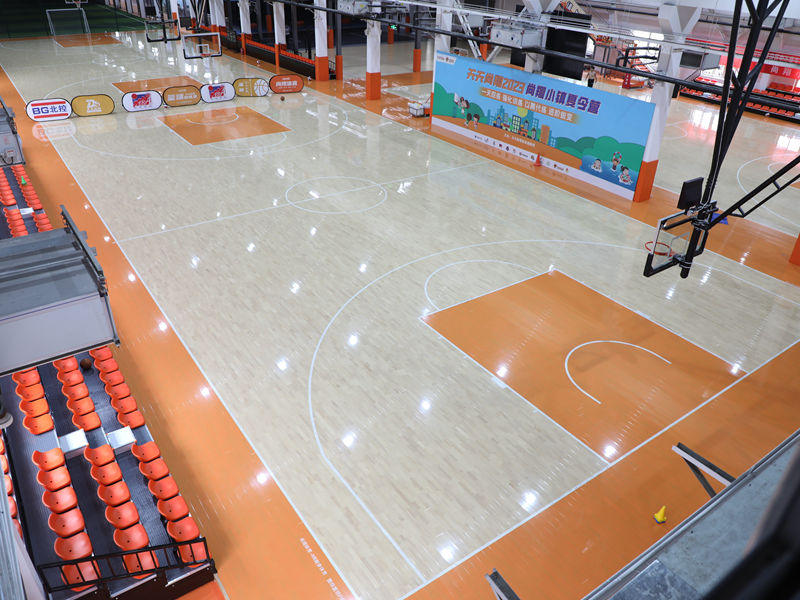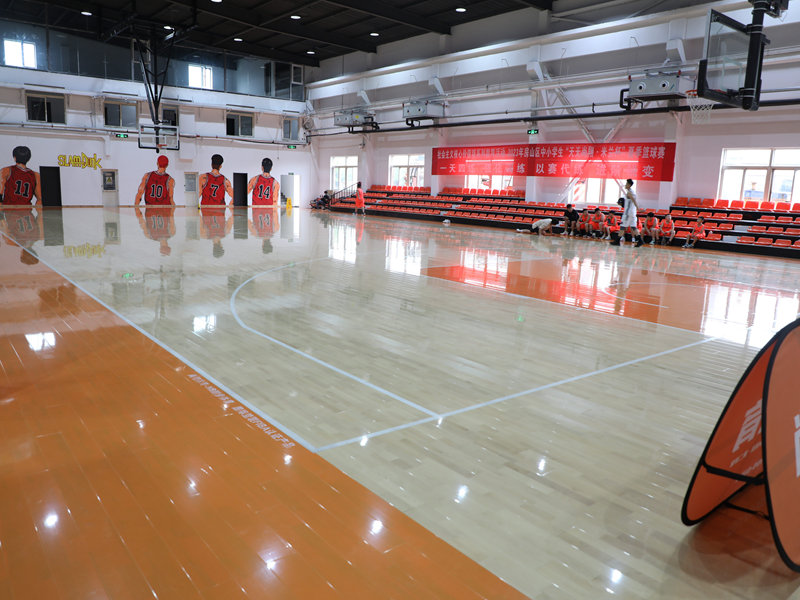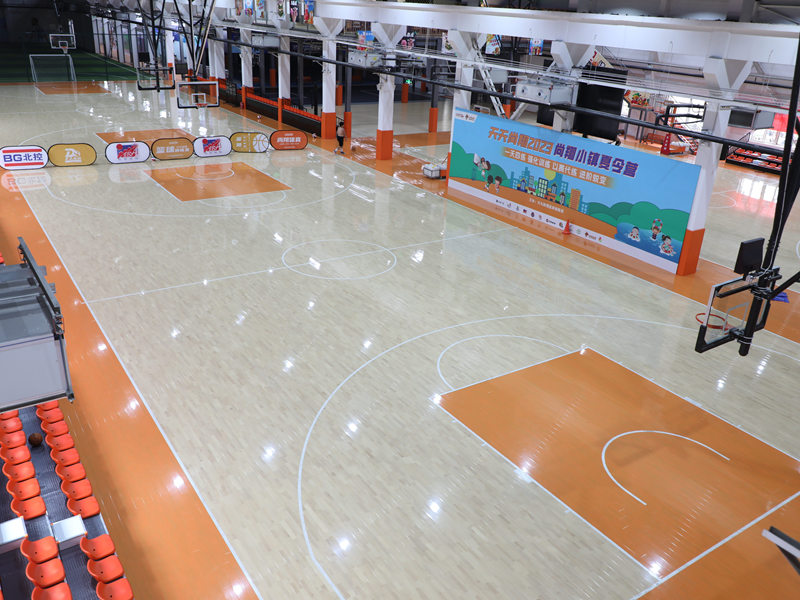
The performance of a modular indoor basketball court wood floor begins with its material composition, which is a multi-layered engineered system designed to meet rigorous athletic demands. The top playing surface is typically constructed from dense hardwoods such as hard maple or white oak, selected for their uniform grain structure, high shock absorption, and resistance to abrasion from constant foot traffic. These wood species undergo a precise kiln-drying process to achieve a moisture content between 6% and 9%, stabilizing them against the humidity fluctuations common in indoor sports environments. Beneath the surface layer lies a sophisticated support structure: a grid of pressure-treated wooden keels, spaced at regular intervals, which are fastened to a high-density polyethylene moisture barrier installed over the concrete subfloor. Between the keels and the subfloor, specially formulated rubber shock-absorbing pads are strategically placed to dissipate impact forces. This layered assembly is not merely a floor but a dynamic system that converts kinetic energy from jumps and landings into harmless heat, reducing athlete fatigue and the risk of impact-related injuries by up to 30% compared to rigid surfaces.
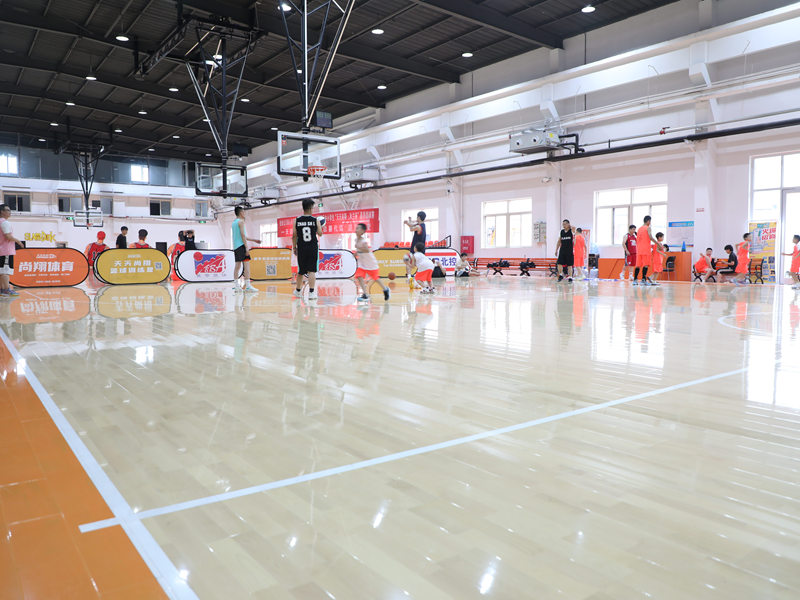
The structural integrity of the system is further enhanced by the cross-laminated base panels, usually made from oriented strand board, which are secured atop the keel grid. These panels provide a flat, stable substrate that prevents localized deflection and ensures uniform ball response across the entire court. Each hardwood plank is milled with precision tongue-and-groove edges, allowing for a tight, gap-free fit during installation. The entire assembly is designed as a “floating floor,” meaning it is not rigidly attached to the subfloor but rests on the shock-absorbing pads. This design allows for natural expansion and contraction of the wood with seasonal changes in temperature and humidity, preventing warping or buckling. The finished surface is coated with multiple layers of a specialized, low-gloss polyurethane finish that provides a consistent coefficient of friction—typically between 0.5 and 0.7—optimized for secure traction without restricting the rapid pivoting movements essential in basketball.