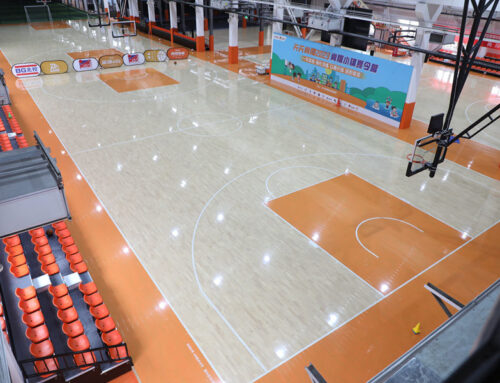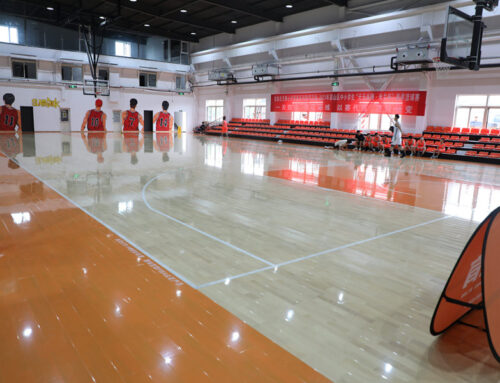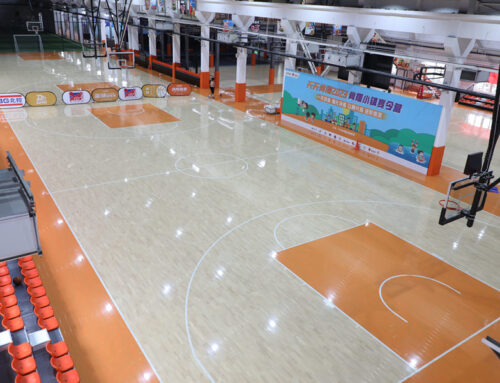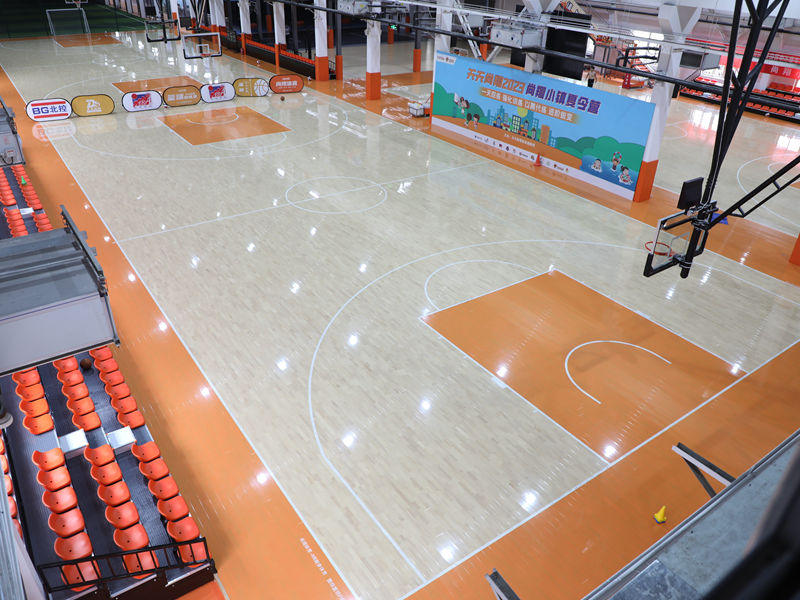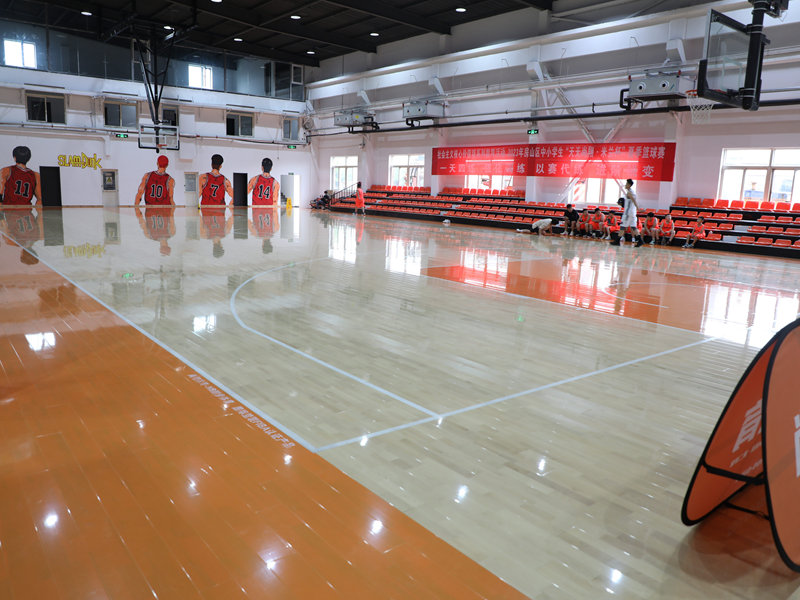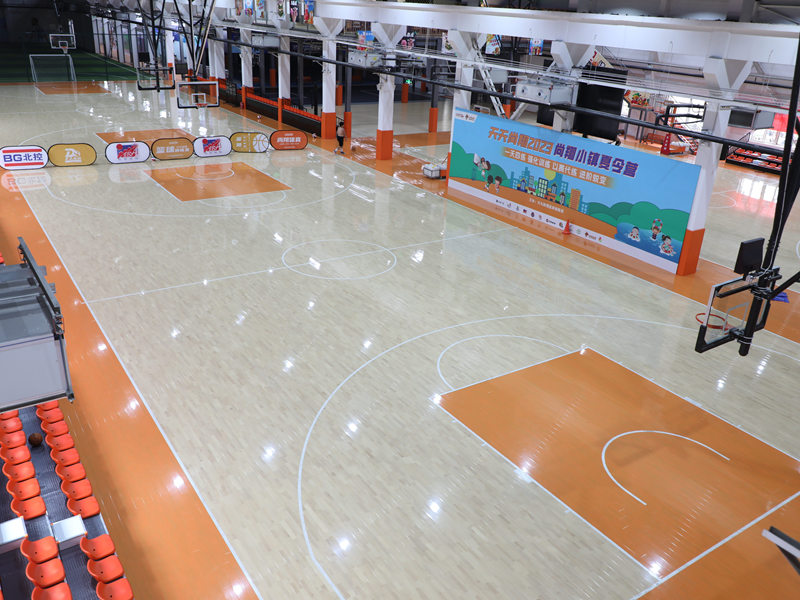
Wood’s natural tendency to absorb and release moisture in response to environmental humidity has always presented a challenge for sports wooden flooring installations. Uncontrolled dimensional changes as wood expands and contracts can create uneven surfaces, squeaks, and gaps that compromise both performance and safety. Traditional approaches to this problem involved careful climate control of facilities and limitations on wood species selection, but modern printing technology offers a more sophisticated solution through engineered hygroscopic management built directly into the printed surface layer. By creating a precisely calibrated moisture barrier that allows controlled vapor transmission rather than complete sealing, manufacturers can now produce modular sports wooden flooring that maintains dimensional stability across a much wider range of environmental conditions.
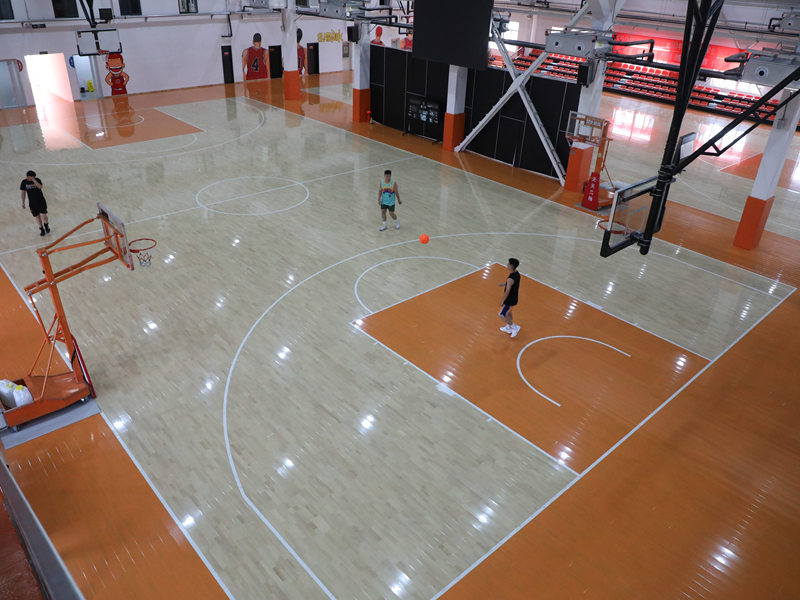
The innovation lies in creating printed surface layers that are selectively permeable rather than completely impermeable. Complete moisture sealing might seem like the obvious solution, but it creates its own problems by trapping moisture within the wood substrate, potentially leading to decay or creating pressure differentials that cause more severe warping. The printed layers on advanced sports wooden flooring are engineered with microscopic channels and porosity that allow moisture vapor to pass through at a controlled rate, maintaining equilibrium between the wood and the surrounding environment without the rapid moisture exchange that causes dimensional instability. This balanced approach means the flooring can accommodate normal seasonal humidity fluctuations without noticeable dimensional changes, creating a consistently flat playing surface year-round.
This hygroscopic management extends to protection against liquid spills, which pose a different challenge than atmospheric humidity. The same printed surface that allows controlled vapor transmission creates an effective barrier against liquid water, preventing spills from penetrating into the wood substrate where they could cause staining, swelling, or mold growth. The chemical formulation of the printing materials includes hydrophobic components that cause liquid water to bead up on the surface rather than being absorbed, giving facility maintenance staff ample time to wipe up spills before any damage occurs. This dual functionality—allowing vapor transmission while blocking liquid penetration—represents a significant advancement in sports wooden flooring technology, particularly for facilities that host events where beverages are served or that are located in climates with high humidity variability.
The benefits of engineered hygroscopic management in printed sports wooden flooring extend beyond mere dimensional stability. By maintaining more consistent moisture content within the wood substrate, the flooring provides more uniform mechanical properties throughout its service life. The shock absorption characteristics, surface hardness, and even acoustic properties remain stable regardless of seasonal changes, ensuring that athletes experience consistent playing conditions throughout the year. This consistency is particularly valuable for training facilities where athletes develop muscle memory for specific movement patterns—they can trust that the floor will respond the same way in summer humidity as it does in winter dryness. The sophisticated moisture management made possible through advanced printing technology represents one of the less visible but critically important advancements in modern sports surface engineering.