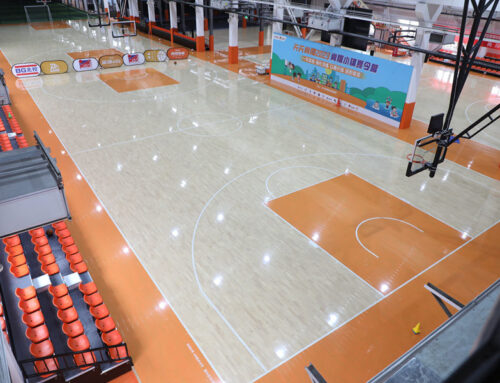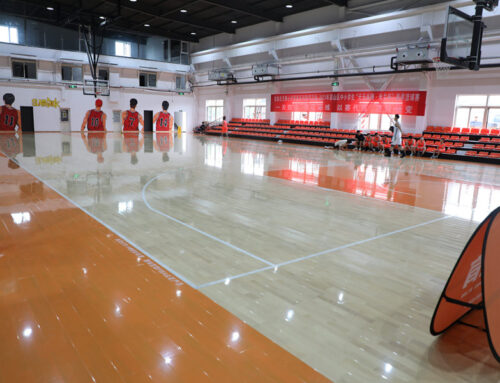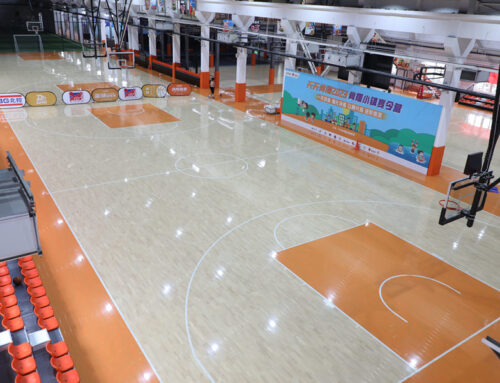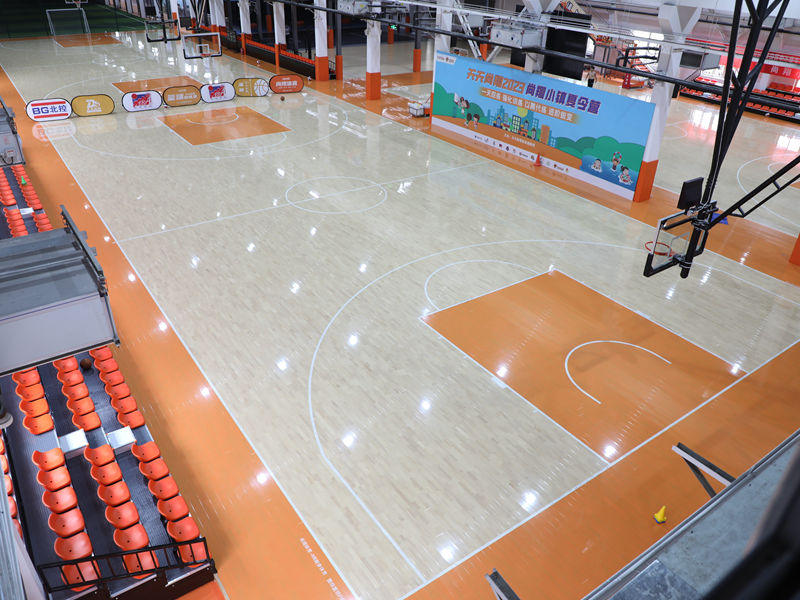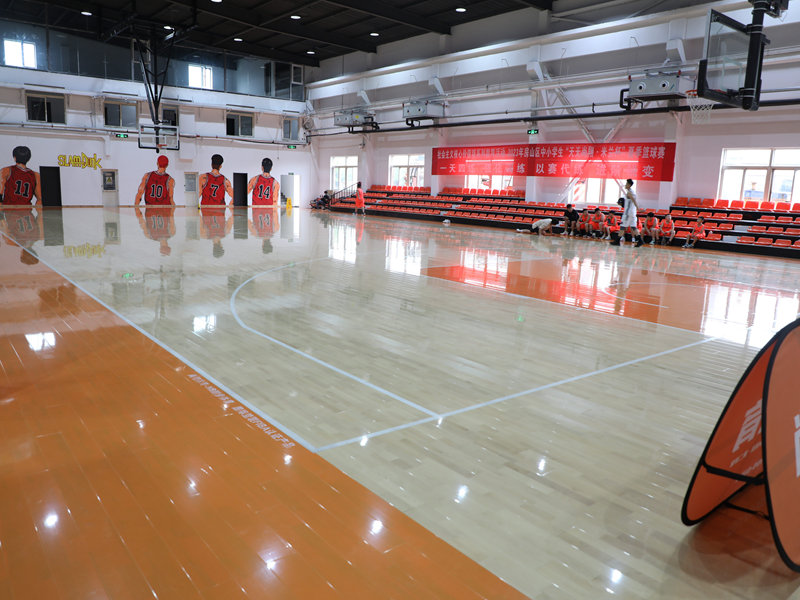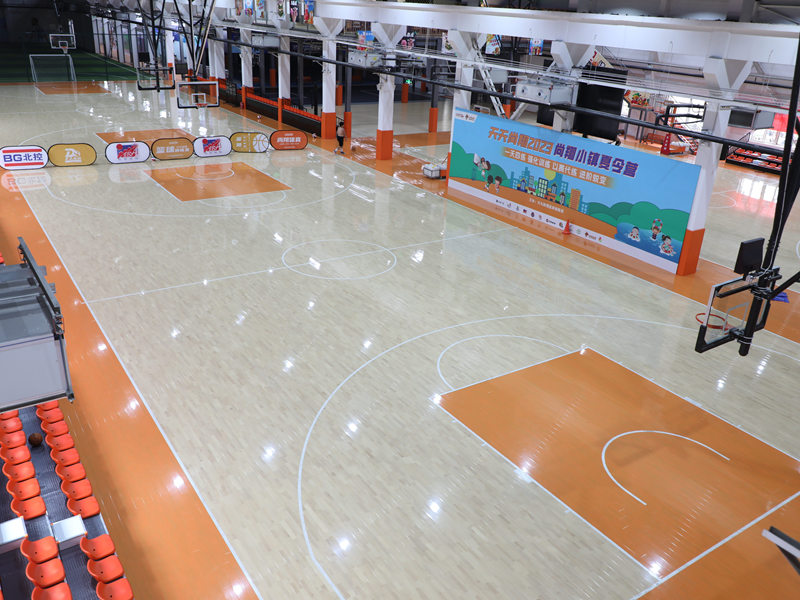
Climate is one of the most significant factors affecting the performance and longevity of indoor basketball court hardwood flooring. Wood is a natural material that expands and contracts with changes in temperature and humidity. If these changes are not managed, the floor can develop serious problems.
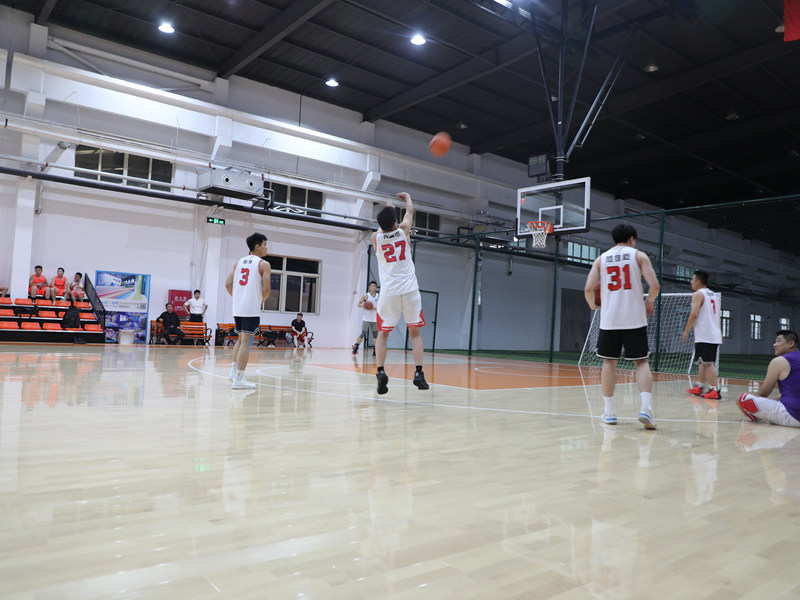
The ideal climate for an indoor basketball court hardwood floor is a temperature between 60 and 75 degrees Fahrenheit and a relative humidity between 35 and 50 percent. Within this range, the wood remains dimensionally stable, the finish stays intact, and the floor performs at its best.
When humidity rises above 50 percent, the wood begins to absorb moisture from the air. This causes the planks to expand. If the expansion is uniform across the entire floor, it may not be visible. But if some areas are more humid than others, the floor can develop cupping, crowning, or gaps between planks. Cupping occurs when the edges of a plank rise higher than the center. Crowning is the opposite, with the center rising higher than the edges. Both conditions affect ball bounce and can create tripping hazards.
When humidity drops below 35 percent, the wood loses moisture and shrinks. This causes gaps between, which is one reason players prefer it. They can hear the ball clearly, which helps with ball handling and spatial awareness.
However, excessive noise can be a problem. In recreational facilities, loud echoes can make it difficult for players to communicate, which can affect teamwork and increase the risk of collisions. In schools, noise from the gym can disrupt nearby classrooms.
The acoustic properties of a basketball court floor are influenced by several factors. The hardness of the wood affects how much sound is reflected versus absorbed. Harder woods, like maple, reflect more sound. The finish also matters. A matte finish absorbs slightly more sound than a gloss finish. The subfloor and shock absorption layer play a significant role as well. A thicker, denser shock absorption layer absorbs more sound, reducing echo and reverberation.
The construction of the building itself is the biggest factor. High ceilings, hard walls, and large open spaces all contribute to noise. Adding acoustic panels to the walls and ceiling can significantly reduce echo without affecting the floor. Some facilities install acoustic curtains or baffles that can be deployed during games to control noise.
For professional and collegiate arenas, acoustics are carefully engineered. The goal is to create an environment where the crowd is loud and energetic, but where players can still communicate on the court. This requires a balance between sound reflection (for crowd energy) and sound absorption (for player communication).
In recreational facilities, the acoustic goal is different. The priority is to reduce noise to acceptable levels for the surrounding community. This can be achieved through a combination of have no such benefit. In fact, their production generates significant carbon emissions.
Water usage is also a factor. Hardwood floor maintenance requires minimal water. Daily damp mopping uses far less water than the cleaning processes required for some synthetic surfaces.
For facility managers who want to build a truly sustainable basketball facility, the path is clear. Specify certified hardwood, use water-based or zero-VOC finishes, choose recycled or natural rubber shock absorption, invest in climate control to extend the floor’s life, and plan for end-of-life reuse. By making these choices, a basketball facility can be both a high-performance sports venue and a model of environmental responsibility.