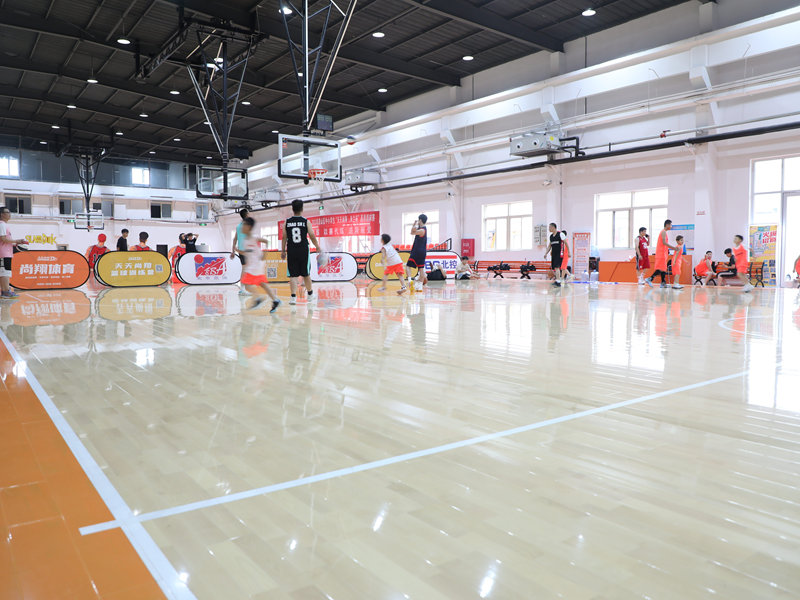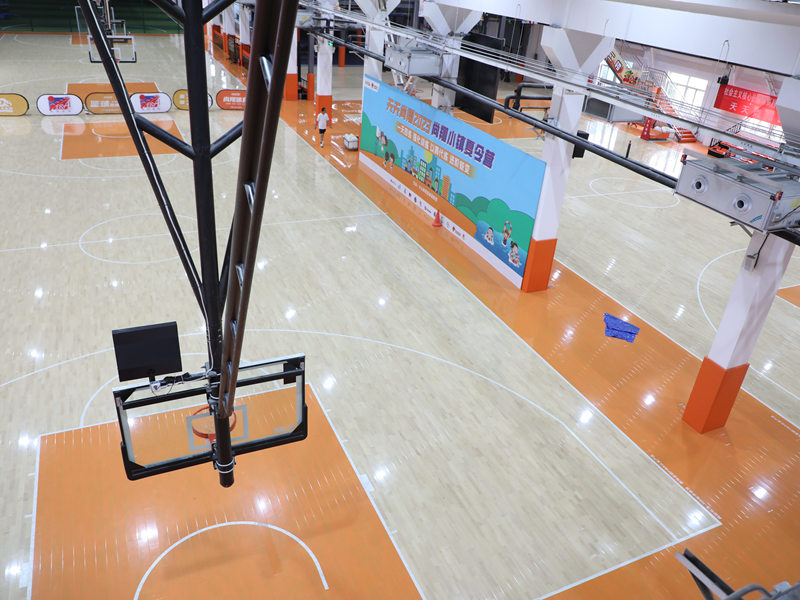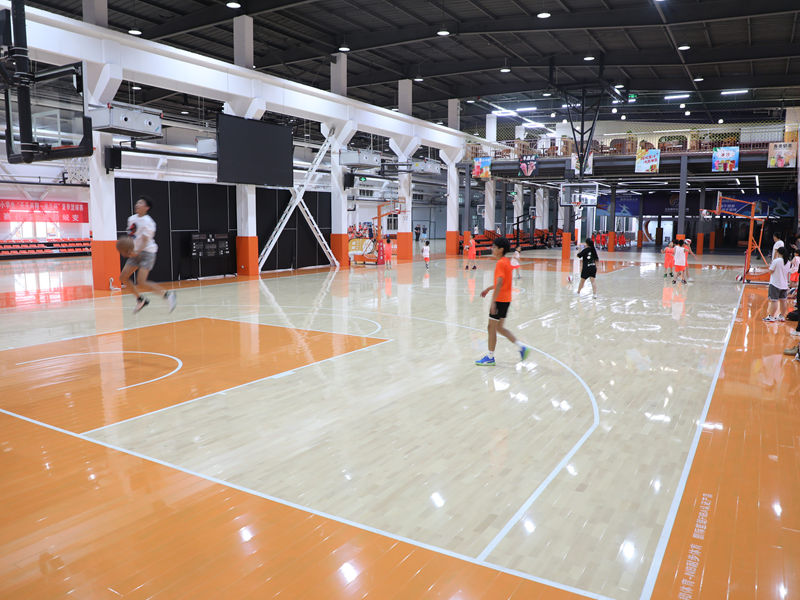
One of the most common objections to indoor basketball wood flooring is cost. Compared to synthetic surfaces, polished concrete, or rubber tiles, hardwood is significantly more expensive upfront. But this comparison is misleading. To understand the true cost of a basketball wood floor, you need to look beyond the initial purchase price and consider the total cost of ownership over the life of the floor.
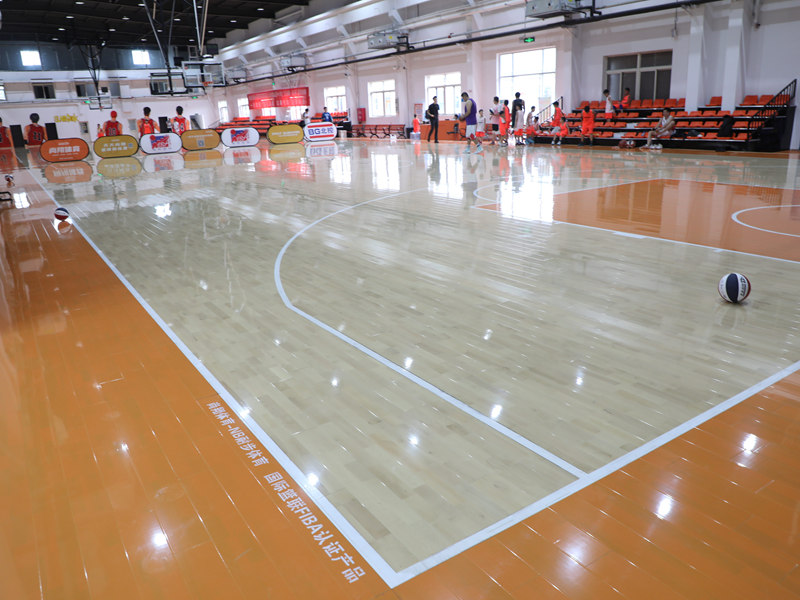
Let us break it down.
The initial cost of a quality indoor basketball wood floor, including materials, subfloor system, installation, and finish, typically ranges from 80 to 150 dollars per square meter, depending on the region, the thickness of the wood, the complexity of the subfloor system, and the level of finish. For a standard basketball court of approximately 420 square meters, the total installed cost would be roughly 35,000 to 65,000 dollars.
This seems like a lot. And it is. But compare it to the alternatives over time.
A synthetic sports refinishing. Over 25 years, that is two to three refinishing cycles, adding 7,000 to 20,000 dollars to the total cost. The grand total over 25 years is roughly 42,000 to 85,000 dollars — comparable to or less than the synthetic option, and with far superior performance.
But the cost comparison does not stop there. You also need to factor in injury costs. As discussed in previous articles, hardwood floors produce significantly fewer injuries than synthetic or rigid surfaces. The cost of treating a single ACL tear can exceed 30,000 dollars in medical expenses, not to mention the lost playing time and potential long-term disability. If a hardwood floor prevents even a few serious injuries per season, the savings alone can justify the higher upfront cost.
Maintenance costs also favor hardwood. Daily sweeping and periodic mopping with a neutral pH cleaner are all that is required for routine maintenance. Synthetic surfaces often require specialized cleaning products, periodic deep cleaning, and eventual full replacement. The ongoing maintenance cost of hardwood is significantly lower.
Energy costs are another factor. Wood is a natural insulator, which means a wood floor does not require the same level of climate control as concrete or synthetic surfaces. In facilities without sophisticated HVAC systems, this can translate into meaningful energy savings.
Finally, there is the intangible cost of performance. A hardwood court delivers better ball bounce, better traction, better shock absorption, and a better playing experience. For competitive teams, this can be the difference between winning and losing. For recreational facilities, it means happier members and better retentionlimation. After the hardwood is installed, it must be allowed to acclimate to the temperature and humidity of the facility for several days before sanding and finishing. Rushing this step is one of the most common — and most costly — mistakes. If the wood is not properly acclimated, it will move after installation, causing gaps, cupping, and crowning. The acclimation period is typically three to five days, depending on the species and the thickness of the wood.
The fourth mistake is poor sanding technique. The sanding process must be done with large drum sanders using progressively finer grits. Starting too coarse or skipping grits will leave scratches and imperfections in the surface. Ending too coarse will leave a rough surface that affects ball bounce and traction. The sanding process should start at 60 grit and progress through 80, 100, and finally 120 grit. Each pass should overlap the previous one to ensure even coverage.
The fifth mistake is incorrect finish application. The finish must be applied in the right number of coats, with proper sanding between coats, and under the right environmental conditions. Applying finish in a room that is too cold, too humid, or too dusty will result in a poor-quality coating that wears quickly and performs inconsistently. The ideal conditions for finish application are a temperature between 18 and 24 degrees Celsius, relative humidity between 40 and 60 percent, and a clean, dust-free environment.
The sixth mistake is ignoring expansion gaps. Wood expands and contracts with changes in temperature and humidity. If there is no gap between the floor and the walls, the wood be sized correctly for the facility. A basketball court generates significant heat from players, lights, and spectators. The HVAC system must be able to remove this heat while maintaining stable humidity. In large arenas, this may require multiple HVAC zones. The court area should have its own dedicated climate control system, separate from the seating areas, to ensure that the conditions on the floor are always optimal.
Dehumidification is often necessary, especially in humid climates or in basements. A dedicated dehumidifier can maintain humidity within the ideal range even when outdoor conditions are extreme. Humidifiers may be needed in dry climates or during winter months when indoor heating dries out the air.
Air circulation is also important. Stagnant air can create pockets of high humidity near the floor, even if the overall room humidity is within range. Ceiling fans or dedicated air circulation systems help distribute air evenly and prevent localized moisture problems.
One often-overlooked factor is direct sunlight. If the facility has large windows, sunlight can heat the floor unevenly, causing localized expansion and discoloration of the finish. UV-filtering window films or blackout curtains can mitigate this problem.
The cost of proper climate control is significant, but it is a fraction of the cost of replacing a failed wood floor. A good HVAC system pays for itself many times over by protecting the floor. Facilities that invest in climate control enjoy floors that perform beautifully for decades. Those that do not will face a cycle of repair, replacement, and frustration.