One of the greatest selling points of portable indoor basketball court wooden flooring is that it can be installed without professional contractors. For facility managers, school administrators, and ambitious homeowners, the DIY installation option saves thousands of dollars. But DIY does not mean careless — proper technique is essential for a safe, high-performing court.
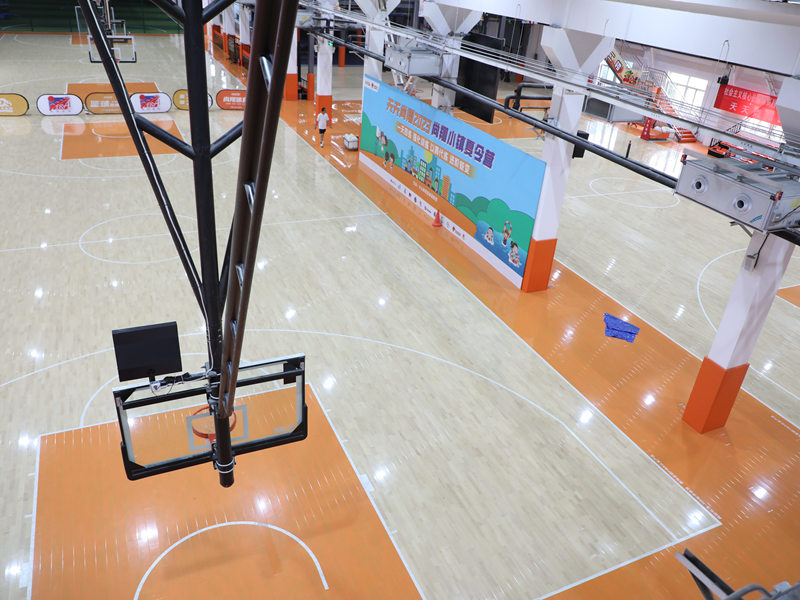
Before you begin, gather the right tools. You will need a tape measure (at least 10 meters), a carpenter’s square, a rubber mallet, a utility knife, a chalk line, and a speed square. Optional but helpful: a rubber roller (to flatten panels), a hand saw or jigsaw (for cutting), and knee pads. That is it. No nail guns, no sanders, no heavy equipment.
The most common DIY mistake is skipping dribbling, passing, and shooting. Gaps between panels, uneven surfaces, or inconsistent finishes can cause the ball to catch, bounce erratically, or roll unpredictably. High-quality portable systems with tight panel connections and a smooth finish provide ball handling that is virtually indistinguishable from permanent hardwood. Low-quality systems with loose connections and rough finishes create a frustrating playing experience that affects confidence and accuracy.
Footwork and traction determine how quickly a player can stop, start, and change direction. The coefficient of friction (COF) of the surface should be between 0.4 and 0.6 for basketball. Too low (below 0.4) and players slip. Too high (above 0.6) and players feel stuck, which increases the risk of knee injuries during lateral movement. Portable systems with sports-rated matte finishes typically achieve the optimal COF range. The finish must also be maintained — a worn or dusty finish can drop below the safe range.
Jump landing is where safety becomes critical. When a player jumps and lands, the force on their joints can reach two to three times their body weight. A court with adequate shock absorption reduces this force by fifteen to thirty-five percent. This reduction is the difference between a comfortable landing and a painful one, between a healthy joint and an injured one. Portable systems with built-in rubber shock layers provide consistent protection across the entire court. Systems with foam-only shock absorption may provide good protection initially but lose effectiveness as the foam compresses.
Fatigue is affected by energy return. A court with good energy return gives a slight “spring” with that affects injury risk. Loose or shifting panels create uneven surfaces that cause ankle rolls and missteps. The interlocking connection system must be secure enough to prevent movement under lateral forces. After installation, every panel should be checked for stability by pressing down firmly. Any panel that moves, lifts, or creates a gap should be reseated immediately.
Fire safety is a regulatory requirement in most jurisdictions. The wood surface, shock absorption material, and substructure must all meet fire retardancy standards. Look for systems that are certified to meet Class B or Class C fire ratings (depending on local codes). Some shock absorption materials are inherently fire retardant; others require chemical treatment. Ask for fire test certificates before purchasing.
Slip resistance when wet is a safety consideration for cleaning. The finish should maintain its grip even when the surface is damp. Systems with matte finishes perform better in wet conditions than high-gloss finishes. If the court will be mopped frequently, choose a system with a slip-resistant finish rated for wet conditions.