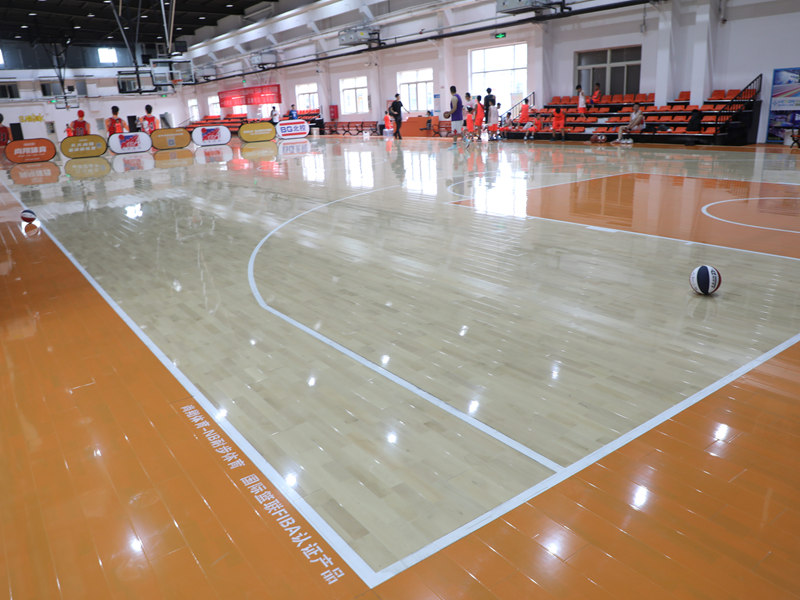
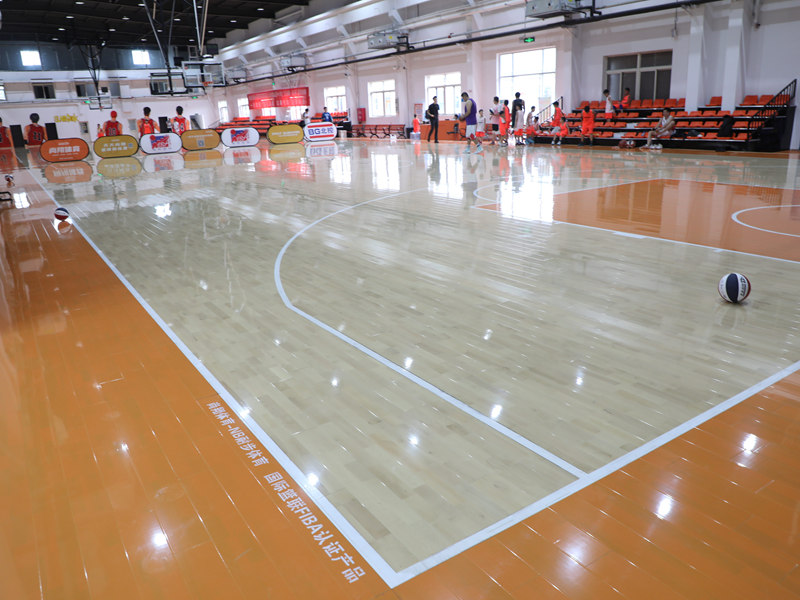
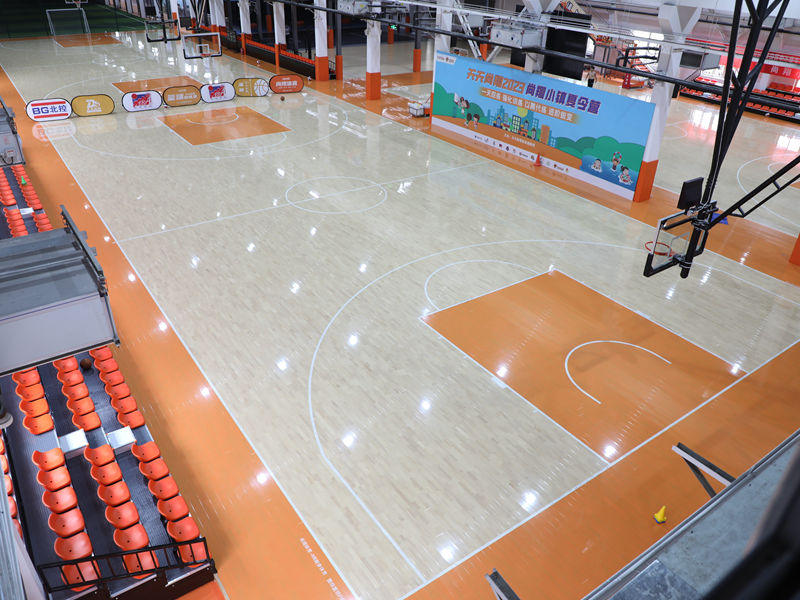
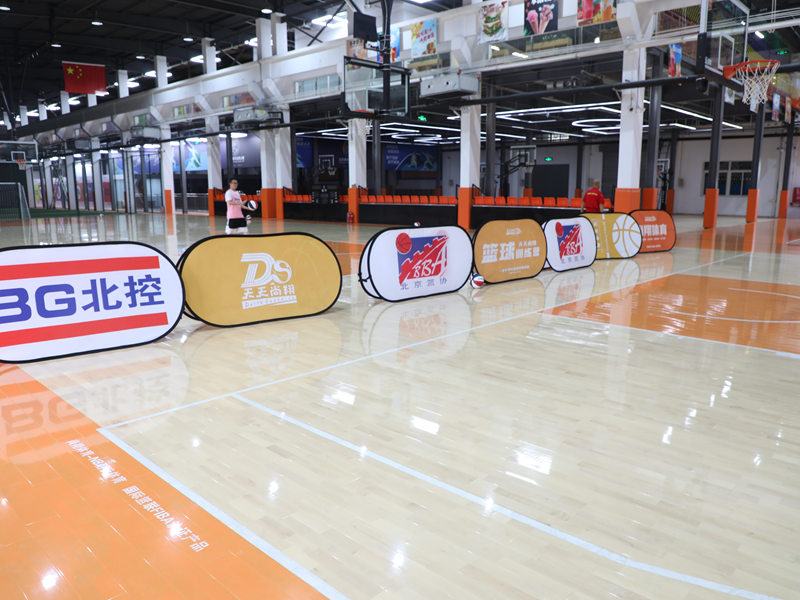
Most people only think about the performance and safety benefits of indoor basketball court wood flooring, but one of its most underrated advantages is the positive impact it has on the acoustics of large gymnasium spaces. A typical gymnasium is a huge, high-ceilinged room with hard walls, a hard ceiling, and hard surfaces everywhere, which creates a very echoey, reverberant environment where sound bounces around endlessly. When a gym has a bare concrete or hard synthetic floor, the noise level during a busy game or practice can become almost unbearably loud: the sound of hundreds of sneakers squeaking, basketballs bouncing, players shouting, and spectators cheering all bounces off the hard floor and amplifies, creating a constant roar that makes it impossible for players to communicate with each other on the court, or for coaches to give instructions that can be heard across the noise. Indoor basketball court wood flooring, with its layered, springy structure, absorbs a significant amount of this reflected sound, reducing the overall reverberation in the space and making the entire gym feel far quieter and more comfortable for everyone inside.

The sound absorption of a wood basketball court works in two different ways. First, the soft, resilient layered structure of the floor itself vibrates slightly when sound waves hit it, converting the acoustic energy of the sound into tiny amounts of mechanical movement, rather than reflecting the sound wave right back up into the room. This dramatically reduces the amount of echo that bounces off the floor, cutting down the total reverberation time in the gym by 20-30% compared to a hard synthetic floor. Second, the wood surface itself produces a much more pleasant, muted sound when basketballs bounce on it, compared to the sharp, loud “crack” that a ball makes when it hits concrete or a hard synthetic surface. The sound of a basketball bouncing on a well-maintained wood court is a classic, familiar sound that feels warm and inviting, rather than harsh and jarring. This difference in sound is not just a matter of comfort—it also has real practical benefits for players. When the noise level in the gym is lower, point guards can hear their teammates calling for the ball across the court, coaches can communicate plays clearly without shouting, and referees can hear each other’s calls without confusion.
This acoustic improvement also makes the gym a far more versatile space for other events outside of basketball. Many school gyms are used for assemblies, concerts, community meetings, and other large gatherings, and the reduced echo from indoor basketball court wood flooring makes speeches and musical performances sound far clearer and more intelligible, without the muddy, echoing sound that plagues gyms with hard floors. The quieter environment also reduces listener fatigue, so people can spend hours in the gym for an event without getting headaches or feeling overwhelmed by the constant noise. Even for spectators at a basketball game, the reduced reverberation makes the experience far more enjoyable: they can hear the commentary from the announcer clearly, they can hear the sounds of the game without being overwhelmed by a constant wall of noise, and they can easily hold a conversation with the person sitting next to them. These acoustic benefits are often completely overlooked when venue operators are choosing a flooring material, but they make a huge difference in the overall usability of the entire gym space, adding even more value to the investment in high-quality indoor basketball court wood flooring.