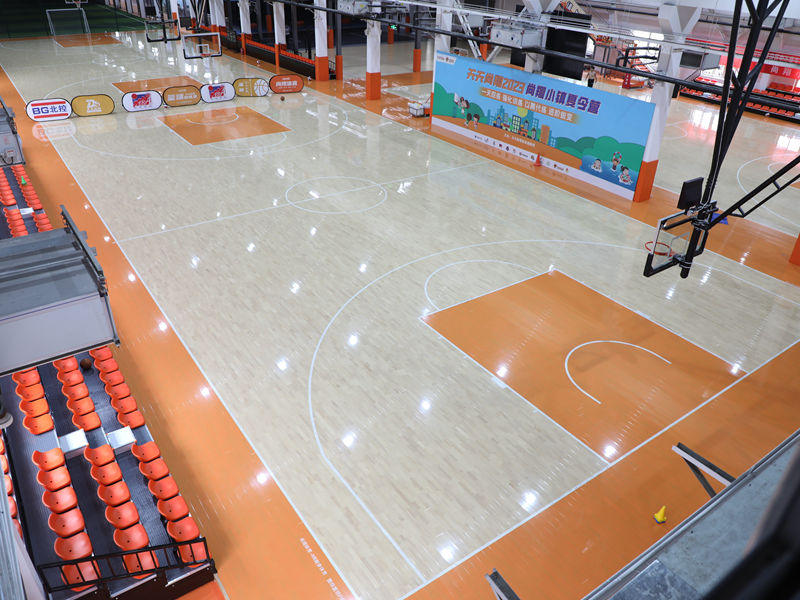
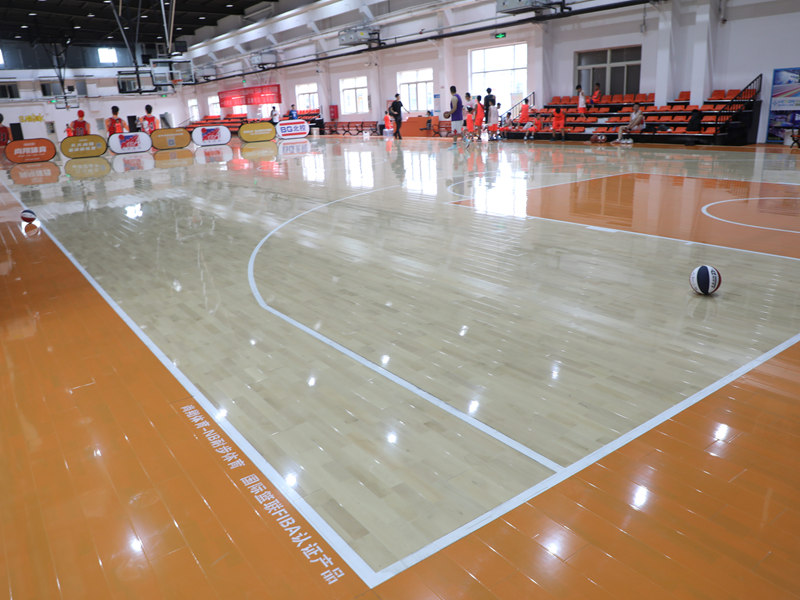
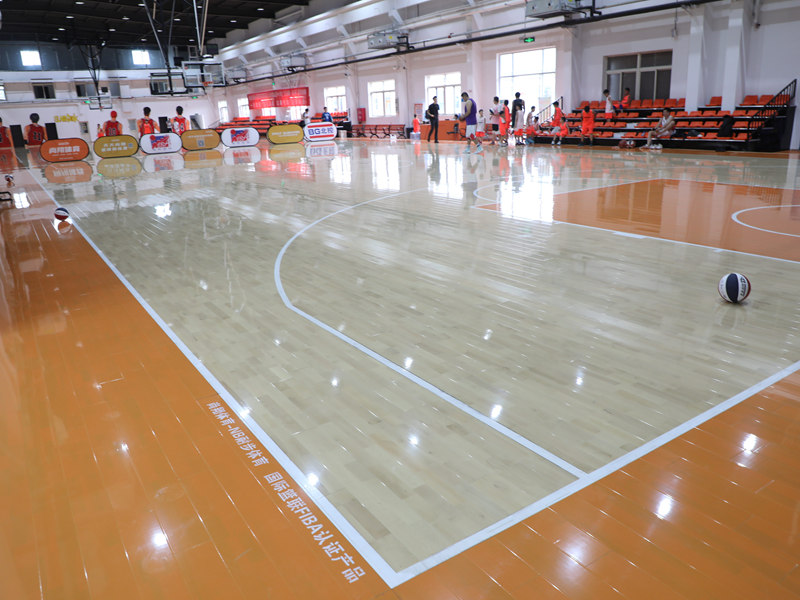
In an era where more and more venue operators are prioritizing environmentally sustainable building materials, indoor basketball court wood flooring stands out as one of the most eco-friendly options for athletic surfaces, especially when compared to fully synthetic alternatives that are made from non-renewable petroleum-based materials. Wood is a completely renewable natural resource: when hardwood forests are managed with sustainable harvesting practices, new trees are planted to replace every tree that is cut down, creating a continuous cycle of renewal that can be maintained indefinitely. Unlike synthetic athletic surfaces that are manufactured in high-energy industrial processes that produce large amounts of greenhouse gas emissions, wood is a carbon-sequestering material: every plank of wood used in a basketball court stores the carbon dioxide that the tree absorbed from the atmosphere during its decades of growth, keeping that carbon out of the atmosphere for the entire lifespan of the floor. This means that a wood basketball court actually has a negative net carbon footprint, unlike synthetic floors that generate large amounts of carbon emissions during their production.

Another major sustainability advantage of indoor basketball court wood flooring is its extremely long usable lifespan. A high-quality synthetic athletic floor will typically last between 10 and 15 years before it has to be completely torn out and sent to a landfill, because the top performance layer wears out and cannot be renewed. A properly maintained wood basketball court, by contrast, can last 50 years or more, with multiple resurfacings that refresh the top playing layer without needing to replace the entire structure. At the end of that extremely long lifespan, the wood planks are completely reusable: they can be sanded down and refinished to be used as flooring in another venue, or they can be repurposed into furniture, wall paneling, or other building materials, keeping them out of landfills almost indefinitely. Even if the wood is no longer suitable for any other use, it is completely biodegradable, and it will break down naturally over time without releasing any toxic chemicals into the environment. Synthetic athletic surfaces, on the other hand, are almost impossible to recycle, and they will sit in a landfill for hundreds of years without decomposing.
Modern sustainable indoor basketball court wood flooring projects also go even further to reduce their environmental impact. Many suppliers source their wood from independently certified sustainably managed forests, ensuring that no old-growth trees are ever harvested, and that the forest ecosystem remains healthy and intact for wildlife and future generations. The finishes used on modern wood courts are also low-VOC, water-based formulations that do not release any toxic fumes or harmful chemicals into the indoor air of the gym, creating a healthier indoor environment for players and visitors. Even the waste products from the sanding and resurfacing process are sustainable: the fine wood dust that is collected during resurfacing can be composted or used as biomass fuel for heating, instead of being thrown away. When you add all these factors together, indoor basketball court wood flooring is easily the most environmentally responsible choice for any new basketball venue, combining high performance