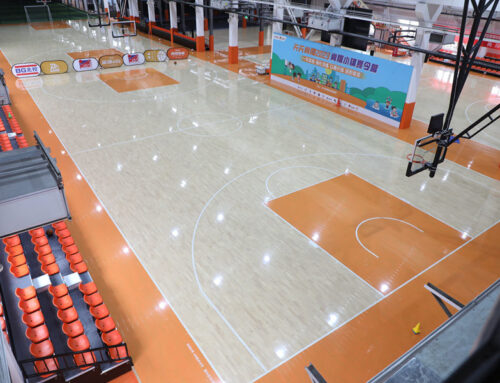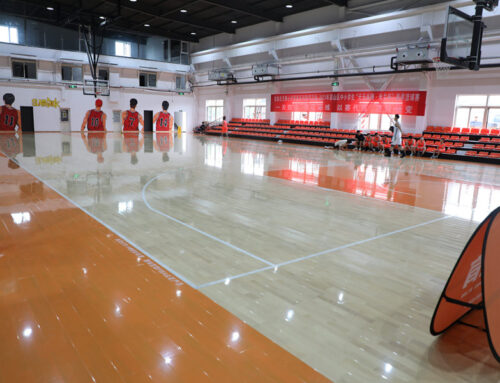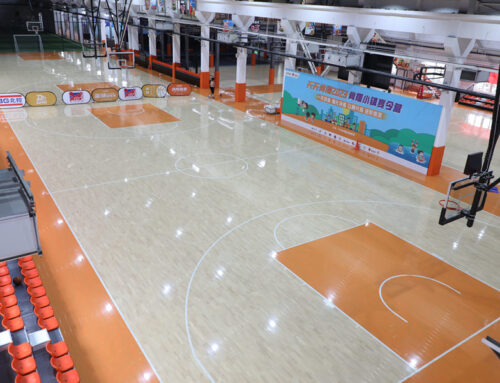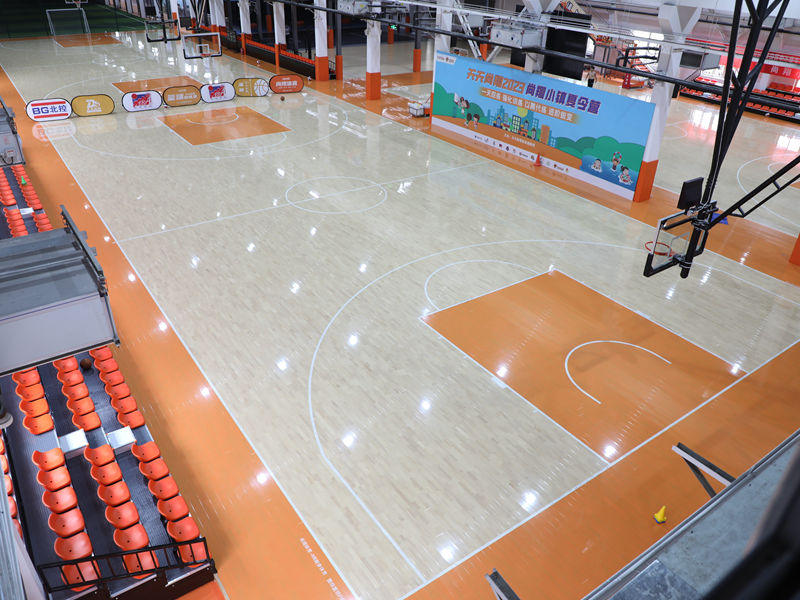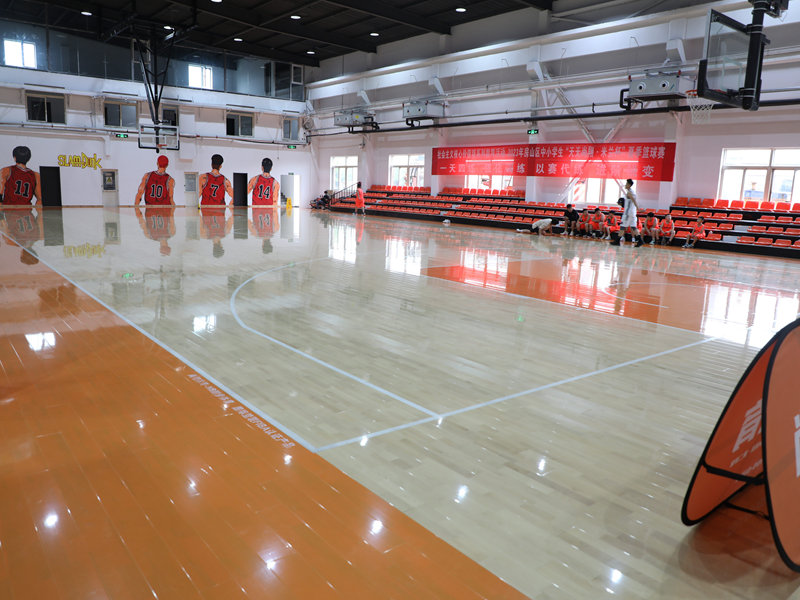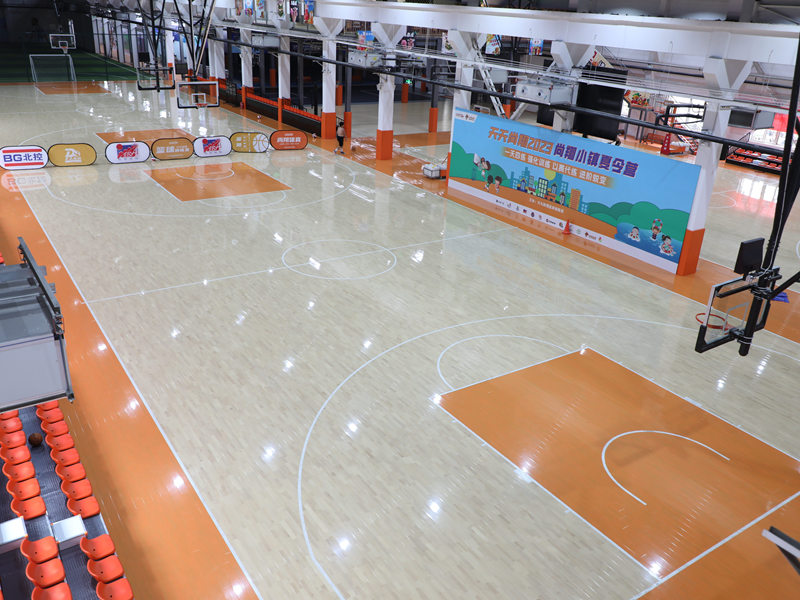
The long-term performance of printed indoor sports wooden flooring depends entirely on the perfect synergy between the printed image layer and the transparent wear layer that sits above it. Early attempts to combine printing with wooden sports floors failed because manufacturers did not fully account for the chemical interactions between printing inks and polyurethane wear coatings, leading to issues like ink bleeding, delamination, and reduced surface durability.
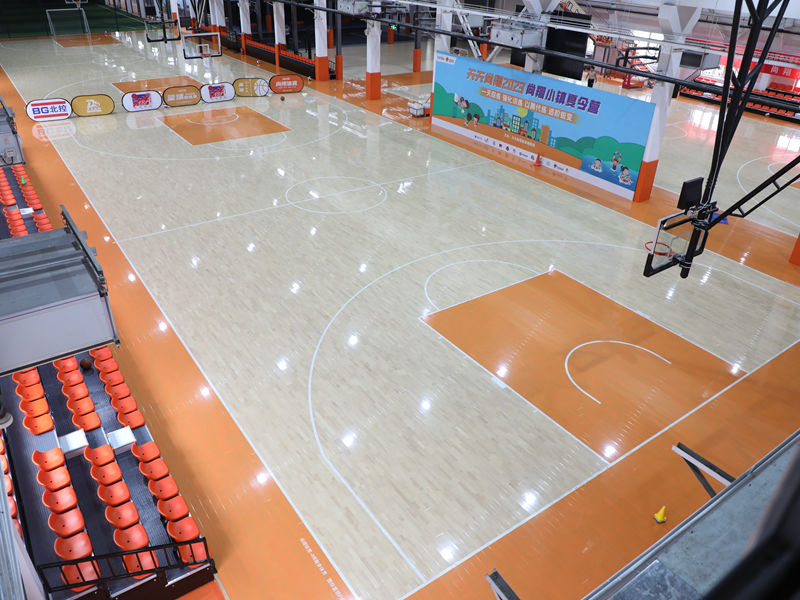 Over decades of research and development, material scientists have refined the process of bonding printed imagery to the wear layer, creating a multi-stage lamination system that ensures the two elements fuse together at a molecular level, creating a single unified surface that is far stronger than the sum of its parts. The process begins with the application of a clear primer coat to the sanded surface of the engineered wood substrate, which creates a uniform, porous surface that the digital printing inks can penetrate slightly, rather than sitting on top of the wood. The selected imagery is then printed onto this primed surface in multiple thin layers, allowing each layer of ink to dry fully before the next one is applied, eliminating any risk of color bleeding or smudging. Once the printed pattern is fully cured, a series of progressively thicker polyurethane wear layers are applied, with each layer being bonded to the previous one using a combination of heat and pressure. This process ensures that the bottom layer of the polyurethane seeps into the tiny gaps between the ink particles, creating a permanent mechanical bond that prevents the printed imagery from ever separating from the wear layer. The final top layer of the system is formulated with a precise level of surface gloss and micro-texture that enhances traction for athletic footwear, while still allowing 100 percent of the light to pass through to the printed layer beneath, ensuring the colors remain vivid and clear. This advanced lamination technology means that the printed imagery is completely protected from scuffs, scratches, and the abrasive impact of thousands of pairs of athletic shoes, ensuring that even the most intricate custom patterns remain perfectly intact after decades of heavy use in high-traffic sports venues.