Basketball was invented in 1891, and for the first several years of the sport’s history, players competed on all kinds of rough, uneven surfaces—dirt gym floors, rough wooden planks, even packed clay. It did not take long for players and coaches to realize that these inconsistent surfaces were holding the sport back, and that a dedicated, purpose-built wood floor would make the game far safer, faster, and more enjoyable. The history of basketball court wood flooring is a story of steady, careful innovation that tracks directly with the growth and evolution of the sport itself.

In the early 1900s, the first generation of dedicated indoor basketball courts used simple solid wood planks nailed directly to the concrete or dirt ground of the gym. These early floors were a massive improvement over the rough surfaces that came before them, but they had major flaws. Without any kind of air gap or shock-absorbing substructure, they were still very hard and unforgiving, and they warped constantly as moisture levels changed. Players would complain about uneven spots, unexpected bounces, and sore knees after every game, but even with all those problems, these wood courts were so much better than the alternatives that they quickly became the standard for every new gym being built.
By the 1930s and 1940s, designers began experimenting with the first layered subfloor systems. Builders started adding small wooden cushions and raised sleeper beams under the top planks, creating a small air gap between the wood and the ground. This simple change made the floor far more resistant to warping, and it added a small amount of much-needed shock absorption that made playing far less tiring on players’ legs. It was during this era that the classic old gym floors still beloved by many long-time basketball fans were first built—floors that have now lasted 70 or 80 years and are still in use today. These floors developed a legendary reputation for having a “lively” feel under players’ feet that no previous surface could match.
The 1960s and 1970s brought major advances in finish technology. Before this era, most wood courts were sealed with simple wax finishes that scuffed easily, had very poor traction, and needed to be stripped and re-waxed every few months. New, more durable synthetic finishes were developed that created a hard, scratch-resistant top layer that maintained its consistent traction for far longer, even with heavy daily use. These new finishes made wood courts far easier to maintain, and they eliminated the old problem of the floor becoming slippery as the wax wore down. Suddenly, wood courts could stay in perfect playing condition for months at a time, with only basic regular cleaning.
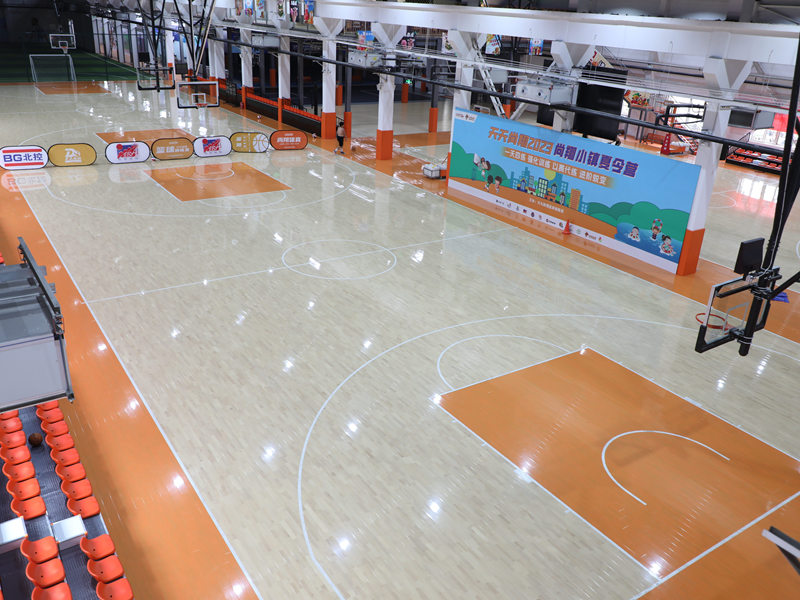
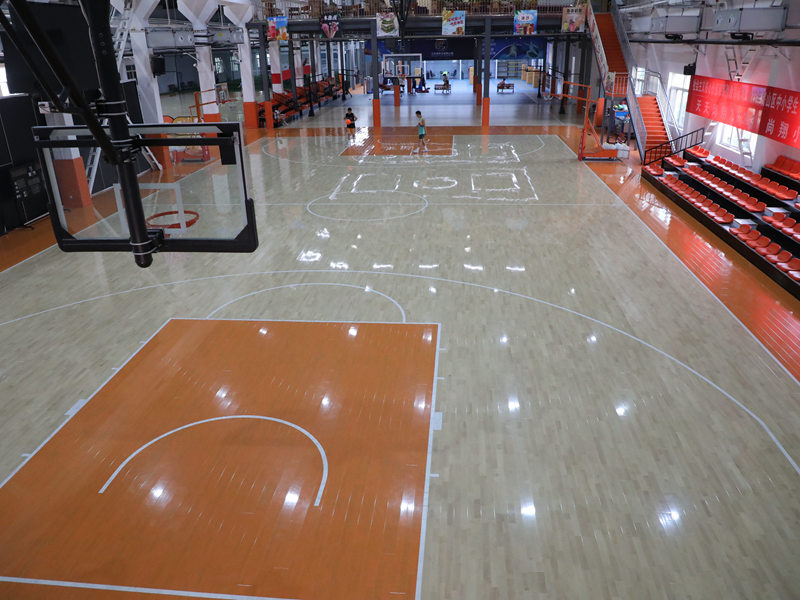
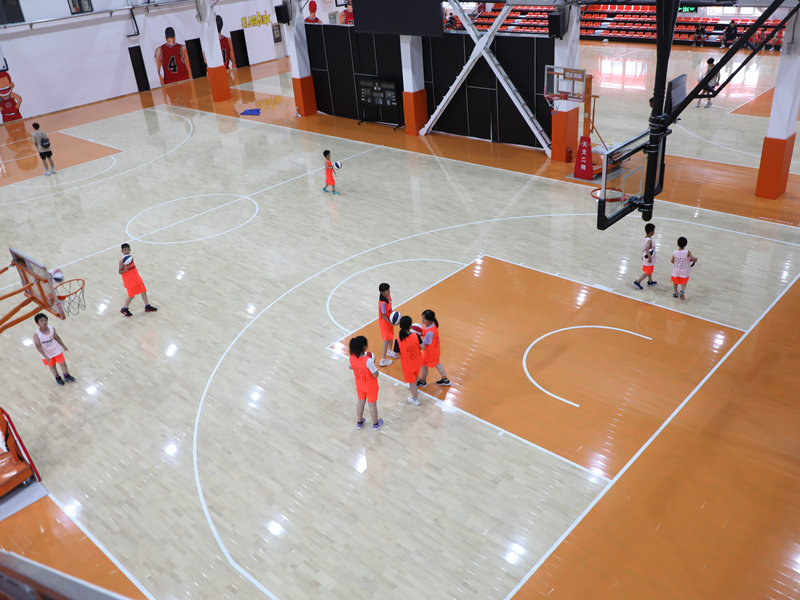
Today’s modern basketball court wood flooring systems are the result of more than a century of these small, steady improvements. Every part of the system, from the calibrated rubber shock pads under the floor to the non-slip UV-cured top finish, has been refined to create the perfect balance of safety, performance, and durability. Even with all this new technology, the core idea has never changed: a wood court is still the best possible surface for basketball, just as it was more than 100 years ago. The evolution of these floors is a testament to how deeply the sport and its playing surface have grown together.