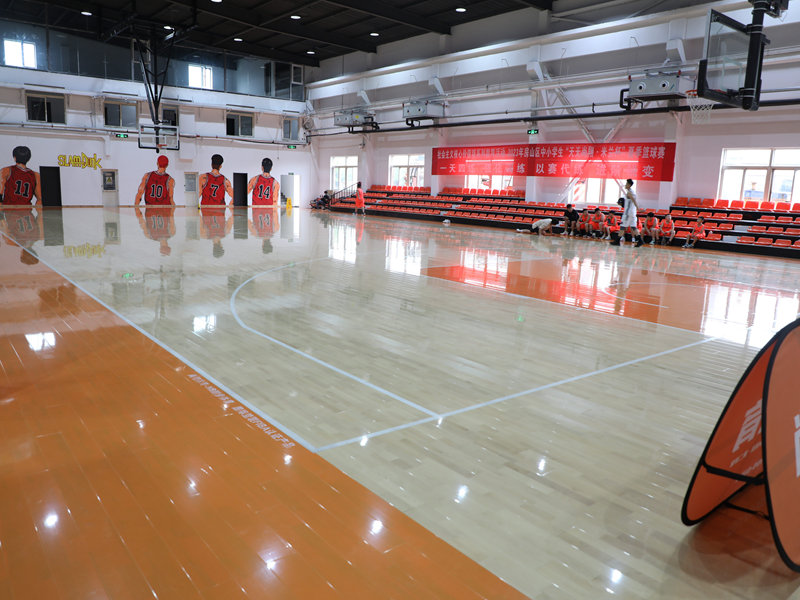
The modular indoor sports wood flooring industry is evolving rapidly, driven by advances in materials science, manufacturing technology, and the changing needs of sports facilities. Understanding these trends helps facility managers make investments that will remain relevant and performant for years to come.
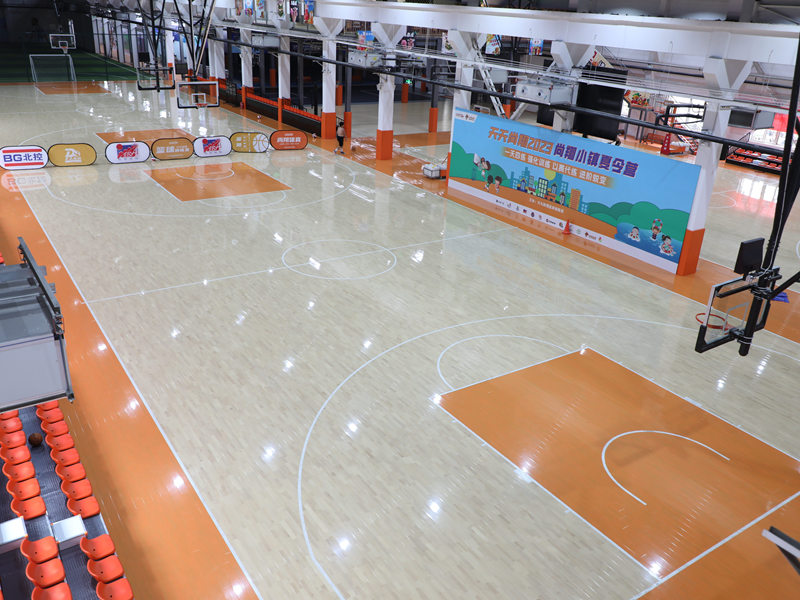
One of the most significant trends is the development of smarter shock absorption systems. Next-generation modular floors are incorporating sensor technology into the support layer, allowing real-time monitoring of impact forces, floor flatness, and usage patterns. This data can be used to optimize athletic performance, prevent injuries, and schedule maintenance proactively. While still in early stages, this technology has the potential to transform how sports floors are managed.
Another trend is the use of engineered wood composites. Traditional solid hardwood panels are being supplemented — and in some cases replaced — by high-density engineered wood products that offer superior dimensional stability, consistent performance, and lower environmental impact. These composites can be manufactured with precise density profiles, optimizing the balance between stiffness, with minimal tools. Quick-change surface finishes that switch between high-friction and low-friction modes are also in development.
Finally, the global sports industry is growing, and with it, the demand for high-performance indoor sports floors. Emerging markets in Asia, the Middle East, and Latin America are investing heavily in sports infrastructure, and modular flooring is well-positioned to serve these markets due to its speed of installation, ease of relocation, and lower total cost of ownership.
The future of modular indoor sports wood flooring is bright. The technology is maturing, the market is expanding, and the products are getting better every year. For anyone planning a new facility or renovating an existing one, modular sports wood flooring is not just the choice of today — it is the choice of tomorrow.