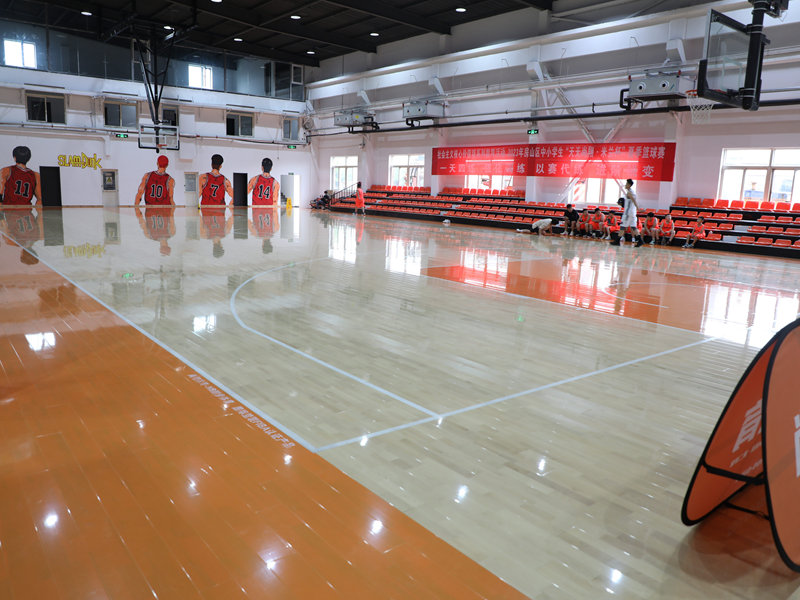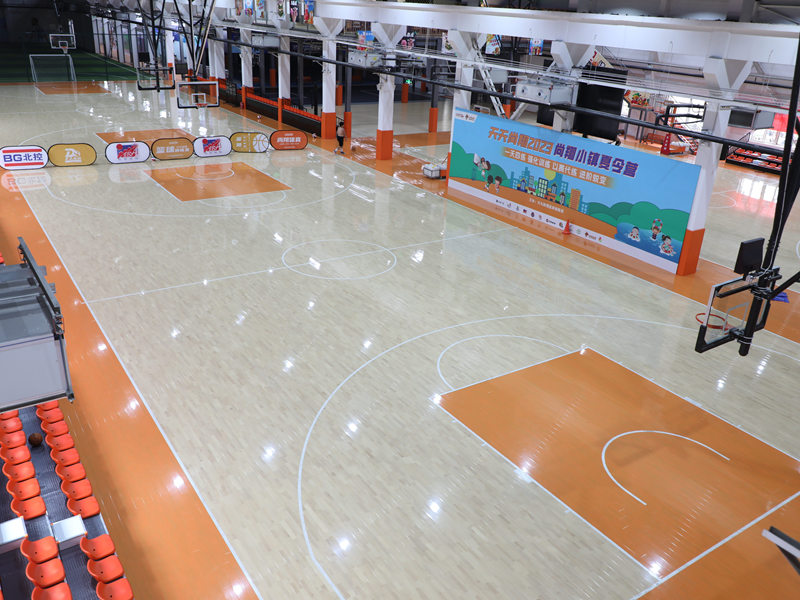
A clean sports floor is not just a matter of appearance — it is a matter of performance, safety, and hygiene. Dirt, dust, and microbial contamination can affect surface friction, accelerate wear, and create health hazards. For modular indoor sports wood flooring, proper cleaning is essential to maintaining both the playing surface and the long-term integrity of the floor.
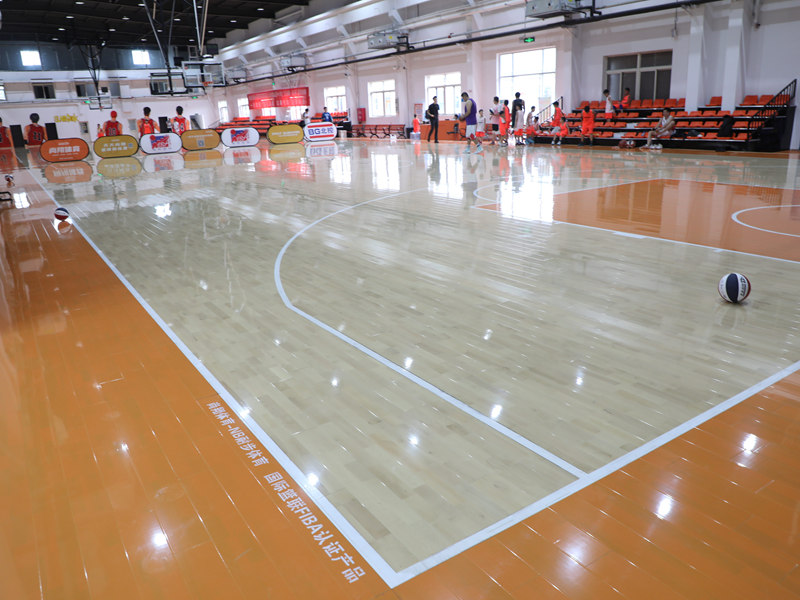
The first rule of cleaning a modular sports wood floor is: use less water, not more. Excess moisture is the number one enemy of any wood floor. Water can seep into the seams between panels, causing the wood to swell, the finish to lift, and the locking mechanisms to loosen. For daily cleaning, a dry microfiber mop or a dust mop is sufficient to remove surface dust and debris. If the floor is visibly dirty, a slightly damp mop — not a wet one — can be used with a pH-neutral cleaner specifically formulated for sports wood floors.
Never use harsh chemicals, bleach, ammonia, vinegar, or wax-based cleaners. These substances can damage the finish, alter the surface friction, and leave residues that attract dirt. They can also degrade the locking mechanisms over time. Stick to cleaners that are recommended by the floor manufacturer and that carry appropriate certifications for use on sports surfaces.
For deeper cleaning, a single-disc machine with a soft pad can be used on a low-speed the buildup of bacteria and fungi. In facilities used for fitness classes or youth sports, a disinfectant approved for sports floors should be used periodically.
The modular design actually simplifies cleaning in one important way: if a section of the floor becomes contaminated or damaged beyond cleaning, the affected panels can be removed and replaced, and the new panels will be pristine. This is not possible with traditional floors, where contamination can penetrate the surface and require extensive treatment.
By following these guidelines, facility managers can modular sports wood floors looking and performing like new for years.